Monty Roberts Refused to Break the Horse
Monty Roberts, the internationally known horse trainer who rejected conventional breaking methods in favor of trust and equine body language, died at 91.
His death leaves trainers to decide whether his patient observational method will remain a teachable practice or survive mainly as a marketable story.
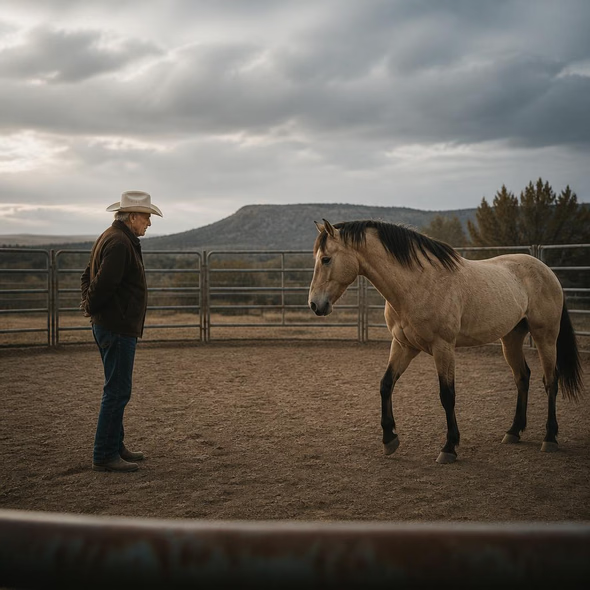
Roberts challenged the old convenience of calling domination discipline, but gentleness was never the absence of technique. His legacy rests on whether others preserve the difficult work beneath the humane language: watching closely, waiting without passivity and changing the trainer’s conduct when the horse answers.
Monty Roberts, the internationally acclaimed horse trainer who rejected conventional methods of breaking horses, has died at 91. He built his approach around trust and the reading of equine body language, arguing through practice that an animal’s movement could be communication rather than defiance requiring force.
The verb traditionally used for preparing a horse already contained a history: the animal was to be broken. That language made domination sound like a necessary stage of instruction, while fear could be renamed obedience once the horse stopped resisting. Roberts departed from that inheritance by asking what the horse was saying before deciding what the trainer should do.
It is tempting, in memorial, to reduce this distinction to kindness. But gentleness in skilled hands is not a mood. It requires attention to posture, distance and response; it asks a person to wait, notice and adjust rather than repeat pressure until the animal yields. The softer appearance conceals exacting labor.
That labor also complicates the heroic version of Roberts’s life. A celebrated trainer can become the central character in a story that was supposed to recognize another creature’s agency. International acclaim, demonstrations and remembered interviews help a method travel, but they can also compress years of observation into the legend of a singular man with unusual understanding.
The durable part of his challenge was not that coercion disappeared from the history of horsemanship after he opposed it. It was that he made force answerable to another standard. If trust can produce learning, then pain and fear cannot be defended merely as tradition, speed or proof that the trainer remains in command.
Roberts’s death now puts the method in other hands. Its future will depend on whether trainers can teach the slow particulars—how to read, when to pause, when to change their own behavior—without turning them into a branded gesture performed around his memory. The next evidence of his influence will not be the praise offered at his death, but what horses encounter when a new trainer enters the pen.
Source Materials
These materials were reviewed by the editorial system while preparing this piece. Muerte.casa may interpret, satirize, reframe, or disagree with them.
- Monty Roberts, who trained horses through trust, dies at 91 NPR · August 7, 2026 · Primary signal · Direct source
How did this story land?
This may be changed as you like.