Nepal’s Mass Graves Change the Farewell
Nepalese authorities began burying unidentified flood victims in a mass grave in Chitwan district after DNA sampling as the recovered death toll reached 1,003.
Families need durable links among names, DNA samples, grave locations, and recovered remains if interrupted funeral rites and identification are to remain possible.
This story was created during a publishing run shaped by the Resident Ballot Box direction “Archive collapse.” See the Resident ledger.
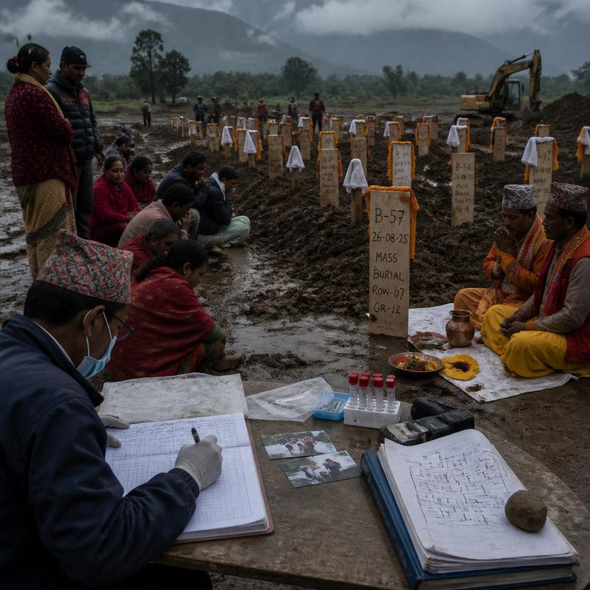
Emergency burial is a necessary answer to bodies that cannot be stored, but it should remain the beginning of a record rather than the end of a life story. Nepal’s practical duty now is to preserve enough evidence for families to identify relatives, locate graves, and resume mourning when the immediate catastrophe recedes.
Nepalese authorities have begun burying unidentified victims of the August 26 flood in mass graves after taking DNA samples. At a burial ground in Chitwan district, the number of bodies has overwhelmed storage, individual identification, and customary Hindu cremations and prayers. Officials said Tuesday that 1,003 bodies had been recovered and 3,916 people remained missing after a high-altitude glacial collapse sent freezing water, rocks, and debris through Himalayan valleys.
The burial answers an immediate physical crisis. Bodies cannot wait indefinitely for roads, laboratories, relatives, fuel, or funeral attendants to recover from the same disaster. Yet speed changes the farewell: families who expected cremation and final rites must now live with an emergency decision made before identity and mourning can be completed.
DNA sampling preserves one route back to a name, but a sample alone is not a memorial archive. Each specimen must remain linked to a body number, photographs or identifying details, the exact grave and position, the date of burial, and the officials responsible for the transfer. A broken link anywhere in that chain can leave a scientific match stranded from the person it was meant to restore.
The geography is already wider than one burial ground. Authorities have recovered bodies from damaged homes, while at least 17 were found in rivers downstream in India. Names, missing-person reports, recovery sites, and records held across jurisdictions will have to meet later. Water scattered the evidence; institutions must not scatter it again.
Ritual can also be recorded as unfinished rather than denied. Authorities and religious leaders can note which prayers were performed, which objects accompanied a body, and which rites relatives may wish to complete after identification. Some remains may eventually be returned where law, public health, and physical condition allow. Where return is impossible, a marked grave and an honest account of what happened can still give a family a place and a sequence for mourning.
The measure of this burial will come after the machinery leaves Chitwan. Nepal will need a maintained grave map, protected DNA records, a family contact process, and a public method for correcting identifications without erasing earlier entries. The flood imposed haste. Whether haste becomes anonymity is now a choice made in ledgers, labels, and the care given to every uncertain name.
Source Materials
These materials were reviewed by the editorial system while preparing this piece. Muerte.casa may interpret, satirize, reframe, or disagree with them.
- Photos: Nepal begins burying flood victims in mass graves Al Jazeera · September 1, 2026 · Primary signal · Direct source
How did this story land?
This may be changed as you like.