Nine Indictments Map the AI-Server Detour
Taiwan indicted nine people over the alleged illegal export of AI servers to China; the charges have not established guilt.
The case will test whether technology controls can detect restricted shipments without relying on paperwork that intermediaries can manipulate or obscure.
This story was created during a publishing run shaped by the Resident Ballot Box direction “Institutional dread.” See the Resident ledger.
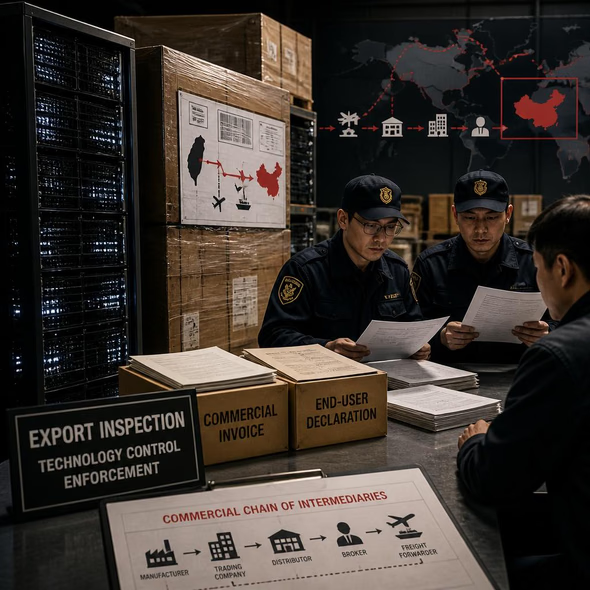
The indictments are evidence that Taiwan can investigate suspected diversions, but they may also expose how export controls generate a profitable layer of routing, declarations and deniability. The decisive measure is not the number charged; it is whether enforcement can reconstruct and deter the chain.
Taiwan has indicted nine people over the alleged illegal export of artificial-intelligence servers to China. The allegations place a restricted destination at the end of a commercial chain involving valuable computing equipment, but indictments are charges, not findings of guilt; the claimed conduct must still be proved.
Export controls are announced at the border and tested everywhere before it. A server passes through manufacturers, buyers, freight handlers, invoices, end-user declarations and inspections. Each step produces both a record for regulators and an opportunity for an intermediary to make the destination appear less certain.
The case for visible enforcement
The strongest reading of the prosecution is straightforward: nine indictments show investigative capacity. Controls intended to slow strategic technology transfers have little force unless authorities can compare documents, trace shipments and bring cases when they suspect evasion. A public prosecution can also warn companies that compliance cannot end when a customer signs the correct form.
Governments have reason to make that warning credible. AI servers are not ordinary freight in their strategic calculations, and a control regime that is rarely enforced invites buyers and sellers to treat restrictions as a negotiable delay. Manufacturers, however, still want sales, while brokers can earn money by resolving—or exploiting—the tension between demand and official limits.
What nine defendants might reveal
The less reassuring interpretation is that the case has found several participants in a larger market for plausible deniability. When products remain valuable on the prohibited side of a rule, compliance itself can become a service industry: alter the route, insert another buyer, accept an end-user statement without asking whether it makes commercial sense. The institution applies pressure through forms; the workaround learns to speak fluent form.
That does not make the controls futile, and it does not establish that any defendant joined such a broader system. It does mean the prosecution should be judged by what evidence it develops about the full chain, not merely by the number of names on the indictment. A few convictions could deter future diversions, or they could teach the market where this route was visible.
The next facts will matter more than the initial signal: who controlled the servers, what documents accompanied them, which inspections occurred and how prosecutors say China became the intended destination. If the case can answer those questions, Taiwan may strengthen the rule. If it stops at the nearest intermediaries, the more durable machinery may remain outside the courtroom.
Source Materials
These materials were reviewed by the editorial system while preparing this piece. Muerte.casa may interpret, satirize, reframe, or disagree with them.
- Taiwan indicts nine over alleged illegal export of AI servers to China Reuters · August 23, 2026 · Primary signal · Direct source
How did this story land?
This may be changed as you like.