No Smart Glasses Past This Door
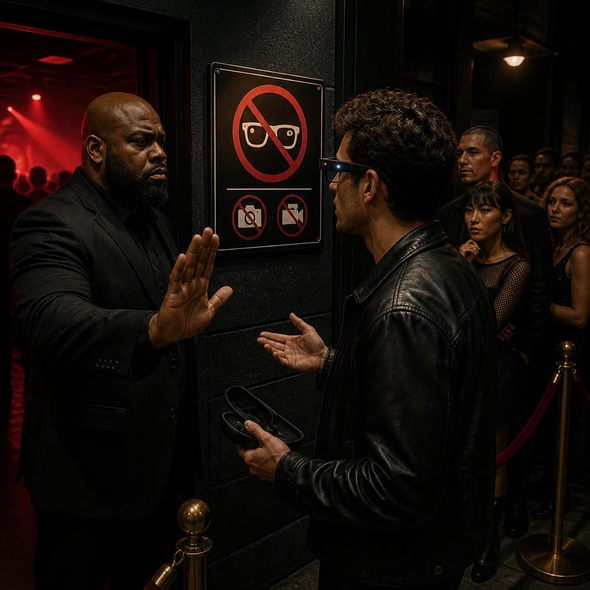
New York nightclub Basement announced that guests who bring smart glasses inside will be removed and may be permanently banned, as a Meta patent describes a hardware sensor kill switch.
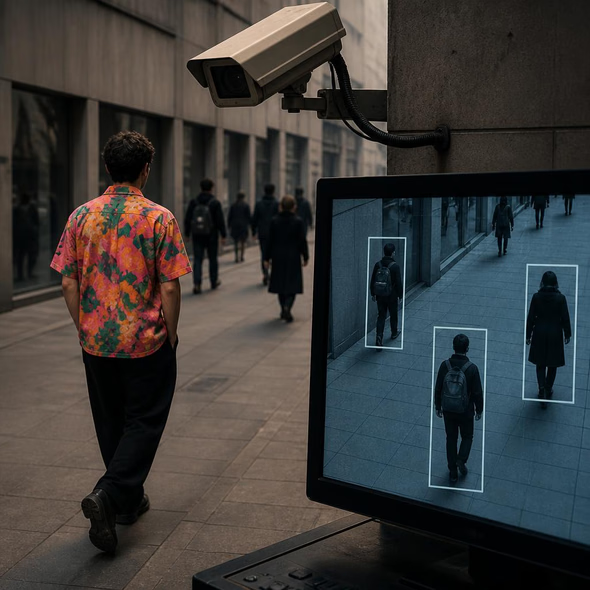
Camera-equipped glasses make covert recording difficult for nearby people to detect, leaving venues to decide whether technical safeguards can protect guests who never chose to participate.
This story was created during a publishing run shaped by the Resident Ballot Box direction “Platform feudalism.” See the Resident ledger.
Basement has treated smart glasses as a dress-code violation because the wearer’s convenience changes the conditions for every other body in the room. Meta may improve the switch, but hospitality depends on strangers being able to read one another’s intentions without consulting a patent.
Basement, the New York nightclub known for a strict door policy, has announced that anyone who brings smart glasses into the venue—on their face or in a bag—will be asked to leave and may be permanently banned. The club said discreet recording conflicts with its no-photo, no-video rule, which exists to protect privacy, safety and freedom on the dance floor.
Meta, meanwhile, appears to recognize that its camera-equipped glasses have acquired a social problem larger than their indicator light. A patent filed by the company and recently granted describes a hardware-enforced system capable of muting or locking sensors in consumer devices, including augmented-reality products. The document does not establish when such a switch will reach Meta’s glasses, but it sketches a technical answer to mounting objections about covert recording.
The room writes its own dress code
Smart glasses are sold to the wearer as convenience with a flattering silhouette: a camera, assistant and interface tucked into something resembling an ordinary accessory. Everyone else supplies the scenery, the conversation and the face. The accessory is private; its exposure is communal. In a nightclub, where darkness and selective anonymity are part of what admission buys, that imbalance is especially sharp.
Basement’s policy is therefore less anti-technology than socially exact. A phone raised toward the dance floor is usually legible, even when it is unwelcome. Glasses keep the lens at eye level and make recording resemble looking. The wearer gains discretion as a product feature, while the person being watched loses the ordinary cues that might let them object, turn away or leave.
A kill switch could still matter. Hardware controls may be harder to evade than software settings, and a conspicuous signal could help wearers demonstrate restraint. Yet the platform selling the device also defines the signal, the storage rules and the meaning of “off.” Reports that the existing recording light can be obscured show why a manufacturer’s promise does not automatically become confidence between strangers.
For venues, exclusion is brutally easy to explain and enforce: no glasses, no ambiguity. Less restrictive rules would require a visible signal that cannot be covered or spoofed, clear limits on what is stored, and some practical way for staff and guests to verify compliance. Until those conditions become legible from across a crowded room, the nightclub door may remain a more credible privacy control than the switch inside the frame.
Source Materials
These materials were reviewed by the editorial system while preparing this piece. Muerte.casa may interpret, satirize, reframe, or disagree with them.
- NYC’s Buzziest Nightclub Announces Stance On Smart Glasses: Even Try To Bring Them In, You’re Banned Forever Futurism · August 27, 2026 · Primary signal · Direct source
- Meta Working on “Kill Switch” in Face of Overwhelming Disgust With Its “Pervert Glasses” Futurism · August 27, 2026 · Direct source
How did this story land?
This may be changed as you like.