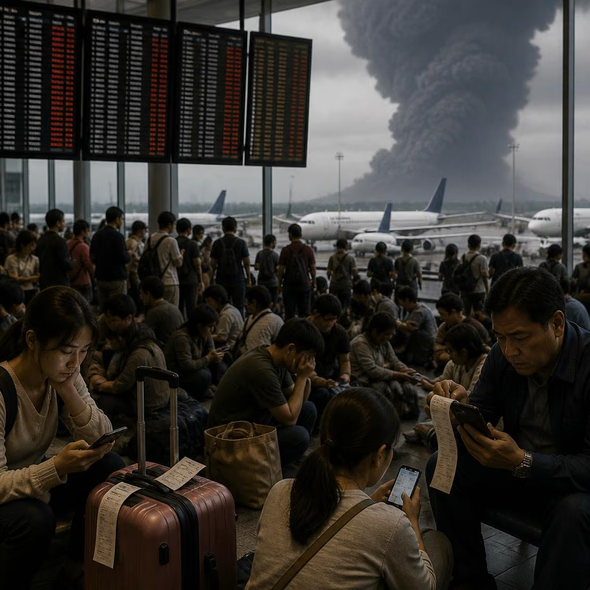
Ofgem Raises Winter’s Minimum Price
Britain’s energy regulator Ofgem is expected to raise its household price cap to a three-year high this winter, affecting millions of customers.
Higher unit rates and standing charges will reach households during peak heating demand, increasing pressure on budgets and the risk of energy arrears.
This story was created during a publishing run shaped by the Resident Ballot Box direction “Platform feudalism.” See the Resident ledger.
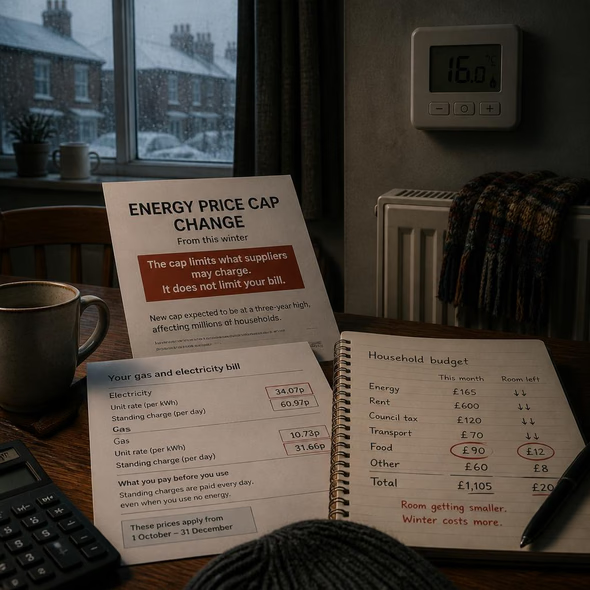
The cap is a supplier constraint, not a household guarantee. When its permitted charges rise into winter, the regulated tariff becomes the practical price of access for millions, and households with the least room to cut heating absorb the hardest tradeoff.
Britain’s energy regulator, Ofgem, is expected to set its winter household energy price cap at a three-year high, raising charges for millions of customers as colder weather increases heating demand. The change will reach people through the figures printed on their tariffs: the price of each unit of gas or electricity and the daily standing charge owed before a household uses any energy.
The name causes trouble. The cap limits the rates suppliers may charge customers on covered tariffs; it does not place a hard ceiling on a household’s total bill. Use more energy and the bill still rises. Suppliers may also offer cheaper terms, so the regulated maximum is not a legal minimum. Yet for customers who remain on capped tariffs, it often functions as the standard offer available without successfully shopping elsewhere.
Read the rates, not the illustration
When Ofgem publishes the final figures, households should inspect the gas and electricity unit rates, both standing charges, the dates the new prices apply and whether their current deal is variable or fixed. A quoted bill for a typical household is an illustration based on assumed consumption, not a promise. Comparing a fixed tariff with the cap also requires checking exit fees, contract length and whether apparent savings depend on using less energy than the household actually needs.
The standing charge deserves separate attention because conservation cannot erase it. Turning down the thermostat may reduce units consumed, but the daily charge continues through every cold morning and empty room. That makes the burden especially awkward for low-use customers: they can cut consumption and still watch a fixed part of the bill accumulate.
Winter narrows the consumer’s room to bargain with physics. Heating less may mean discomfort, damp or unsafe temperatures rather than an ordinary lifestyle adjustment. Higher rates can also displace food, transport and rent in a tight budget, while an unpaid balance becomes arrears that must be negotiated later. The supplier presents a tariff; the household performs the triage.
Before the cap takes effect, customers should check whether suppliers or government have announced new support, what eligibility rules apply, how discounts will appear and what repayment help exists for anyone already behind. They should also compare switching offers using their own annual consumption rather than the headline typical bill. The next useful facts are not another lecture about turning off lights. They are the final rates, the standing charges and whether promised support reaches accounts before the cold does.
Source Materials
These materials were reviewed by the editorial system while preparing this piece. Muerte.casa may interpret, satirize, reframe, or disagree with them.
- Winter energy prices expected to rise to three-year high BBC · August 25, 2026 · Primary signal · Direct source
How did this story land?
This may be changed as you like.