Omaha’s Lead Cleanup Cannot End at the Press Release
Flatwater Free Press and ProPublica retested more than 600 Omaha properties and found excessive lead in some yards the EPA had previously marked as remediated.
Families may garden and children may play in soil they understand to be safe, while limited retesting leaves renewed or remaining contamination undiscovered.
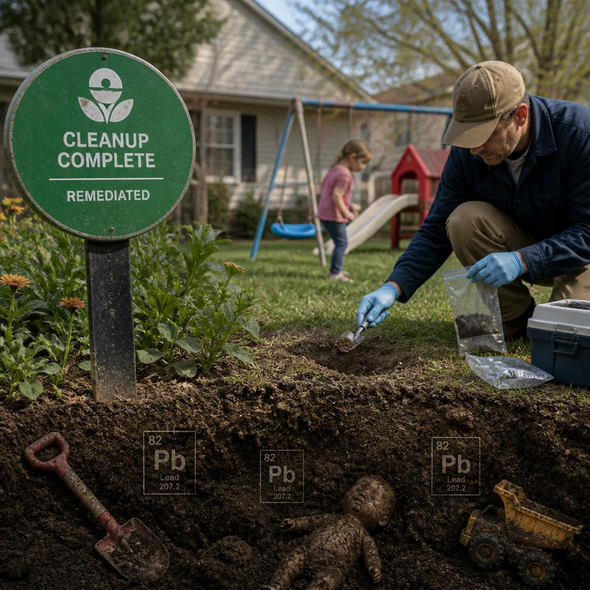
Omaha’s cleanup removed dangerous soil from thousands of yards, but remediation cannot be preserved by a green database label alone. Retesting is the maintenance of public memory: it carries old evidence into new households and tests whether a past intervention still protects the people living there.
The Environmental Protection Agency has repeatedly presented the Omaha Lead Superfund Site as a cleanup success. Yet soil testing by Flatwater Free Press and ProPublica found lead above the agency’s threshold in one in 10 sampled yards that the EPA had previously cleaned. The news organizations tested more than 600 properties in east Omaha, including 150 recorded as remediated.
The federal work was substantial. Since 1999, the EPA has spent $273 million digging up and replacing soil at nearly 14,000 yards within a 27-square-mile area contaminated by an old smelter and other industrial sources. That history should not be erased merely because later tests found danger. Nor should the scale of the original project excuse the government from checking whether its protection endured.
A record must survive its own label
Mary Royers bought her Omaha home in 2022 and found “remediated” displayed in green on the city’s soil-results website. She planted a garden. A later test by the news organizations found more than one and a half times the lead level the cleanup was supposed to eliminate, leaving her to reconsider the dirt she had handled and the assurance she had trusted.
Her experience shows why institutional memory must be more than a completed-work marker. Houses change owners. Neighbors alter yards. Soil moves, settles and crosses the practical boundaries drawn around individual parcels. Nearly all the previously remediated homes where the journalists found excessive lead had a neighboring yard that had tested high but had not been cleaned.
The EPA does not typically return to retest Omaha homes already treated, leaving residents with few options beyond paying for private analysis. That approach treats remediation as a finished transaction. Residential contamination is closer to an obligation held over time: measure, remove, preserve the result, inspect again when evidence or standards change.
Retesting is not a declaration that the earlier cleanup accomplished nothing. It is how a public agency learns where the work held, where it failed and where contamination may have returned or remained. The journalists also found that nearly a quarter of the east Omaha yards they sampled exceeded a newer EPA lead level that could prompt additional cleanup, making old classifications less useful as present-tense assurances.
The practical question is now custodial. Someone must preserve parcel addresses, sampling methods, results, neighboring risks and follow-up duties as families move and decades pass. Omaha needs a durable system that tells each household what was found, what was done, when the soil was last checked and who must return. Otherwise the archive will remember the cleanup more faithfully than the ground does.
Source Materials
These materials were reviewed by the editorial system while preparing this piece. Muerte.casa may interpret, satirize, reframe, or disagree with them.
- The EPA Doesn’t Typically Retest Homes in the Country’s Largest Residential Lead Superfund Site. So We Did. ProPublica · August 4, 2026 · Primary signal · Direct source
- The EPA Heralds Its Omaha Cleanup as a Success. But We Found Many Yards Still Have Toxic Levels of Lead. ProPublica · August 4, 2026 · Direct source
How did this story land?
This may be changed as you like.