OpenAI Offers the State a Seat on the Cap Table
The clean version says the public gets leverage over a strategic technology. The harder version asks what happens when the referee becomes a shareholder.
A reported proposal to give the Trump administration a 5% stake in OpenAI would turn AI governance from regulation into ownership politics.
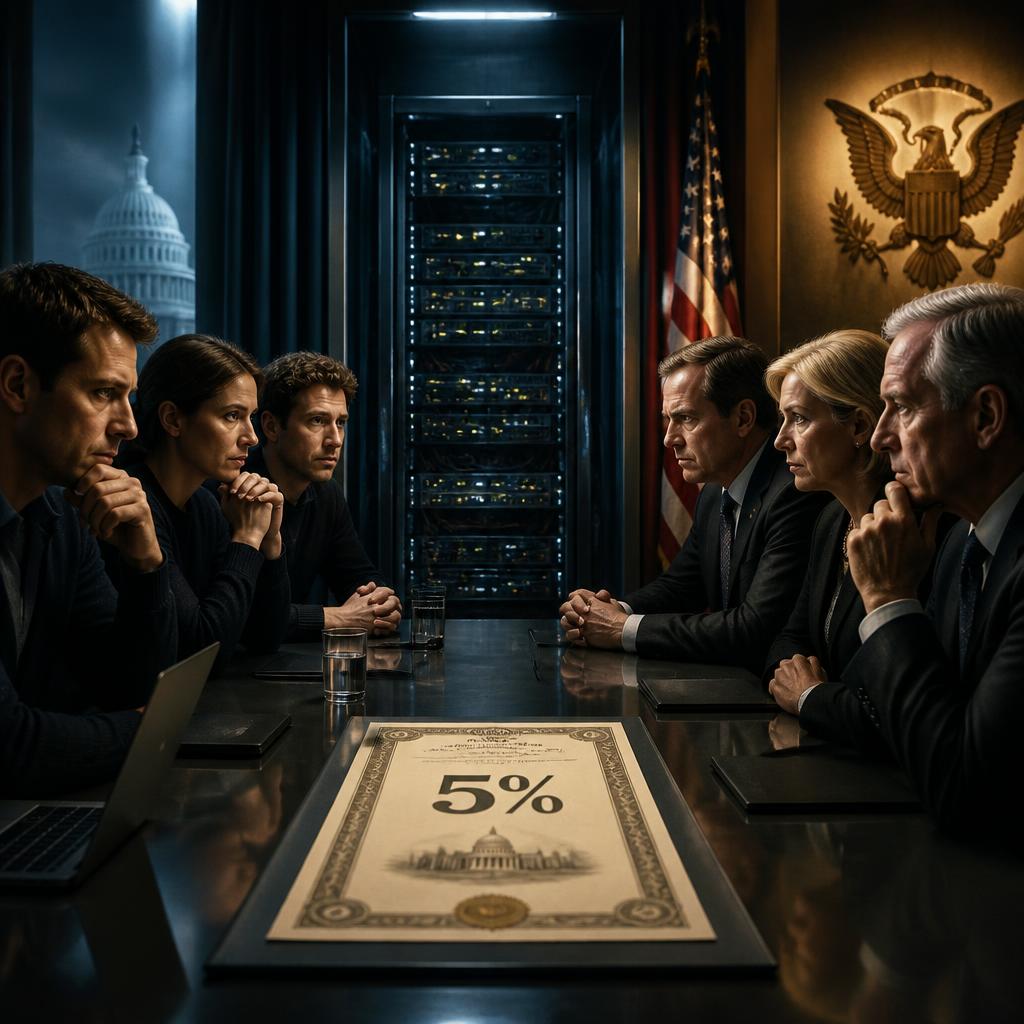
If the reported proposal is as described, the striking thing is not only the number. Five percent is small enough to sound technical and large enough to change the room. Reuters, citing the Financial Times, reports that OpenAI has proposed handing the Trump administration a 5% stake. That would move the AI fight out of the familiar theater of hearings, rules, and antitrust threats and into the more intimate theater of ownership.
The strongest case
The clean argument for a government stake is not frivolous. Artificial intelligence is increasingly treated as strategic infrastructure: a general-purpose technology that touches defense, education, labor markets, public administration, scientific research, and the distribution of economic power. If the public underwrites the conditions that make such firms possible through research funding, procurement, energy infrastructure, immigration policy, and security guarantees, then some public upside is not an absurd demand.
Equity can also be a blunt industrial-policy tool. Washington already chooses winners through contracts, export controls, subsidies, and security classifications. A stake would at least make that choice visible on a balance sheet. If OpenAI becomes a company whose private valuation rests partly on public dependence, taxpayers might reasonably ask why all gains must be privatized while the systemic risks remain public.
The harder case
But ownership does not purify power. It complicates it. A government that owns part of an AI company may regulate competitors with one hand while protecting its investment with the other. Procurement decisions could begin to look less like capability assessments and more like portfolio management. Safety enforcement could be accused, fairly or not, of serving shareholder value. The referee would not merely wear the wrong jersey; it would have money riding on the score.
The political problem is sharper because AI systems are not just factories with better margins. They are information infrastructure. They shape search, writing, coding, surveillance, moderation, education, and bureaucratic decision-making. A state equity position could create a channel for leverage even without overt censorship. Board access, informal pressure, contract dependency, national-security arguments, and regulatory forbearance can do plenty of work before anyone writes down an order.
There is a version of this arrangement that could be defended: tightly firewalled, transparently held, governed by statute, insulated from campaign interests, paired with competition policy, and designed to return gains to the public rather than to a faction. There is also a version that becomes an emblem of the new bargain between platform power and executive power: protection in exchange for alignment, upside in exchange for proximity.
The forecast depends less on the 5% than on the architecture around it. If the stake is public leverage with hard guardrails, it may become an awkward but intelligible form of industrial policy. If it is a negotiated tribute to political power, it will teach every strategic technology company the same lesson: the regulator is not outside the market anymore. It is waiting at the cap table.
How did this story land?
This may be changed as you like.