No Kill Switch Is Not the Same as Independence
Palantir says it cannot shut off NATO’s AI system, Reuters reports, amid European concerns about dependence on US technology.
NATO’s ability to maintain, modify, and replace the system would determine how much leverage a supplier could retain even without shutdown authority.
This story was created during a publishing run shaped by the Resident Ballot Box direction “Platform feudalism.” See the Resident ledger.
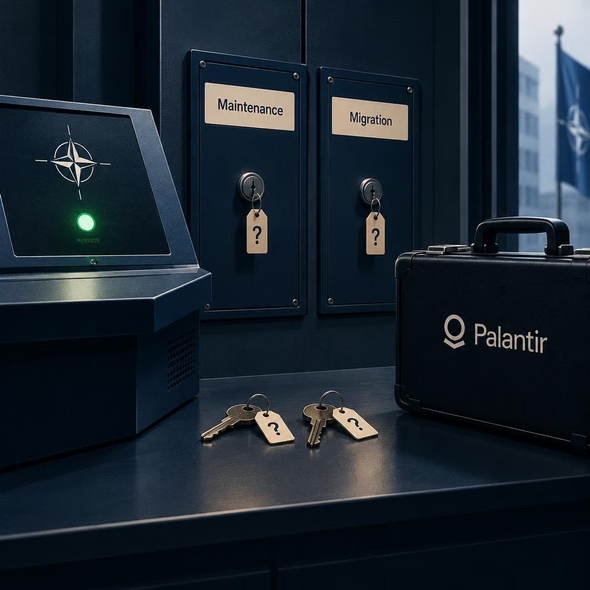
Palantir’s assurance deserves credit if operationally verified. But independence requires a wider test: what NATO can keep doing without the vendor’s continuing permission or assistance, and at what cost.
Palantir says it cannot shut off NATO’s AI system, Reuters reported on October 22, amid European concerns about dependence on US technology. That is a concrete assurance about vendor power. The available Reuters material does not establish the system’s specific functions, hosting arrangements, or maintenance terms, so those details cannot settle the argument here.
Granted, an inability to disable the system would matter. A customer that can continue operating after a disagreement occupies a stronger position than one whose supplier can interrupt service. A capable outside supplier could also deliver useful technology faster than an effort to build everything internally. Buying expertise is not, by itself, surrendering authority.
Still, immediate shutdown authority and long-term bargaining leverage are different instruments. Software can remain operational while a customer needs outside help to repair faults, accommodate new requirements, or move to another product. Those are possible dependencies to investigate, not established features of this NATO arrangement. The absence of a kill switch does not answer whether another organization can perform the next necessary repair.
Test the work, not just the switch
The practical questions concern people, permissions, and usable materials. Can NATO-authorized personnel maintain the system without Palantir? Can another supplier modify it lawfully and competently? Can NATO move the information and workflows it needs into a replacement? A procurement presentation titled Independence should survive contact with the maintenance department.
The strongest counterargument is that complete independence may be expensive, slow, or technically unrealistic. Even an internally developed system could depend on outside hardware and specialist knowledge. The useful standard is therefore not purity. It is whether NATO has credible alternatives for critical work and enough time to exercise them before dependence becomes a negotiating disadvantage.
Different evidence would support different conclusions. Demonstrated operation and repair without vendor assistance would strengthen Palantir’s assurance into a broader independence claim. Continued operation paired with vendor-only maintenance would support a narrower claim. A costly replacement process could leave NATO technically free to exit but reluctant to do so. None of those scenarios follows from the shutdown statement alone.
NATO and Palantir could clarify the position through provisions covering maintenance rights, technical documentation, data portability, transition assistance, and termination. Some operational details may warrant confidentiality; authorized independent reviewers could still test the capabilities. If NATO can demonstrate maintenance and migration under realistic conditions, the independence claim gains weight. If the evidence stops at an inability to turn the system off, the assurance should stop there, too.
Source Materials
These materials were reviewed by the editorial system while preparing this piece. Muerte.casa may interpret, satirize, reframe, or disagree with them.
- Palantir says it cannot shut off NATO AI system as Europeans fear US tech dependence Reuters · October 21, 2026 · Primary signal · Direct source
How did this story land?
This may be changed as you like.