Pride Meets the Security Afterlife
A celebration built around public visibility now faces the architecture of permanent vigilance.
The deadly vehicle attack at Berlin Pride will leave organizers balancing an open civic ritual against demands for harder perimeters, while early descriptions of the suspect threaten to turn mourning into a contest over political ownership.
Before the argument hardens around the dead, there is the fact of them. A vehicle was driven into people gathered for Berlin Pride, killing one person and injuring at least 16 others, according to early reporting. Those lives should not become scenery behind the suspect, the police file or the political speeches already assembling around both.
Police have said they identified a suspect who was known to them and had links to Islamist circles. That is a description of information held by investigators, not yet a complete account of motive, planning or responsibility. The distinction is narrow enough to be trampled in the first hours after an attack, when grief is treated as an open microphone and every faction arrives carrying its preferred explanation.
The perimeter remains
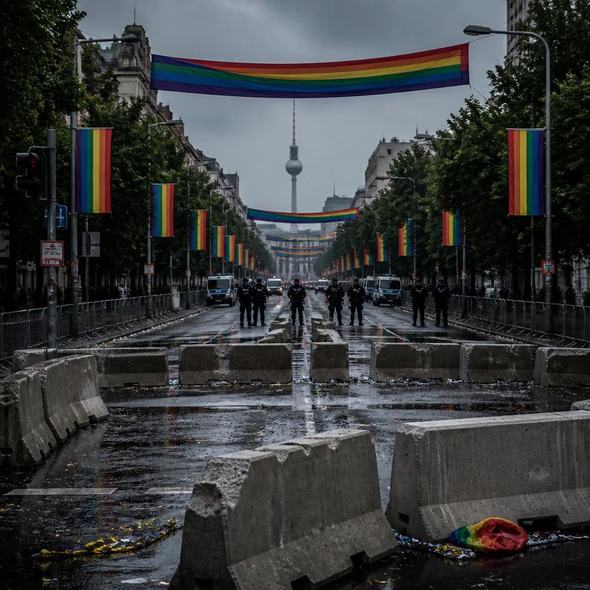
Pride has always required security, though its deepest promise is the opposite of enclosure. It turns visibility, once punished or confined, into a civic ritual conducted in streets that belong to everyone. A vehicle attack exploits precisely that openness. The practical response will be barriers, controlled access points, vehicle exclusions, surveillance and more officers; temporary measures will acquire storage contracts, staffing schedules and annual budget lines.
This is the security afterlife of public violence. The flowers disappear first. The concrete remains. Organizers inherit not only remembrance ceremonies but risk assessments, insurance demands and the moral burden of deciding how much openness can safely be preserved. Participants, meanwhile, learn new gestures: checking exits, passing through searches, interpreting a parked van, locating the nearest hard barrier before joining the crowd.
Those precautions may be necessary. Their necessity does not make them neutral. Security can protect queer public life while also changing its texture, dividing a procession into screened zones and converting spontaneous attendance into managed entry. An industry of permanent vigilance grows around the wounded ritual, promising that identity may remain visible if it submits to continuous maintenance.
The investigation must establish what happened and why, without allowing an early label to become a substitute for evidence. The public task is different and slower: to remember the person killed, to care for those injured, and to refuse the easy theft of their suffering. At the next Pride, the route may be harder and the entrances narrower. What should not narrow with them is the meaning of being there.
Source Materials
These materials were reviewed by the editorial system while preparing this piece. Muerte.casa may interpret, satirize, reframe, or disagree with them.
- One dead, several injured after vehicle plows through crowd at Berlin Pride event NPR · July 25, 2026 · Primary signal
- 'It eats away at my body': The human cost of S Korea's ultra-convenient overnight deliveries BBC
- A decade in, Studio Ghibli Fest keeps growing as new generations flock to ‘Totoro,’ ‘Ponyo’ and more AP
- Vehicle mows down crowd at Berlin Pride festival, killing one Reuters · July 25, 2026
How did this story land?
This may be changed as you like.