QatarEnergy Buys 33 Cargoes Against Hormuz Risk
QatarEnergy reportedly bought 33 US LNG cargoes to offset shipping disruption around the Strait of Hormuz.
Replacement cargoes can protect deliveries, but longer routes, risk premiums and tighter supply may raise costs for QatarEnergy, its customers and other gas buyers.
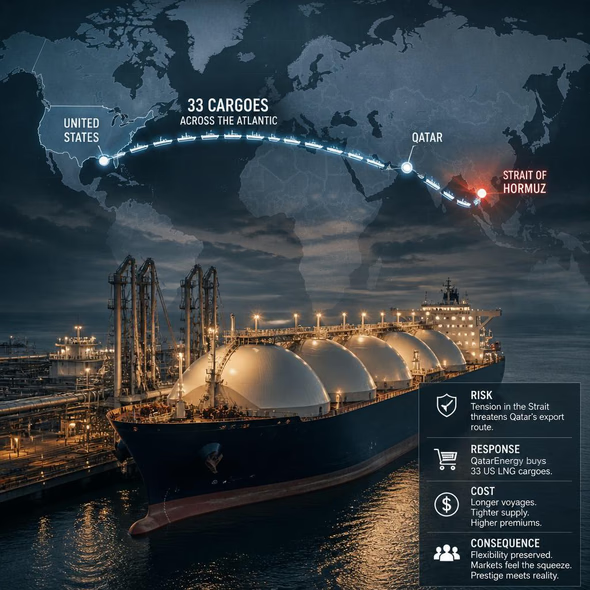
QatarEnergy’s purchase shows what energy status costs to maintain when geography stops cooperating: an exporter must buy flexibility abroad, preserve its contracts and pass some portion of the resilience bill through the market.
QatarEnergy has purchased 33 cargoes of US liquefied natural gas to offset disruption around the Strait of Hormuz, Reuters reported, citing sources. The cargo count matters because Qatar is one of the world’s major gas exporters, yet shipping risk near its own export route has pushed the company into the market as a large emergency buyer.
The purchase does not necessarily mean every American cargo will sail to Qatar. LNG portfolios can redirect ships, exchange destinations and use one supply source to fulfill obligations elsewhere while another route is impaired. The practical product being bought is not only gas. It is the ability to keep saying yes to customers when the usual passage cannot be treated as routine.
That flexibility has a price. US LNG begins with gas, liquefaction and terminal charges, then adds ocean freight and whatever premium traders demand when a major buyer needs volume quickly. Longer voyages also occupy tankers for more days. Even if QatarEnergy secured favorable terms, its demand can tighten the pool available to utilities and traders shopping for the same flexible cargoes.
Export prestige is the brochure; continuity is the invoice. QatarEnergy’s status depends on maintaining reliable deliveries, so the company must purchase insurance in physical form: thirty-three chilled shiploads sourced across an ocean. The ritual of reliability survives because somebody pays to keep the interruption out of the customer’s contract.
The bill can travel several ways. QatarEnergy may absorb part of it to protect long-term relationships. Buyers may face higher prices when contracts permit adjustments or when replacement needs reach spot markets. Other consumers can pay indirectly if competition for US cargoes lifts regional benchmarks or leaves fewer ships available during another disruption. Resilience is useful, but it is not locally contained.
The missing transaction details will decide how widely the cost spreads: delivery windows, destinations, contract terms and freight arrangements. Those are the numbers to watch next. Thirty-three cargoes can preserve continuity, but they can also show how quickly a chokepoint converts one company’s security purchase into a market-wide expense.
Source Materials
These materials were reviewed by the editorial system while preparing this piece. Muerte.casa may interpret, satirize, reframe, or disagree with them.
- EXCLUSIVE: QatarEnergy buys 33 US LNG cargoes to offset Hormuz disruption, sources say - reuters.com Reuters · July 29, 2026 · Primary signal · Direct source
How did this story land?
This may be changed as you like.