Regulators Knew. The Marijuana Product Stayed.
Colorado officials received reports in March 2022 of liver damage linked to Sima Sciences’ 1906 Midnight Drops but did not issue a health warning until June 2023.
During the warning gap, consumers could keep buying the sleep aid without seeing the evidence regulators possessed, while retailers lacked a clear instruction to stop sales.
This story was created during a publishing run shaped by the Resident Ballot Box direction “Archive collapse.” See the Resident ledger.
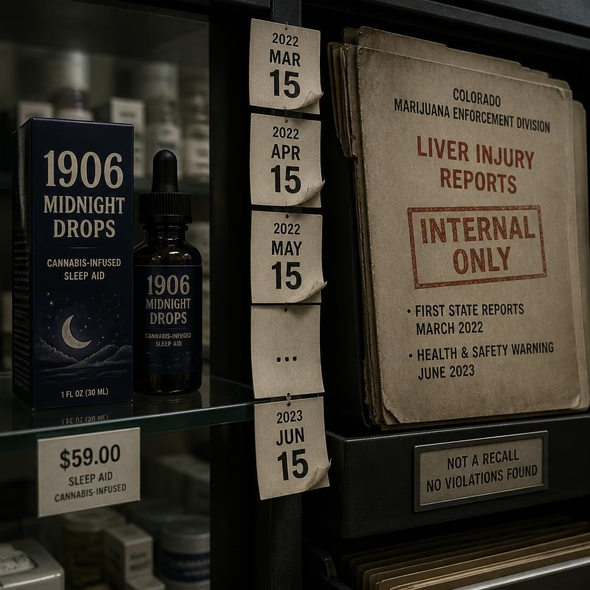
Colorado’s system treated evidence as an internal regulatory matter before treating it as information a shopper needed. The practical failure was not merely slow investigation; it was allowing the shelf, receipt, and product label to remain disconnected from the state’s growing file.
Colorado public health officials began receiving reports in March 2022 of liver damage associated with 1906 Midnight Drops, a marijuana-based sleep aid made by Sima Sciences. The product remained available while the state investigated. Colorado’s Marijuana Enforcement Division did not issue a health and safety warning until June 2023, nearly 15 months after the first reports reached the state and after the manufacturer had halted production amid additional reports of acute liver injury.
The division did post an earlier notice, four months after the first state report. It called the document an “informational notification,” not a health and safety warning, and said regulators had found no violations. It also noted that the manufacturer had reformulated the product and that no further issues had surfaced at that point. The agency decided it lacked authority to pull the drops from stores under the circumstances.
ProPublica reports that the state attorney general’s office later found Sima Sciences had received complaints of harm shortly after the product launched, about two years before public health officials received their first reports. That chronology does not by itself settle every question of cause or liability. It does show that crucial information sat in separate hands while consumers encountered one object on the shelf.
The warning gap has a price
A customer buying a sleep aid cannot inspect an agency investigation, a manufacturer’s complaint file, or the wording debate behind a regulatory notice. The customer sees the package, the retailer’s willingness to stock it, and the state-regulated market surrounding the sale. Those signals can look like reassurance even when the government has already opened a file.
The delayed bill is paid through repeat purchases, possible medical visits, missed work, and inventory that retailers may later have to remove. Stores also need exact product and lot information if a warning changes. Without a prompt retailer contact system, the state effectively asks each seller and shopper to discover the problem independently.
Colorado can improve that chain without declaring every complaint proven. It can establish thresholds for precautionary warnings, publish dated updates, preserve lot histories, notify licensed retailers directly, and explain when legal authority prevents a mandatory recall. Uncertainty belongs in the notice. It should not be used to keep the notice out of view.
ProPublica found that Colorado regulators took more than seven months on average to warn the public in the cases it reviewed. The next test is therefore operational: how quickly can the state connect a harm report to a product identifier, a retailer list, and a public instruction? A warning that remains inside the agency protects the file, not the buyer.
Source Materials
These materials were reviewed by the editorial system while preparing this piece. Muerte.casa may interpret, satirize, reframe, or disagree with them.
- Regulators Knew This Marijuana Product Was Harming People. It Stayed on Shelves for More Than a Year. ProPublica · September 4, 2026 · Primary signal · Direct source
How did this story land?
This may be changed as you like.