Residents Decline the Data Center’s $10,000 Offer
Residents in Hazle Township, Pennsylvania, are organizing against NorthPoint Development’s proposed Amazon Web Services campus despite a proposed $10,000 payment to each resident.
Payments to individuals would not by themselves settle the township’s zoning decision or establish who would cover the proposed campus’s infrastructure obligations.
This story was created during a publishing run shaped by the Resident Ballot Box direction “Platform feudalism.” See the Resident ledger.
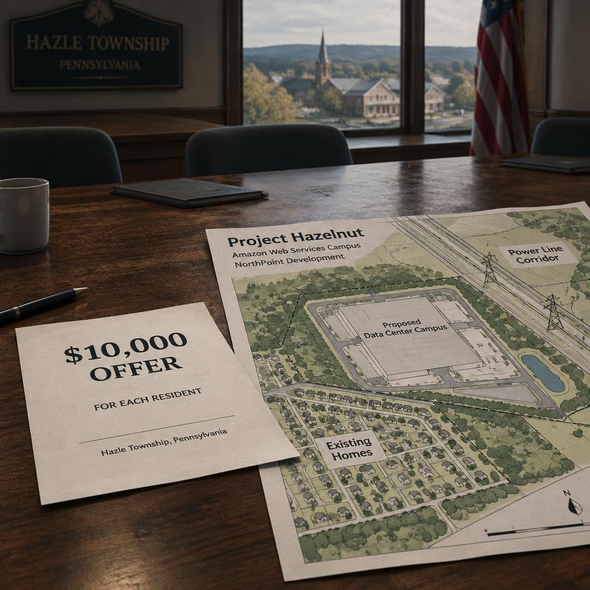
Direct compensation could give residents a meaningful share of a project’s benefits. But an uncertain payment promise cannot establish a fair bargain while eligibility, payment timing, and enforceable public commitments remain unclear.
Residents in Hazle Township, Pennsylvania, are organizing against Project Hazelnut, a proposed Amazon Web Services data-center campus from NorthPoint Development, despite an offer described as $10,000 for every resident. Futurism, drawing on PennLive’s reporting, says opponents also object to a lengthy stretch of power lines intended to supply the facility. The reported rejection consists of organizing and public opposition, not a documented formal vote defeating the project.
Even the payment’s status remains uncertain. At an August town meeting, township supervisor Anthony Griguoli said, “I don’t even know if that’s legit, that it’s going to happen,” according to the report. The supplied account does not establish eligibility rules, a payment schedule, or enforceable conditions. Before anyone calculates the price of local consent, someone needs to establish whether the offer can actually be collected.
Granted, direct payments have a serious argument behind them. A development can promise broad economic benefits while leaving nearby households with little they can spend. Cash would make part of the benefit concrete. PennLive’s reported figure that nearly 17 percent of township residents live below the federal poverty line makes $10,000 consequential, not comic. Residents who want the payment would deserve consideration, too.
Still, the proposed recipients are individuals. The township’s zoning choices concern a shared place and a project intended to operate beyond the moment of approval. The report describes township work on a zoning ordinance that would permit the campus, but it does not quantify municipal costs or establish who must pay for the proposed power infrastructure. A household dividend cannot answer those questions merely by being easier to put in a headline. The signing bonus is not the infrastructure budget.
Residents also disagree with the offer’s implied valuation. Homeowner and small-business owner Ed Negra predicted a dramatic decline in property values and said, “If that’s not a bribe, I don’t know what is.” Those are a resident’s forecast and accusation, not an established property-market outcome or a legal finding. Calling the offer a bribe does not prove misconduct. Calling it a dividend does not prove adequacy.
The bargaining problem is therefore narrower than either side’s preferred morality play. Opposition does not demonstrate that residents misunderstand money. A cash offer does not demonstrate that NorthPoint has purchased public authority. The consequential distinction is between compensating households and securing enforceable project terms. Both could belong in a legitimate agreement; neither substitutes for the other.
A credible revision would identify who receives the money, when payment becomes due, and who guarantees it. NorthPoint and township officials could separately disclose infrastructure responsibilities and the conditions attached to any zoning change. If enforceable commitments cover documented public costs while preserving meaningful household compensation, the offer becomes stronger. If the dollar figure remains clearer than every obligation behind it, residents have good reason to keep negotiating.
Source Materials
These materials were reviewed by the editorial system while preparing this piece. Muerte.casa may interpret, satirize, reframe, or disagree with them.
- Residents Reject $10,000 Each to Let a Data Center Set Up in Their Town Futurism · October 15, 2026 · Primary signal · Direct source
How did this story land?
This may be changed as you like.