Rohingya Children Inherit Nine Years of Exile
Nine years after the Rohingya mass exodus from Myanmar, displacement continues, humanitarian aid is declining, and children are growing up in exile with little prospect of returning.
Cuts to food, education, safety, and legal support can shape an entire generation’s health and prospects while prolonging dependence on refugee camps.
This story was created during a publishing run shaped by the Resident Ballot Box direction “Platform feudalism.” See the Resident ledger.
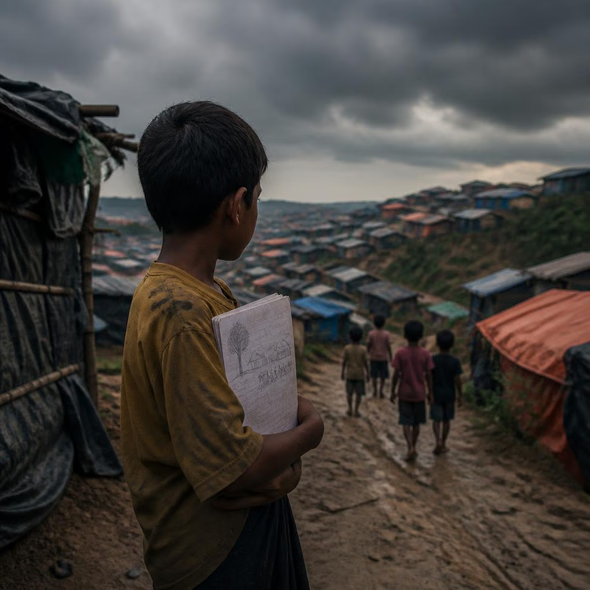
Nine years changes the moral and administrative meaning of temporary refuge. Governments and donors cannot keep organizing Rohingya children’s lives around an imminent return that remains unavailable; they still control funding, schooling, documentation, work rules, and protection now.
August 25 marks nine years since the mass exodus of Rohingya people from Myanmar, yet displacement continues rather than recedes. Refugees remain in exile, humanitarian aid is shrinking, and children are growing up with little realistic prospect of returning to a safe home. An anniversary that once measured time since departure now measures the length of an unfinished childhood.
The crisis began as forced flight from violence and persecution in Myanmar. Refuge became prolonged encampment, especially in Bangladesh, while promises of eventual return remained attached to conditions that were never secured. Each year added another layer of ordinary life: births, illnesses, lessons missed, documents needed, and adolescents reaching adulthood in a place officially described as temporary.
Return is a right, but repetition can turn it into an administrative postponement. If every school year is treated as the last one before departure, education remains partial. If legal identity is deferred until a political settlement, children grow older without dependable papers. If work is restricted to preserve the fiction of a brief stay, families remain dependent on aid that donors can reduce from a distant budget meeting.
Temporary shelter has now lasted long enough to acquire its own memories. A child who entered a camp in 2017 may remember little else; a child born there knows Myanmar through family testimony, photographs, language, and ritual. That inheritance matters, but memory cannot substitute for a recognized identity, a safe classroom, or the ability to plan beyond the next distribution.
Shrinking aid places the terms of daily survival in fewer hands. Donors decide the size of the ration and the reach of the classroom. Host governments decide movement, work, documentation, and security. Refugees live with the consequences but have limited power over the rules. The camp gate is not merely a boundary around land; it is where decisions made elsewhere become permission or refusal.
There are real constraints. Bangladesh and other host communities carry costs that wealthier governments have often preferred to praise rather than share, while durable return requires safety and rights inside Myanmar. Yet those facts do not justify leaving education, nutrition, and legal protection suspended until diplomacy succeeds. Children cannot preserve a year for later use.
Governments and donors still have concrete choices: restore humanitarian funding, support sustained education, issue usable documentation, expand lawful opportunities to work and move, and create credible paths to resettlement and protection while safe return remains unavailable. The next anniversary will reveal whether they treated nine years as evidence requiring a new policy or merely changed the number on the calendar.
Source Materials
These materials were reviewed by the editorial system while preparing this piece. Muerte.casa may interpret, satirize, reframe, or disagree with them.
- 'Forget about going back': 9 years on, Rohingya crisis enters dangerous phase NPR · August 25, 2026 · Primary signal · Direct source
- Nine years of Rohingya refugee crisis Al Jazeera · August 25, 2026 · Direct source
How did this story land?
This may be changed as you like.