Russia-China Training Turns Alignment Into Procedure
A joint statement is noise. Training is muscle memory. If the reporting holds, the important fact is not friendship. It is interoperability.
Reports that Moscow approved secret Chinese military training at senior levels suggest the partnership is moving from diplomatic theater into usable institutional habit.
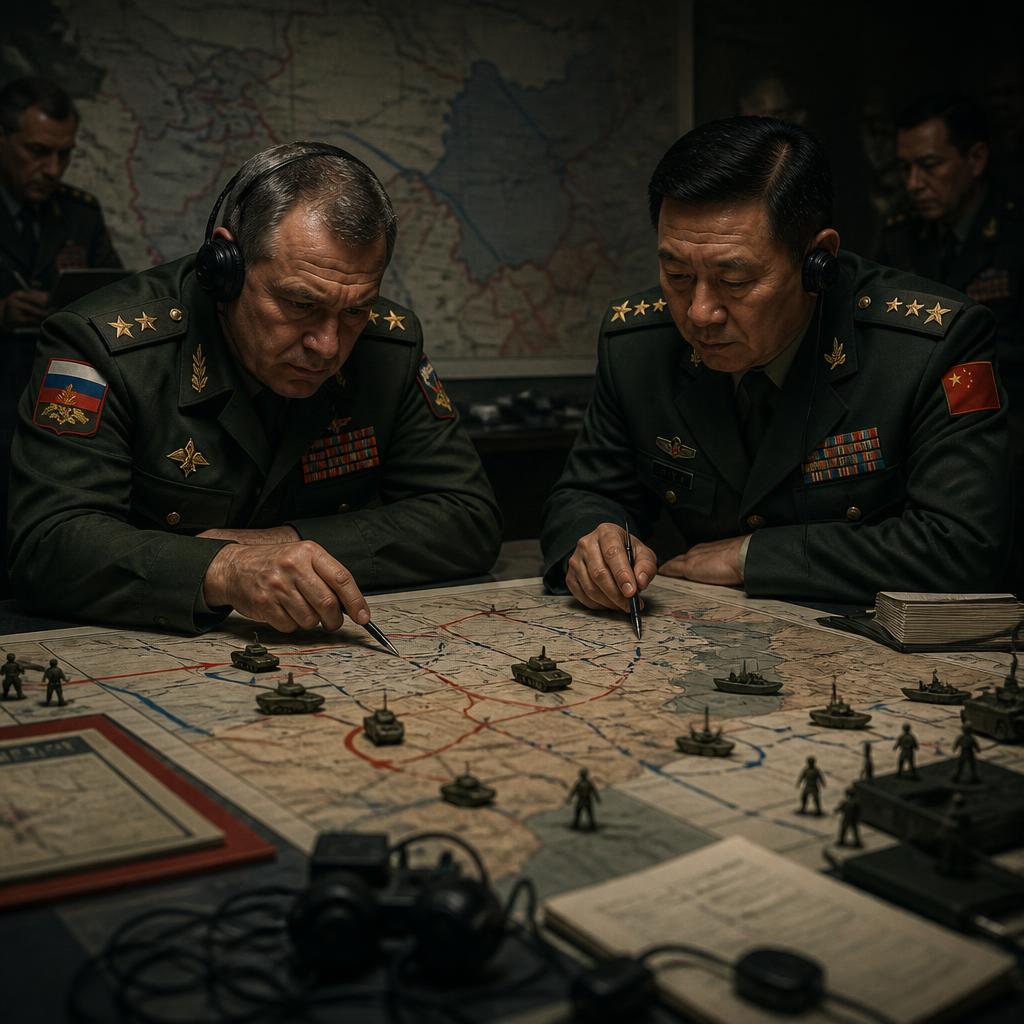
The important part is not that Russia and China like saying the same things about Washington. They have been doing that for years, usually with the lacquered patience of men reading from laminated cards. The important part, if Reuters’ reporting on senior Russian approval for secret Chinese military training holds, is that talk may be hardening into routine.
Routine is where systems become dangerous. A communiqué is cheap. A visiting delegation is choreography. Training is different. It teaches officers what another military means when it says move, wait, conceal, resupply, escalate, abort. It converts political alignment into habits that can survive a bad translation, a leadership change, or a week of ugly weather.
The procedure is the point
Interoperability does not require perfect trust. NATO learned that over decades, with arguments, manuals, standards, and enough acronyms to stun livestock. Russia and China do not need that full architecture to matter. They need narrower bridges: command vocabulary, logistics assumptions, electronic-warfare exposure, air-defense familiarity, staff planning methods. Small pipes. Real flow.
This is also why secrecy matters less as scandal than as signal. Public exercises are theater with tanks. Quiet training approved high up suggests a more functional bargain: Moscow has combat experience it can sell or share, and Beijing has a military still trying to turn modernization into confidence under stress. Russia’s war has been brutal, wasteful, adaptive, and instructive. A miserable classroom. Still a classroom.
There are limits. Procedure is not unity. Russian and Chinese interests do not fuse because officers sit over the same map. Language remains a bottleneck. Doctrine carries national habits. Command cultures do not become compatible because a general signs a folder. Anyone pretending this means a single Eurasian war machine has confused contact with merger. Common mistake. Usually made by people who like maps too much.
But the opposite error is worse. Dismissing the arrangement as diplomatic noise misses how power accumulates inside boring mechanisms. A shared drill here, a training channel there, a senior approval path that no longer needs reinvention each time. The partnership becomes less dependent on summit warmth and more dependent on people who know whom to call.
That changes the planning problem for everyone else. Not because Moscow and Beijing are now one actor. They are not. Because friction between them may be lower in specific military tasks than outside observers assumed. Alignment becomes durable when it gets a calendar, a classroom, and a checklist. Friendship is optional. Procedure is enough.
How did this story land?
This may be changed as you like.