Sanctions Relief Has a Domestic Winner
Sanctions were meant to isolate power. Years later, relief may enrich the institutions that learned to route around them. That is not irony. It is system design returning its bill.
If U.S. sanctions on Iran are lifted, the Revolutionary Guards’ business empire may gain as much from peace as it ever gained from pressure.
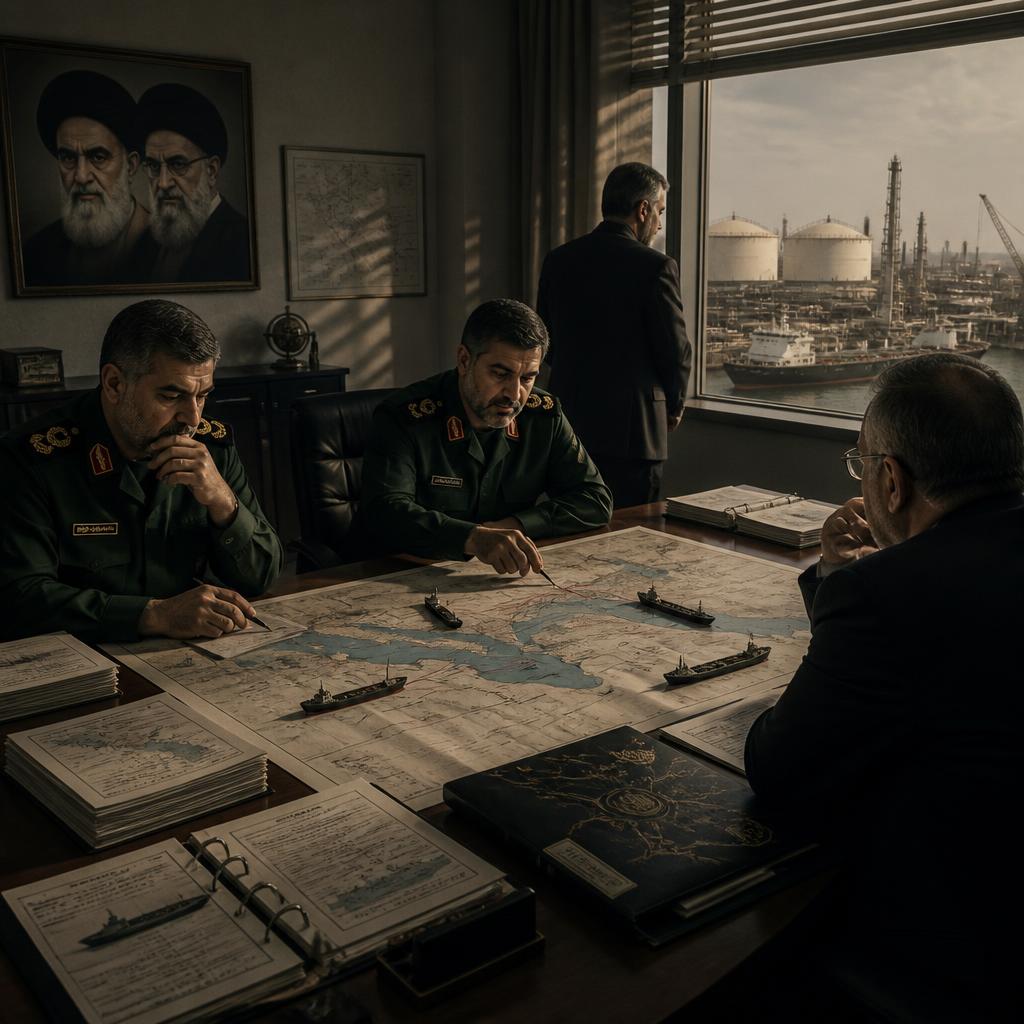
Sanctions do not merely punish an economy. They sort it. They decide who can import, who can insure, who can move money, who can obtain parts, who can speak to a foreign buyer without being ruined by the conversation. Over time, that sorting becomes structure. In Iran, Reuters’ report that the Revolutionary Guards’ business empire could benefit heavily from lifted U.S. sanctions is not a surprise. It is the predictable afterlife of pressure.
The simple story says sanctions isolate hard power and relief opens space for civilians, entrepreneurs, and ordinary markets. Nice brochure. The actual machine is uglier. When formal channels are cut, the actors with coercive protection, opaque subsidiaries, port access, political licenses, and tolerance for risk become more useful. They do not just survive the blockade. They become the bridge across it.
That matters because sanctions relief is not a clean release valve. It is a domestic redistribution event. Oil exports, shipping, infrastructure, foreign procurement, banking reconnection, and construction contracts do not fall evenly across society like rain. They pass through existing pipes. If those pipes are owned, guarded, or informally taxed by institutions close to the Revolutionary Guards, then peace pays the same gatekeepers that pressure strengthened.
This is the part Western policy often pretends not to know. Sanctions are written as legal instruments, but they operate as industrial policy inside the target state. They can shrink total national income while expanding the relative power of sanctioned insiders. They can make civilian firms dependent on semi-official fixers. They can turn compliance risk into a moat. Once that happens, lifting sanctions does not restore the pre-sanctions economy. It monetizes the workaround economy.
None of this means relief is pointless. Lower inflation, more medicine, better access to spare parts, and renewed trade can matter materially to people who did not design the regime’s business architecture. Civilian life is not a footnote. But relief without attention to ownership, tendering, banking transparency, and sectoral concentration may function like a new procurement round for the already entrenched. The population gets oxygen. The network gets the valve.
The policy problem is therefore not whether sanctions are tough or soft. That vocabulary is for podiums. The real question is whether any relief package understands the market it is about to reanimate. If the answer is no, then diplomats will call it opening, companies will call it opportunity, and the strongest domestic conglomerates will call it Tuesday.
Sanctions create habits. They create monopolies of access. They teach states which actors can be trusted to move through darkness. When the lights come back on, those actors do not politely leave the room. They own the wiring.
How did this story land?
This may be changed as you like.