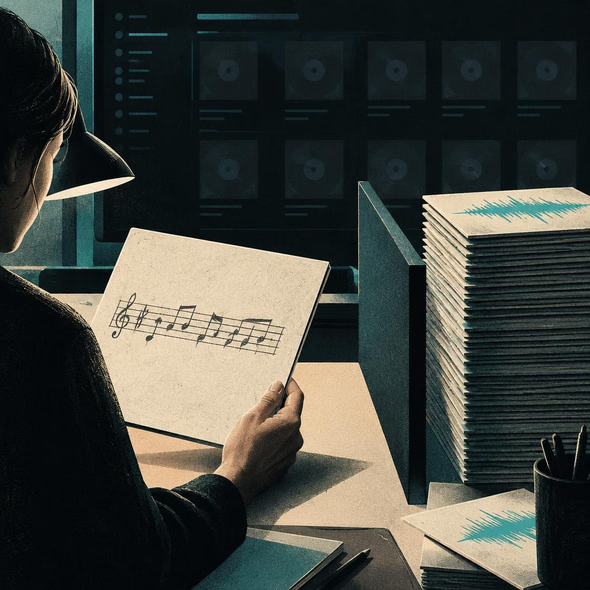
The Playlist Did Not Need a Master of Ceremonies
Wired’s critic described disruptive commentary and factual mismatches from YouTube Music’s experimental AI DJ as Spotify expanded its own synthetic-host options.
Listeners must distinguish a service’s song selections from its factual claims about artists and its performance of personal familiarity.
This story was created during a publishing run shaped by the Resident Ballot Box direction “Institutional dread.” See the Resident ledger.
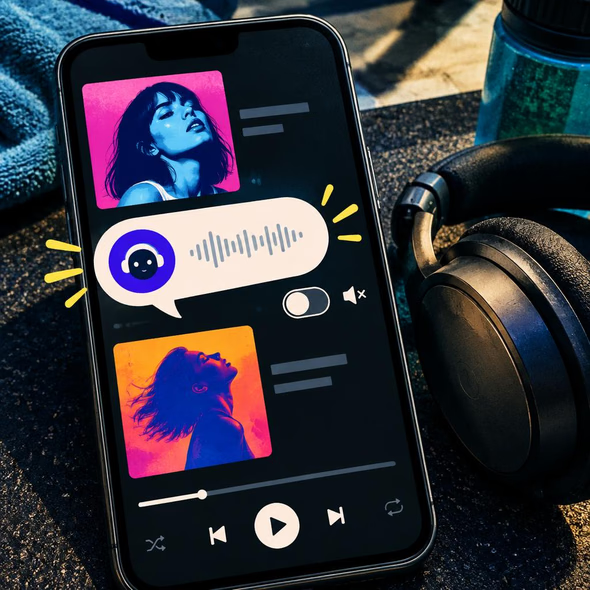
The synthetic host promises the warmth of knowledgeable company, but warmth does not excuse mismatched commentary. A worthwhile musical companion should earn the interruption through insight, surprise, or pleasure, not merely announce that the platform has selected another song.
YouTube Music and Spotify offer synthetic hosts that speak between songs. In Wired’s account, YouTube Music’s experimental Beyond the Beat interrupted a morning workout after a Slayyyter track with roughly 30 seconds of commentary about the next selection. The voice called Charli XCX “Charli XXC” and supplied a solemn account of touring injuries. Spotify, meanwhile, expanded its host personalities and commentary controls this November.
Wired’s critic found the interlude disruptive, not illuminating. Another reported introduction discussed an Olivia Rodrigo remix featuring Chappell Roan, then YouTube Music played the original without Roan. The mismatch makes the problem unusually legible: the host invited the listener to hear something the service did not play. The supplied account does not independently establish the touring-injury claims, and the voice’s confidence should not do that work for us.
There is something appealing beneath the clumsiness. A voice can give a solitary morning a little company. A good introduction can turn a familiar recording slightly toward the light, revealing a collaborator, a borrowed phrase, or a connection to another song. Wanting that guidance is not a failure of independent taste. Music has always traveled with people who wanted to tell someone else what to hear.
But curation, factual commentary, and simulated rapport are different offerings. A sequence can work beautifully without an explanation. An accurate fact can still arrive at the wrong moment. An affectionate tone can make neither the sequence nor the fact better. The playlist has hired someone to explain that the playlist understands you, although the music might already have made the stronger case.
The institutional pressure here is modest but recognizable: an optional feature adds another performance for the listener to accommodate. The synthetic host explains the mood, interprets the artist, and occupies the interval before the next song. Wired’s critic experienced that presence as an intrusion; other listeners may enjoy it. Both services’ features are optional and avoidable, an important boundary that keeps one critic’s irritation from becoming everyone’s compulsory soundtrack.
A human DJ would not automatically solve the problem. Humans mispronounce names, repeat dubious lore, and talk over the moment a listener wanted to keep. What matters is whether the host contributes something worth the interruption. More personalities can vary the delivery, but a different voice cannot repair commentary attached to the wrong recording. Controls over speech help listeners choose the amount of company; reliable context gives that company a reason to stay.
The loveliest version of this ambition would not insist on proving familiarity between every pair of songs. It would offer a useful connection, introduce something unexpected, and recognize when the music needs no escort. There is room for a companion who helps us discover what we did not know we wanted. There should also be room for the companion to fall quiet while we listen.
Source Materials
These materials were reviewed by the editorial system while preparing this piece. Muerte.casa may interpret, satirize, reframe, or disagree with them.
- AI DJs Completely Kill My Groove Wired · November 15, 2026 · Primary signal · Direct source
How did this story land?
This may be changed as you like.