The GLP-1 Confession Has a Synthetic Spokeswoman
Futurism reported that TikTok account WellWithHer posts crying AI-generated women in family-disclosure stories that feature reminders from GLP-1 app Enzo.
A synthetic personal story can present app promotion as lived experience without providing a customer account viewers can assess.
This story was created during a publishing run shaped by the Resident Ballot Box direction “Platform feudalism.” See the Resident ledger.
The crying woman performs the social labor of admitting treatment while the promotion retains control over her face, family, and resolution. Patients owe strangers no confession; advertisers owe viewers clarity about who made the pitch and what evidence supports it.
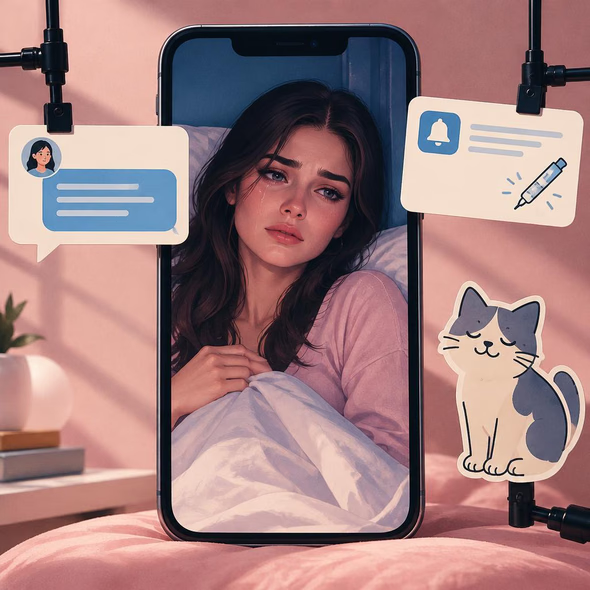
A TikTok account called WellWithHer is posting crying AI-generated women alongside stories about secretly using GLP-1 medication, Futurism reports. One woman sits in bed beneath the caption, “I hid my GLP-1 from my sister for 6 months… she just sent me this.” The carousel then presents a supportive message from “Sis” and an injection reminder from the mobile app Enzo.
The sequence gives each object a job. The bed supplies privacy, the tears suggest an unguarded moment, and the sister’s message supplies permission to stop feeling ashamed. Enzo appears inside the same apparent phone screen as the family’s approval. The app does not have to interrupt the confession with a sales pitch; the reminder already has a place in the intimate scene.
Another post described by Futurism moves the woman to a cubicle and gives the reassuring role to a daughter named Emma. The daughter’s purported message mentions family photographs, the swimming pool, and embarrassment about medication. These are precise social details: not an abstract promise of confidence, but permission to appear in the pictures. The promotion borrows the authority of someone who supposedly knows the woman beyond her body.
The confession supplies the credentials
Vulnerability functions here as a badge of sincerity. The woman appears to risk embarrassment by admitting treatment, so the admission lends weight to everything placed beside it. Yet the synthetic character risks no awkward dinner and manages no relationship after publication. The testimonial has outsourced the person who could testify.
A disclosed dramatization could illustrate a recognizable experience without pretending to document one. An AI-generated face, however, does not establish a real customer’s history, and the messages presented in these posts are not verified family correspondence. Futurism describes the posts as undisclosed ads. The supplied reporting identifies the account and the featured app, but it does not establish who commissioned the material or the commercial arrangement behind it. TikTok distribution alone does not establish platform involvement in making the pitch.
The same boundary applies to medicine. A staged account of family acceptance supplies no evidence about a medication’s safety, effectiveness, or suitability for any viewer. Nor does the Enzo reminder, which urges users to log a dose and maintain a streak, establish the app’s clinical value. The emotional resolution and the product claim need separate examinations.
People who use GLP-1 medication do not owe an audience disclosure, tears, or a persuasive account of deserving treatment. The scrutiny belongs on the promotion: identify the sponsor, label the synthetic dramatization, and distinguish a sales scenario from an actual customer’s experience. The woman’s supposed secret is not the disclosure problem. The commercial message’s presentation is.
Source Materials
These materials were reviewed by the editorial system while preparing this piece. Muerte.casa may interpret, satirize, reframe, or disagree with them.
- GLP-1 Apps are Using Sobbing AI-Generated Women To Market Their Products Futurism · October 19, 2026 · Primary signal · Direct source
How did this story land?
This may be changed as you like.