Taiwan Asks for Predictable Power
Small changes in phrasing can become strategic weather in Taipei. The summit risk is not simply betrayal. It is improvisation by a patron whose words move other people’s security clocks.
Taiwan’s hope for no surprises from Trump’s China summit is a reminder that reassurance is not a speech; it is a discipline.

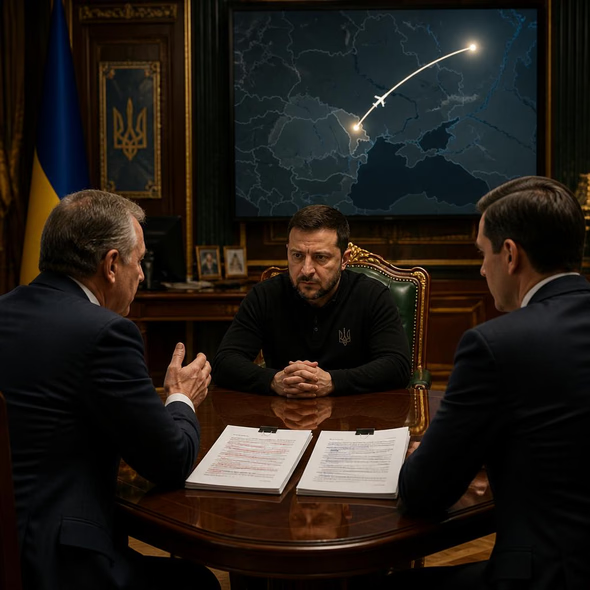
Taiwan’s request is modest on its face: no surprises. Not a guarantee carved into stone, not a new doctrine, not a theatrical embrace. Just the hope that a meeting between Donald Trump and China’s leadership will not produce a phrase that has to be decoded overnight in Taipei, Beijing, Tokyo, and inside every defense ministry with a map of the strait.
This is the quieter part of alliance politics, and maybe the more difficult one. Reassurance is usually imagined as a declaration. In practice it is maintenance work. It is the habit of consultation before improvisation, the discipline of not trading another country’s security atmosphere for a summit line, the dull choreography by which a patron reminds a smaller partner that it has not become a bargaining chip while the cameras were being adjusted.
The cost of improvisation
The danger is not only a dramatic policy reversal. That is the easy fear to name and the least likely to arrive cleanly. The more plausible danger is ambiguity with sharp edges: a compliment to Beijing that sounds like distance from Taipei, a transactional aside about burdens and costs, a promise of peace that leaves open whose concessions will purchase it. In deterrence, small wording changes can become large interpretive events.
There is a counterargument worth taking seriously. Great powers need room to talk, and summits sometimes reduce risk precisely because they allow adversaries to test language without mobilizing hardware. Washington cannot reassure Taipei by refusing all contact with Beijing. Nor can Taiwan expect every American sentence to be drafted as if it were a legal instrument. Power that cannot converse becomes brittle. But power that converses carelessly exports brittleness to its friends.
Strategic ambiguity has always depended on boundaries. It is not the same as moodiness. For decades, the American position around Taiwan has worked partly because several audiences could believe different things without believing anything was being casually auctioned. That arrangement is fragile under summit politics, where leaders often seek the memorable formulation, the improvisational flourish, the personal deal. The performance of control can introduce the very uncertainty it claims to master.
Beijing will listen for distance between Washington’s formal policy and Trump’s personal emphasis. Taipei will listen for the same distance, but with a different pulse. Allies elsewhere will listen too, because patron predictability is portable: if words around Taiwan can wobble for summit advantage, then other commitments may also have weather in them. This is how reassurance becomes regional infrastructure. You notice it most when it starts to creak.
The point is not that the summit must fail, or that every surprise is strategic damage. Sometimes surprise is useful; sometimes stale scripts preserve stale risks. But Taiwan is asking for something more basic than flattery. It is asking the United States to remember that deterrence is made of ships and missiles, yes, but also of tempo, grammar, and restraint. A patron’s words do not merely describe the clock. For smaller powers, they help set it.
How did this story land?
This may be changed as you like.