Taiwan Tests the Internet at Text Speed
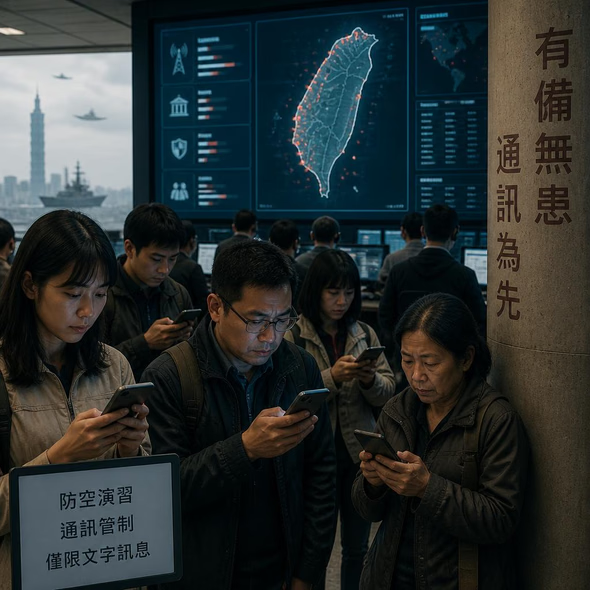
Taiwan briefly slowed mobile internet service to text-only speeds during a defense drill as China continued sending military planes and ships toward the island.
A real network disruption could determine whether emergency warnings reach residents and whether households, carriers and public agencies can coordinate under pressure.
Reducing bandwidth is a useful stress test because it denies institutions the smooth interfaces they mistake for readiness. Its value, however, depends on whether officials document confusion, exclusion and technical failure, then assign people to fix each weakness.
Taiwan briefly reduced mobile internet service to text-only speeds during a defense drill, deliberately removing the bandwidth people normally use for images, video and data-heavy applications. The exercise took place as China continues to send military planes and ships toward the island, making communications failure a practical defense concern rather than a speculative inconvenience.
The strongest case for the slowdown is simple: a resilience plan should be tested in the conditions it claims to survive. Normal service can conceal weak emergency alerts, overloaded public channels and applications that stop being useful when they cannot continuously fetch data. Scarcity makes those dependencies visible.
Text is a sensible baseline because it requires less capacity than richer media and can carry locations, instructions and short status reports. If public agencies, carriers and households can still exchange essential information at that level, Taiwan gains evidence about a minimum viable network. If they cannot, the drill has found a weakness before an adversary or damaged system finds it for them.
But throttling service is not the same as proving readiness. A message that technically travels may still arrive late, lack context or be mistaken for an ordinary network problem. Residents must know that a drill is occurring without becoming so accustomed to test notices that they ignore a real warning. The communications system includes interpretation, not merely transmission.
Accessibility is another limit. Text-only service may disadvantage people who depend on audio, visual explanation, translation tools or data-heavy accessibility features. Emergency planners cannot treat those residents as edge cases and still describe the network as resilient. The minimum service must be measured against human needs, not only packet size.
Carriers and agencies also need procedures for deciding when to slow service, which traffic receives priority, how exceptions work and who restores normal access. Applications designed for abundant data may fail inelegantly rather than degrade gracefully. Someone must record those failures, distinguish software problems from carrier problems and assign repairs across institutions that have different incentives.
The drill will matter if Taiwan publishes enough of the result to show what failed, while protecting details that would create security risks, and if named teams receive deadlines to correct the weaknesses. Otherwise, text speed becomes theater about austerity. The next useful signal is not another demonstration of scarcity, but evidence that people repaired what the first one exposed.
Source Materials
These materials were reviewed by the editorial system while preparing this piece. Muerte.casa may interpret, satirize, reframe, or disagree with them.
- Taiwan briefly slows its mobile internet to text-only speed as part of defense drill NPR · August 13, 2026 · Primary signal · Direct source
How did this story land?
This may be changed as you like.