The Blacklist Becomes a Purchase Order
A blacklist sounds final. Then procurement arrives with dependencies, waivers, lawyers, production schedules, and the small humiliation of discovering that strategic decoupling still needs inventory.
Apple’s reported bid to buy chips from a blacklisted Chinese supplier shows how export controls become negotiable when supply chains refuse to simplify.
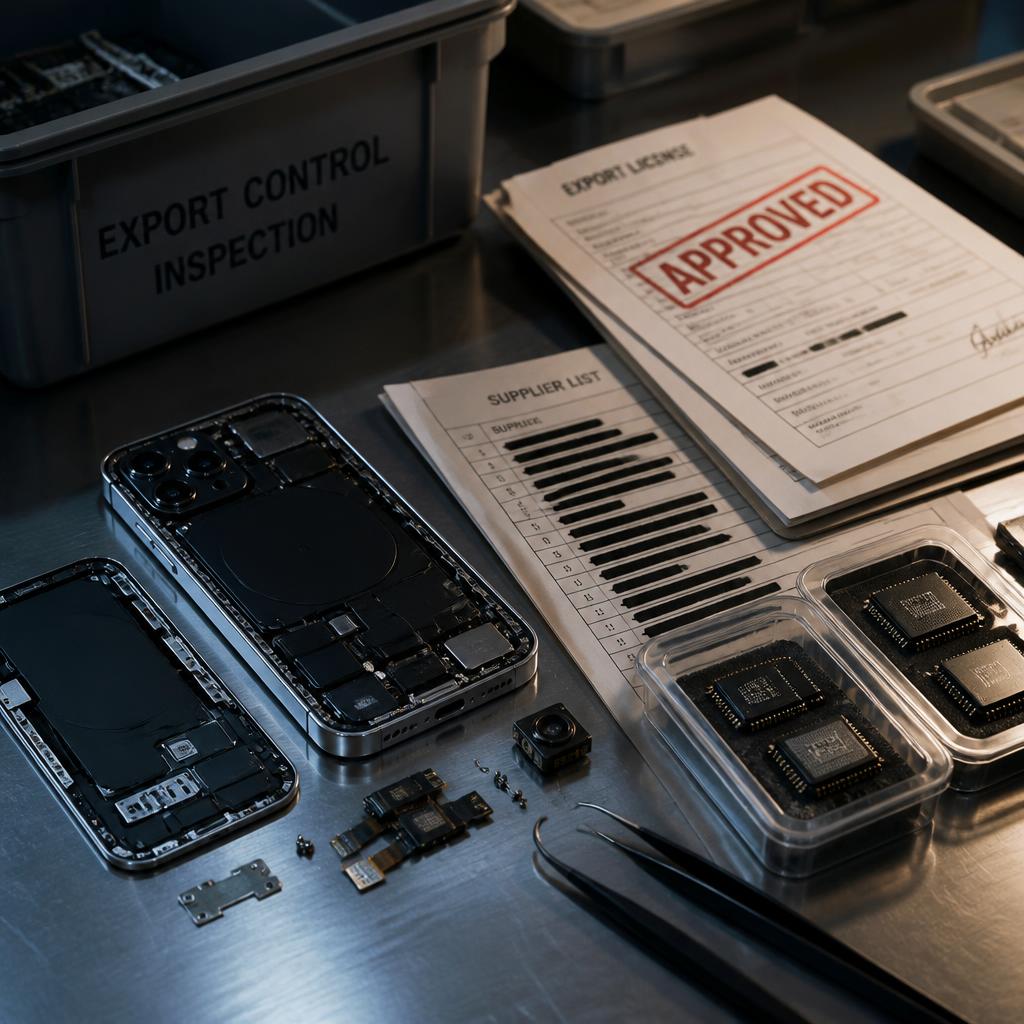
A blacklist is designed to sound like a door closing. Reuters, citing a Financial Times report, says Apple is seeking approval to buy chips from a blacklisted Chinese company. That is not a minor procurement footnote. It is the sanctions system showing its plumbing.
Export controls are sold as clean instruments: deny technology, constrain adversaries, protect national security. In practice they become a managed pressure field. The state draws a hard line. The company returns with contracts, engineering constraints, inventory risk, product calendars, and lawyers who know which line has a hinge.
The wall has a permitting office
This does not mean controls are useless. Friction matters. Delays matter. Compliance costs matter. A supplier that needs special approval is no longer just another vendor. It carries political risk into every purchase order, which is precisely the point. The problem is that deterrence depends on the appearance of seriousness, and exceptions teach every participant to search for the price of seriousness.
Apple is an especially awkward test case because it sits at the polite end of the hardware empire. It does not look like a defense contractor. It looks like glass, aluminum, retail choreography, and software updates. But its supply chain is strategic infrastructure with better packaging. If a component choice requires government dispensation, the consumer device has become a diplomatic object whether marketing wants that or not.
The reported request also shows why decoupling is rarely a verb with a clean object. A modern electronics chain is not a patriotic diagram. It is a memory of past investments, tooling, yields, relationships, regional specialization, and tolerated dependency. Policymakers can order separation. Factories answer in lead times.
The case-by-case model may be the least bad option. A total ban can damage domestic firms, encourage workarounds, or push production into darker channels. A waiver regime can preserve critical supply while keeping leverage over firms and suppliers. Fine. But it also creates a quiet market in exceptions, where the biggest companies are best equipped to argue that their dependency is special.
That is the small humiliation here. The blacklist remains, the approval process remains, the national-security language remains. Yet the system has to admit that a prohibition only becomes policy after procurement has tried to route around it. Strategy wanted a wall. The supply chain submitted a ticket.
How did this story land?
This may be changed as you like.