The Blockbuster Queue Is Part of the Show
AMC, Regal and Fandango customers encountered glitches and virtual queues while competing for scarce premium-format tickets to films including “Dune: Part Three” and “The Odyssey.”
Limited premium screens, unstable booking systems and resale markups can turn opening-night moviegoing into a costly contest determined by timing, technology and location.
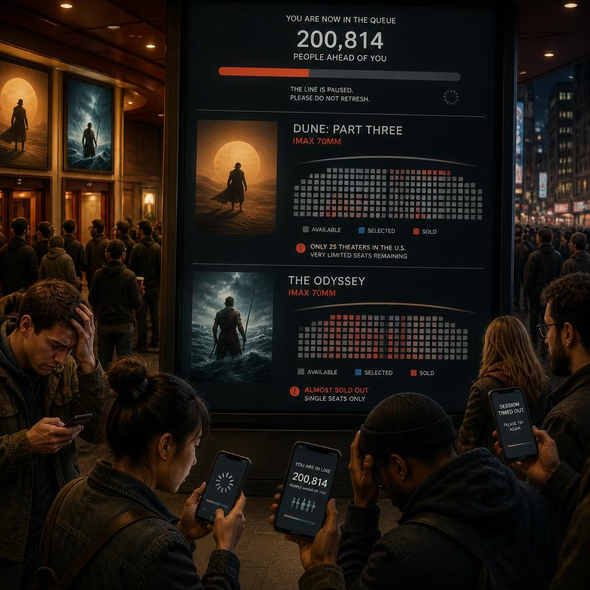
Theaters are selling cinema’s communal scale through rituals of exclusion: the frozen app, the rare screen, the approved seat. Strong demand is real, but the ordeal also teaches audiences that a movie matters most when access feels precarious.
Theater apps and websites buckled as customers tried to buy tickets for “Dune: Part Three,” renewing complaints that also followed sales for Christopher Nolan’s “The Odyssey” and Destin Daniel Cretton’s “Spider-Man: Brand New Day.” In Manhattan, some moviegoers lined up outside AMC Lincoln Square before its box office opened rather than trust the digital queue. AMC chief executive Adam Aron apologized and said traffic for the “Dune” sale reached about three times the volume seen for the latest “Spider-Man” release.
The fiercest demand has gathered around IMAX and, more narrowly, IMAX 70mm presentations. Only 25 theaters in the United States can show films in that format, according to WIRED. That makes the seat map more than a diagram of a room: it becomes a tiny national inventory, released all at once to people refreshing from different cities, devices and work schedules.
The resulting ritual resembles a major concert sale. Customers enter a virtual waiting room, watch desirable sections disappear and make hurried choices before the system times out. Resellers have reportedly offered tickets for hundreds of dollars, while committed viewers contemplate trips across state lines. The film may last three hours; the anxiety begins weeks earlier.
This is not entirely manufactured demand. Directors design certain spectacles for enormous screens, audiences can see a genuine difference, and theaters have reason to promote expensive formats after years of pressure on attendance. But scarcity becomes a marketing instrument when the industry presents one format, one weekend and one cluster of seats as the culturally complete experience. A technical limitation acquires the glow of a premiere.
The charged reversal is that cinema, the grand art of strangers sitting together in the dark, is now advertised through exclusion. Screen size, opening-night access and seat location form a visible hierarchy: not merely whether you saw the film, but whether you saw it correctly. The queue is therefore part malfunction, part velvet rope. Even an apology can reinforce the prestige of the crush by announcing how many other people wanted what you wanted.
AMC says it has approved $2 million in IT spending to address the failures, which may improve the transaction without enlarging the scarce formats underneath it. The more durable repair would pair reliable systems with clearer sale times, transparent queue rules and expanded premium capacity where demand supports it. Otherwise, theaters will keep asking audiences to prove their devotion before granting them the ordinary pleasure of buying two seats and going to a movie.
Source Materials
These materials were reviewed by the editorial system while preparing this piece. Muerte.casa may interpret, satirize, reframe, or disagree with them.
- Why Is It Absolute Hell to Buy a Movie Ticket Now? Wired · August 19, 2026 · Primary signal · Direct source
How did this story land?
This may be changed as you like.