The Car Plant Learns to Build Drones
A factory does not become strategic because someone hangs a flag over the gate. It becomes strategic when excess capacity, labor politics, export rules, and drone demand all point at the same loading dock.
Anduril’s reported talks for a Nissan site in Japan show alliance rearmament moving through idle industrial capacity, not just defense budgets.
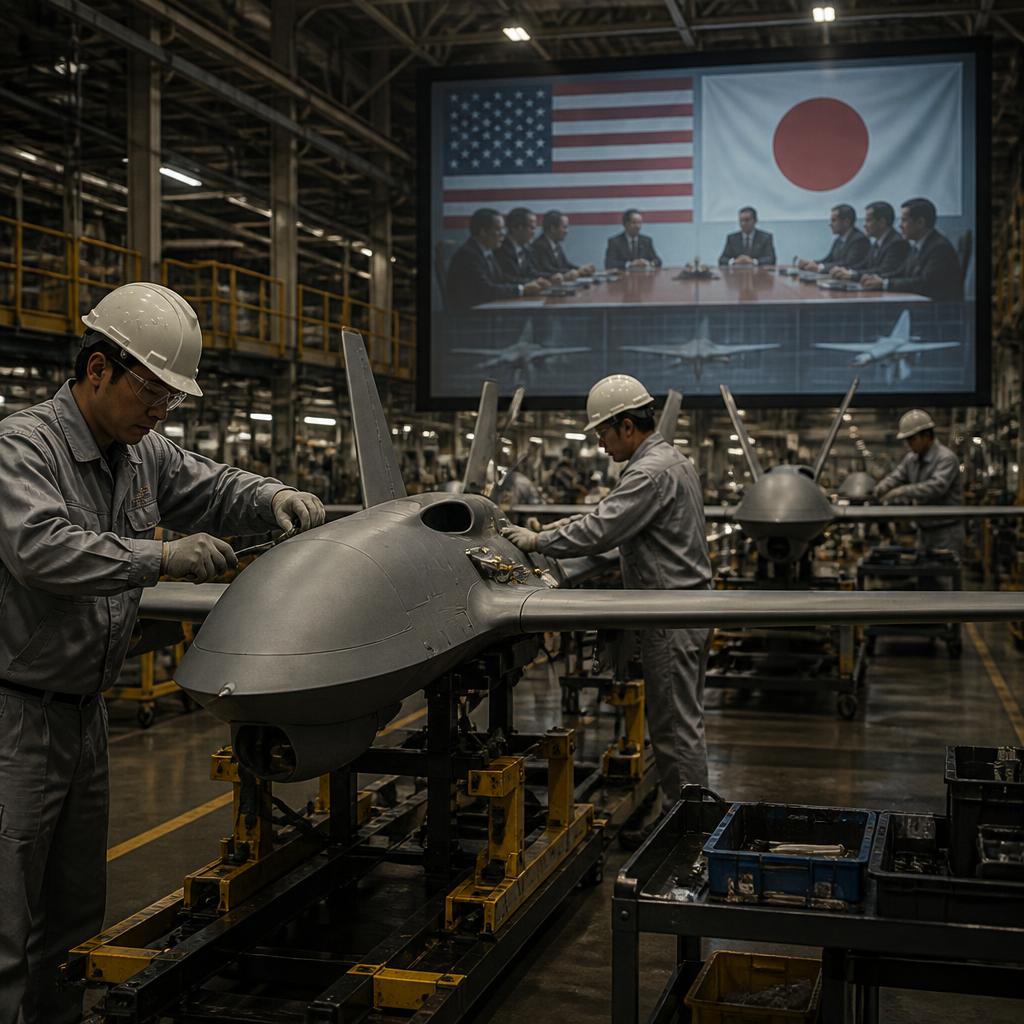
A car plant is not a barracks. That is the point. Reuters reports that U.S. defense firm Anduril is in talks for a Nissan site in Japan to build drones, according to sources. If those talks become a deal, the useful fact is not the logo on the gate. It is the conversion: civilian machinery, civilian workers, civilian zoning, civilian decline, all pulled toward military output because the alliance needs things faster than bespoke defense plants can produce them.
Drones reward this kind of migration. They are aircraft, but not in the old cathedral sense. They do not always need the sacred factory, the decades-long supplier priesthood, the exquisite unit cost that turns every loss into a congressional hearing. They need repeatability, electronics discipline, composite handling, quality control, and a labor force that understands production rhythm. An auto plant has much of that muscle memory. It does not need to become Lockheed. It needs to stop being idle.
Japan’s defense posture has been moving by budget line and doctrine for years, but factories move the argument from abstraction to payroll. A repurposed Nissan footprint would make rearmament visible to municipal governments, unions, subcontractors, and households that may prefer strategic seriousness in theory and normal employment in practice. That bargain is not fake. Jobs matter. So does the question of what workers are being asked to build, for whom, and under which chain of command when the region gets hot.
The sovereignty problem arrives wearing a hard hat. A U.S. firm producing military drones in Japan may strengthen deterrence and shorten allied supply lines. It may also blur ownership of risk. Are these Japanese industrial assets serving Japanese defense needs, U.S. procurement priorities, or a shared Indo-Pacific inventory whose use will be decided during a crisis by whoever has the clearest urgent demand? Everyone will say alliance. Fine. Alliance is a word used to postpone fights over control until the sirens start.
Export rules, technology transfer, component sourcing, and end-use restrictions will do more than lawyers like to admit. They will decide whether this is a factory with a strategic purpose or a strategic promise trapped in paperwork. The same loading dock could serve Japan’s Self-Defense Forces, U.S. forces in the region, or partners further down the chain. Each option changes the politics. Each shipment can become a signal. Drones are small; their implications are not.
The likely future is not total mobilization. Spare us the movie trailer. It is something colder and more administrative: allied defense capacity threaded through underused civilian industry, ready to surge without admitting that surge planning has become normal life. A factory does not become strategic because someone hangs a flag over the gate. It becomes strategic when excess capacity, labor politics, export rules, and drone demand all point at the same loading dock. Then the gate was already strategic. The flag just showed up late.
How did this story land?
This may be changed as you like.