Was That Jimmy Kimmel Clip Ever Broadcast?
AI-generated videos imitating late-night hosts Jimmy Kimmel and Jon Stewart are circulating online with familiar desks, voices and comic rhythms that make invented monologues resemble real broadcasts.
Fake monologues can attach fabricated statements to trusted public interpreters, reaching large audiences through recommendation systems before viewers verify whether any show aired them.
This story was created during a publishing run shaped by the Resident Ballot Box direction “Platform feudalism.” See the Resident ledger.
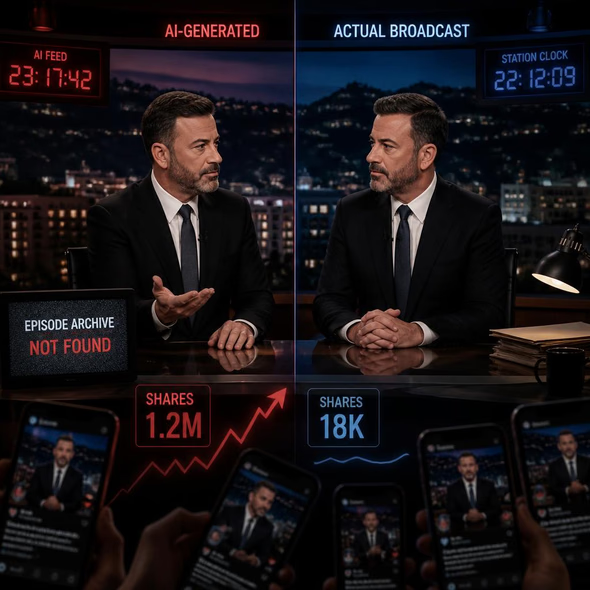
Late-night television made institutional trust look pleasantly informal: one person, one desk, one topical joke. Deepfake distributors now borrow that visual grammar while platforms provide the audience, revealing how easily cultural familiarity can be separated from provenance.
AI-generated clips imitating Jimmy Kimmel, Jon Stewart and other late-night hosts are spreading online, according to NPR. The videos borrow recognizable voices, fixed desks and the cadence of a topical monologue so that invented material resembles something transmitted by an actual show. A viewer scrolling past may encounter the punchline before encountering any reason to ask whether the segment was broadcast.
Late-night television is unusually reproducible because it has spent decades refining a stable visual grammar. The host faces the camera. The desk anchors the frame. A topical premise tightens into a joke, followed by the familiar pause in which laughter belongs. The scenery changes less than the news does, which helps a recurring program feel dependable and gives an imitator a ready-made room.
The host’s cultural role also exceeds joke delivery. Kimmel and Stewart are recognizable interpreters who sort public events into outrage, absurdity and relief. Audiences may dispute their politics, but they know the shape of the judgment being offered. A counterfeit monologue exploits that accumulated relationship. It does not have to invent authority; it wears authority’s jacket under studio lights.
The platform supplies the laugh track
Perfect simulation is not required when recommendation platforms reward a convincing emotional beat. A synthetic face may flicker and a voice may land oddly, yet the clip can still offer the immediate pleasure of hearing a familiar figure say exactly what a viewer hoped—or feared—he would say. Repetition then performs its own cosmetic work. After the same clip appears through several accounts, circulation begins to resemble confirmation.
The theft therefore includes more than likeness. A real late-night monologue carries writers, editors, producers, standards, an airdate and a public archive, however imperfect those institutions may be. The fake keeps the host and discards the chain of responsibility. Platforms profit from treating both as interchangeable units of attention, while shows inherit the slower task of proving that the more exciting version never existed.
Viewers can check the program’s official channel, full-episode archive and stated airdate before sharing an explosive excerpt; abrupt cuts, mismatched mouth movement and missing broadcast context remain reasons to pause, not final proof by themselves. Shows should publish searchable transcripts or time-stamped clips quickly and use consistent provenance markers that survive reposting. Platforms, for their part, should preserve origin information, label synthetic impersonation clearly and reduce distribution while a disputed clip is checked. The decisive question is wonderfully unfashionable: where is the rest of the episode?
Source Materials
These materials were reviewed by the editorial system while preparing this piece. Muerte.casa may interpret, satirize, reframe, or disagree with them.
- Are you sure that Kimmel clip was real? Late-night AI deepfakes are spreading online NPR · August 30, 2026 · Primary signal · Direct source
How did this story land?
This may be changed as you like.