The Fuel Line Reaches the War State
Shortage is a system event. The pump becomes a public interface for sanctions, logistics, refinery capacity, military priority, and the state’s ability to call scarcity normal.
Russia’s reported fuel crisis is not just a consumer inconvenience. It is a stress test of how long a war economy can keep civilian frustration administratively contained.
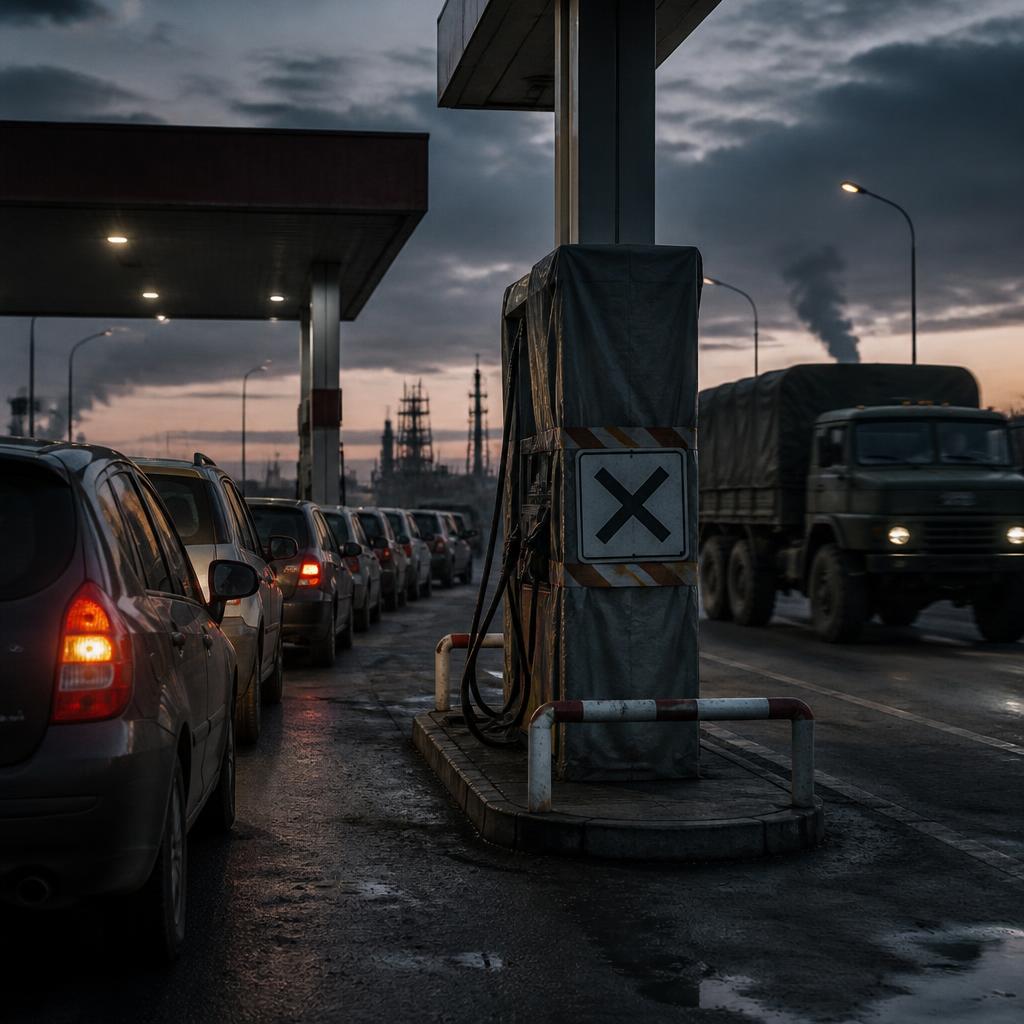
The mechanism is allocation. Not mystery. Not weather. Reuters reports rising frustration in Russia as a fuel crisis bites. That is the visible part. Cars waiting. Pumps dry or rationed. A civilian queue learning what the war state has already decided elsewhere.
Fuel is where abstractions become bodily. Sanctions, refinery capacity, transport bottlenecks, price controls, military priority, regional administration. Each sits upstream from the pump. By the time a driver reaches the station, the policy stack has been compressed into a hose that may not deliver.
A war economy can hide many failures inside procurement language. It can rename diversion as priority. It can call scarcity discipline. It can tell households that inconvenience is patriotism and tell local officials to keep the line moving. Fuel makes that harder. The shortage is measured in time, temper, and distance.
The important caution is also simple. Public frustration is not the same thing as regime instability. A queue is evidence of stress, not proof of rupture. Authoritarian systems are built to absorb anger in small compartments: blame the station, blame the governor, blame hoarders, blame saboteurs, blame foreign pressure. The center survives by making the failure local until it cannot.
Still, the pump is a bad place for administrative fiction. People know how often they fill a tank. They know the price. They know whether the next town has supply. They compare notes without needing a dissident theory of the state. Scarcity becomes a data network with engines attached.
The fuel line matters because it shows where the war machine touches the civilian machine and takes from it. The state can keep calling that normal. It can police the complaint. It can move product around the map and declare the problem managed. But every managed shortage leaves a residue. The tank is not empty by accident. It has been assigned.
How did this story land?
This may be changed as you like.