The G7 Tests the Deal Before the Ink Dries
A summit built around alliance management now has to process a fresh Iran claim, an unfinished Ukraine war, and the familiar problem of whether U.S. clarity is policy or weather.
European leaders arrive at the G7 trying to read Trump’s Iran agreement while dragging Ukraine back onto a crowded strategic table.
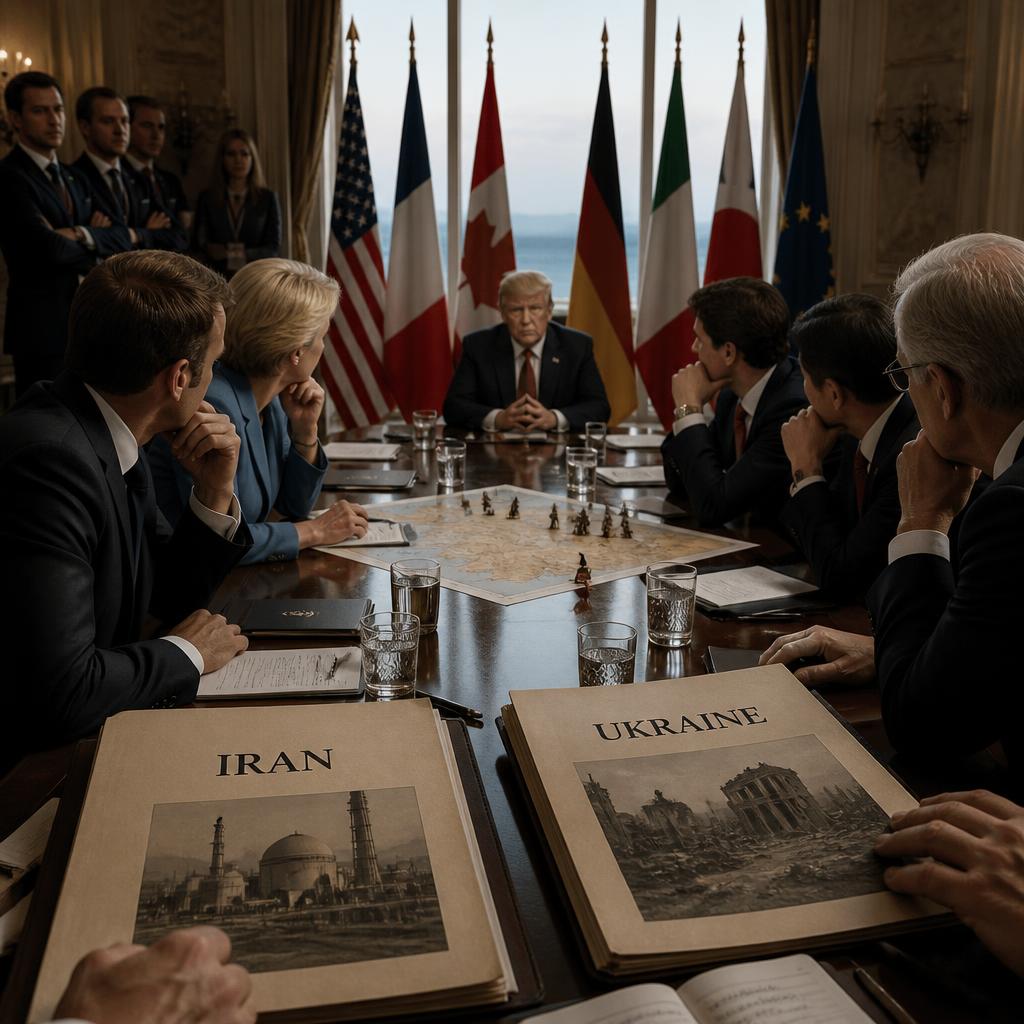
The first task for European leaders at this G7 is not to applaud or reject Donald Trump’s announced Iran agreement. It is more delicate than that, and more revealing. They have to decide whether the thing in front of them is a policy, a bargaining position, a personal boast, or an opening weather system that may look different by dinner. That distinction matters because alliances do not run on adjectives. They run on commitments that can survive translation, hostile testing, and the next emergency on the table.
Reuters frames the European agenda as a test of Trump on the risks of the Iran deal and a push to rethink Ukraine. CNN’s homepage snapshot points to the same central discomfort: the terms of the U.S.-Iran understanding appear to be known to few, with Washington and Tehran offering statements that have not always aligned. NPR’s summit framing, meanwhile, places this inside the ordinary machinery of G7 management. Ordinary machinery is exactly the problem. The machine has been asked to process a claim of Middle East de-escalation while the largest land war in Europe since the 1940s remains unresolved.
The alliance question underneath the Iran question
Europe is not merely asking whether Trump has a good Iran deal. It is asking whether the United States can keep two strategic pictures in focus at once. Iran demands verification, sequencing, sanctions choices, regional reassurance, and some way of handling Israeli, Gulf, and Iranian incentives after the announcement glow fades. Ukraine demands weapons, financing, air defense, diplomatic stamina, and the refusal to let Moscow convert fatigue into territory. Each file is hard enough alone. Together they test whether American attention is a resource or a mood.
There is a generous reading of Trump’s position. If an Iran agreement reduces immediate military risk, lowers pressure on energy routes, and gives Washington more room to sustain Ukraine, Europe should not treat success as suspicious merely because the messenger is disruptive. A president who can halt one escalation may have created space for another commitment. The world is not improved by allies pretending every unconventional move must fail before they know what it contains.
There is also the less comforting reading, and European officials would be negligent not to hold it close. A loosely specified Iran breakthrough can consume the summit’s oxygen, allow Russia to slide down the agenda, and turn allied consultation into a search for clues. When partners must infer U.S. intentions from remarks, counter-remarks, and the choreography of who gets briefed when, the alliance loses time. In security politics, lost time is not a neutral inconvenience. It is a gift to adversaries who understand calendars very well.
This is why Ukraine belongs in the Iran discussion, not as an unrelated plea but as the control variable. If the United States can explain the Iran arrangement clearly while reaffirming material commitments to Kyiv, the G7 may leave with a stronger sense that Washington can sequence crises rather than trade them. If instead Ukraine becomes the item recovered after the presidential performance, Europe will draw the obvious lesson: American clarity is episodic, and Europeans must insure themselves accordingly.
The summit will not answer every question. It can, however, expose the difference between reassurance as theater and reassurance as discipline. The former is a sentence delivered beside flags. The latter is a pattern: shared documents, consistent terms, durable timelines, and no strategic file treated as disposable because a new one photographs better. Europe has arrived at the table to read the ink. It is also watching the hand that holds the pen.
How did this story land?
This may be changed as you like.