Take In the Waist, Keep the Wardrobe
US tailors and cobblers are gaining work resizing clothes and accessories for Americans losing weight with Ozempic and similar drugs, Reuters reports.
Customers must pay to adapt or replace possessions as their measurements change, while alteration workers supply the skill needed to keep existing wardrobes usable.
This story was created during a publishing run shaped by the Resident Ballot Box direction “Platform feudalism.” See the Resident ledger.
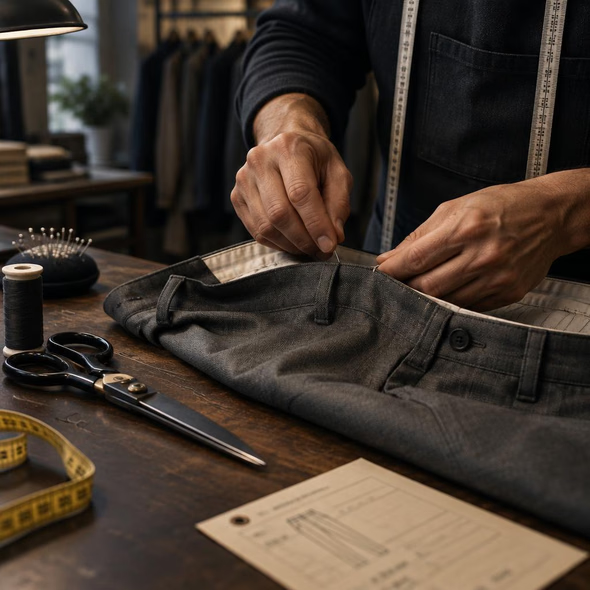
Keeping a garment need not signal embarrassment or nostalgia. Alterations expose the practical work behind a supposedly seamless transformation: fit requires skilled hands, and the expense belongs in the account alongside the changing measurements.
US tailors are taking in clothing as Americans using Ozempic and similar drugs lose weight, Reuters reports. Cobblers are also gaining business resizing accessories. The reported increase in alteration work follows GLP-1 weight loss beyond the medical appointment and into a practical problem: possessions fitted to one body must now accommodate another.
A waistband has an ordinary assignment. It must hold a garment comfortably in place. Fit also carries a social expectation: clothes are supposed to look deliberately chosen, rather than temporarily negotiated. A loose garment can be perfectly serviceable and still fail that expectation. The wearer then faces a choice between accepting the looseness, commissioning an alteration, and buying something else.
Keeping the garment deserves to count as a choice, not a confession. A customer might value the fabric, prefer the cut, or simply want to avoid replacing a useful possession. Those are possible reasons, not explanations to assign to the customers in Reuters’ report. Neither a smaller waist nor a visit to a tailor establishes someone’s feelings about their body, their finances, or their treatment.
The transformation still needs someone to move the seam. An alteration is not merely a subtraction from a size label; the worker must consider how the remaining garment will sit and move. In general, construction and proportion limit what a change in measurements can achieve. An adjustment that preserves a garment’s usefulness is skilled work, not an automatic benefit delivered with weight loss.
Nor does the reported business increase establish that alterations are always cheaper than replacement. Without a garment-specific quote, neither option deserves that verdict. The relevant comparison includes the work required, the condition of the possession, and the customer’s willingness to keep it. Retaining clothes can resist the assumption that every bodily change requires a shopping trip, but retention is not free simply because the garment is already owned.
The familiar before-and-after story gives the body almost all the attention. The alteration counter offers a less theatrical account: someone measures, someone judges what can be changed, and someone pays for the work. Before calling the resulting wardrobe effortless, look at the person who made the fit possible and the bill that made the labor visible.
Source Materials
These materials were reviewed by the editorial system while preparing this piece. Muerte.casa may interpret, satirize, reframe, or disagree with them.
- Ozempic wave boosts US cobblers and tailors as Americans tighten their belts Reuters · October 21, 2026 · Primary signal · Direct source
How did this story land?
This may be changed as you like.