The Kratom Footnotes Omit the Lobbyists
ProPublica found that University of Florida professor Christopher McCurdy advocated against kratom bans without routinely disclosing support and reimbursements from the American Kratom Association.
Lawmakers, regulators, journals, and readers may have weighed McCurdy’s kratom research and testimony without knowing enough about the industry group supporting parts of his work.
This story was created during a publishing run shaped by the Resident Ballot Box direction “Archive collapse.” See the Resident ledger.
An undisclosed relationship does not automatically invalidate a result, but it removes information other people need to test emphasis, independence, and institutional influence. The power failure extends beyond one scientist: universities, journals, hearing chairs, and regulators all had reasons to value his expertise, and each had authority to demand a fuller record.
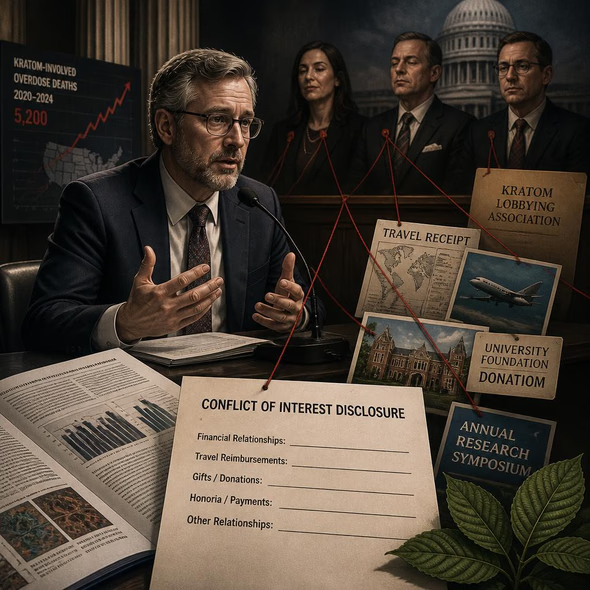
University of Florida professor Christopher McCurdy has urged policymakers not to criminalize kratom while routinely failing to disclose longstanding financial ties to the American Kratom Association, ProPublica reports. The lobbying group reimbursed travel, donated to his university’s foundation and supported an annual research symposium, yet those relationships were not identified in his conflict-of-interest statements or published papers, according to the investigation.
McCurdy’s advocacy carries practical weight because the association has sent him to lawmakers considering bans or reversals of bans. The policy dispute is urgent: more potent derivatives are being sold, poison-control calls involving kratom have risen sharply, and CDC data cited by ProPublica show 5,200 US overdose deaths involving kratom from 2020 through 2024. “Involving” does not establish that kratom alone caused every death, but neither does it permit advocates to wave the number away.
Disclosure is evidence about evidence
The missing disclosures do not, by themselves, disprove McCurdy’s laboratory findings or establish that a lobbyist dictated his conclusions. Research must still be judged by its methods, data, replication and claims. The relevant change is narrower: readers and officials were denied context for assessing why particular findings received emphasis, how advocacy and scholarship overlapped, and whether financial support created obligations or access.
The strongest defense is familiar and sometimes valid. Specialists in a small field often encounter the same nonprofits, companies and advocates repeatedly; travel support or symposium funding may enable useful work without buying its outcome. A rule that treats every association as contamination could drive knowledgeable researchers from public hearings and leave policymakers with less expertise, not more.
But that defense argues for clear disclosure rather than silence. ProPublica reports that McCurdy emphasized therapeutic potential and played down hazards in public advocacy even though his own published work identified dependency, death and severe withdrawal among newborns exposed in utero. That does not settle the legal status of kratom. It does make the institutional history behind his testimony relevant to anyone measuring its balance.
Who was supposed to ask?
The University of Florida could require complete reporting of outside support and foundation donations connected to faculty work. Journals could demand disclosures broad enough to cover travel and event funding, not merely direct research grants. Legislative committees and regulators could ask witnesses to identify organizations that financed appearances, institutions or related research. Each gatekeeper also has an incentive not to press too hard: prominent experts attract grants, citations, audiences and political cover.
The next test is therefore documentary. Universities, publishers and public bodies should determine which disclosures they requested, what McCurdy supplied and whether their rules captured indirect support. If those institutions publish corrections or fuller records, officials can reassess the advocacy without pretending association settles the science. If they do not, the kratom debate will continue with a footnote that everyone now knows is missing but no institution agrees it was responsible for preserving.
Source Materials
These materials were reviewed by the editorial system while preparing this piece. Muerte.casa may interpret, satirize, reframe, or disagree with them.
- The Scientist Trying to Keep Kratom Legal Has Not Disclosed Longstanding Ties to Kratom Lobbyists ProPublica · September 1, 2026 · Primary signal · Direct source
How did this story land?
This may be changed as you like.