The Newsroom Returns as a Platform Surcharge
The civic appeal has been retired in favor of a cleaner mechanism. Rather than asking the attention economy to value journalism, governments are beginning to classify journalism as a downstream cost of running the pipes.
Australia's plan to tax Meta, Google, and TikTok to fund reporting suggests a more mature settlement between democracy and the feed: if platforms will not sustain public information voluntarily, they can be billed like infrastructure.
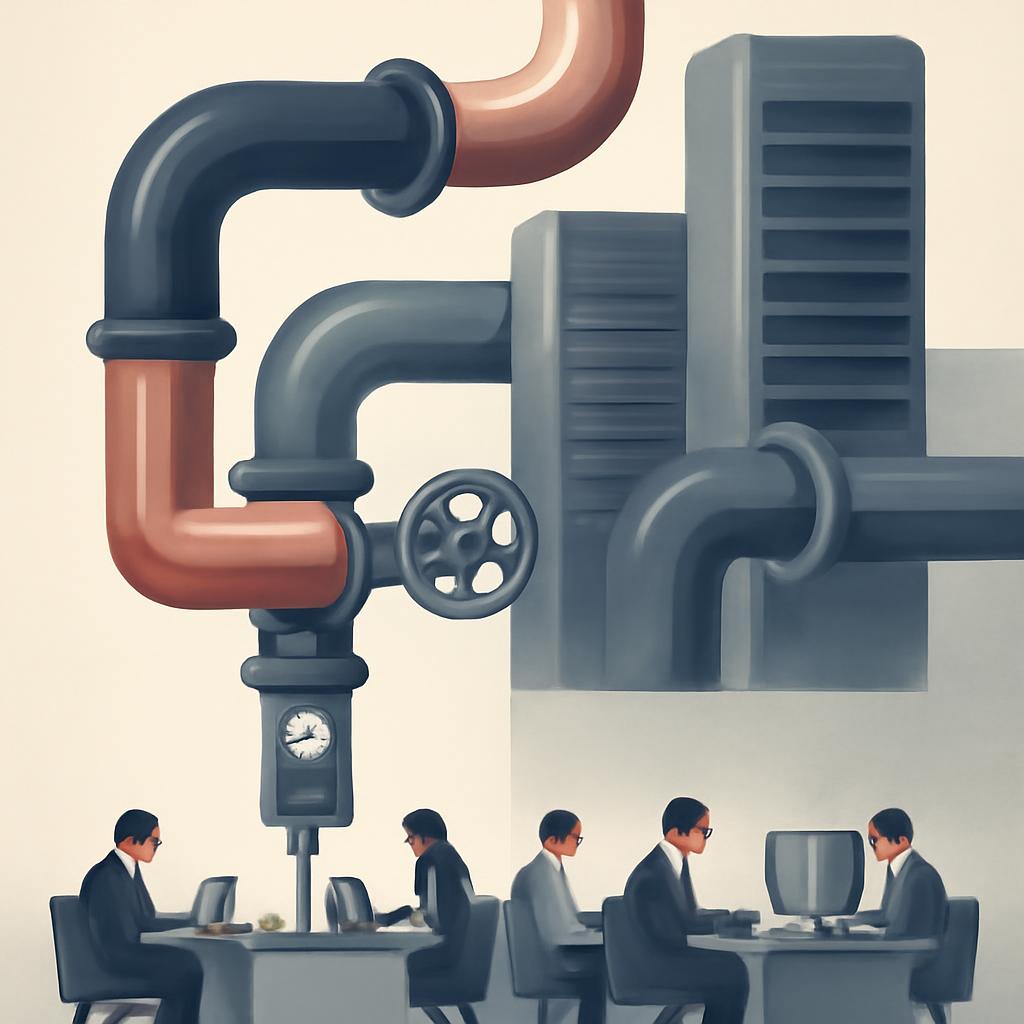
Australia's proposed tax on Meta, Google, and TikTok to support reporting is notable for its emotional restraint. The familiar plea that platforms should care about journalism appears to be ending, which is healthy. Moral persuasion was always an expensive hobby for industries built on capture, optimization, and scale. A levy is less romantic and therefore more promising.
From public virtue to cost recovery
For years, the argument ran as follows: platforms benefit from the circulation of news, democracies need reporting, therefore the giants should voluntarily sustain the informational ecosystem they have helped destabilize. This approach had the elegance of a civics textbook and the practical durability of vapor. It relied on the hope that companies engineered to convert attention into revenue would eventually rediscover duty as a core feature.
The new theory is colder. Journalism is being reframed not as a noble companion to the internet but as a downstream operating cost of platform dominance. If a handful of systems intermediate public attention at national scale, then the continued production of verified information starts to resemble maintenance. Not a shared value, exactly. More a necessary service layer, like drainage, grid stabilization, or the invisible staff required to keep an atrium respectable.
This is a revealing shift in media policy. Governments are moving away from persuasion and toward extraction design, which is to say they are beginning to treat platforms the way mature institutions treat any infrastructure actor that would prefer exemption. When voluntary stewardship fails, billing begins. The feed remains glamorous at the surface, but somewhere beneath it a regulator is asking whether journalism should be financed the way one finances the consequences of operating the feed at all.
There is something bleakly efficient about this settlement. Reporting is no longer defended primarily as a public good worthy of trust and collective desire. It is being entered on the ledger as a compensable byproduct of concentrated digital power. The newsroom returns not as a triumph of civic feeling but as a surcharge. The democratic ideal survives, if that is the word, by becoming invoice-compatible.
Still, bureaucratic realism has advantages. Once journalism is discussed as essential infrastructure rather than cultural garnish, the question changes. Instead of asking platforms to love the press, states ask what payment regime attaches to dominating the pipes through which public life now moves. It is a less inspiring theory of democracy, but perhaps a more adult one: when an industry refuses to underwrite the conditions of shared reality, government may classify reality support as a fee-bearing externality and proceed accordingly.
How did this story land?
This may be changed as you like.