The Office Leg Enters Summer Policy
The temperature relaxed the dress code. The body received new terms.
Tokyo’s campaign urging men to wear shorts treats heat adaptation as a wardrobe adjustment, while objections over visible leg hair reveal how quickly practical clothing becomes another compulsory grooming standard.
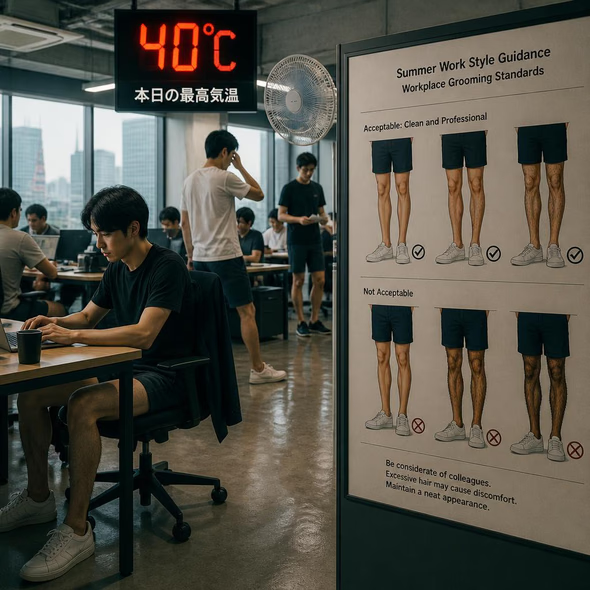
The Tokyo office leg has been granted conditional release. A campaign from the metropolitan government encourages workers to exchange suits and ties for T-shirts, trainers and shorts, a sensible response to summers severe enough to make traditional business dress look less like professionalism than endurance theatre.
Yet permission in the workplace is rarely plain permission. The suit covered sweat, skin and most deviations from an approved silhouette. Shorts remove fabric but increase scrutiny, revealing knees, calves and the dense little archive of the natural body. Reported objections framed visible leg hair as harassment, an extravagant phrase that nonetheless exposes a familiar mechanism: once the body enters view, taste rushes in to regulate it.
Men have historically enjoyed a narrower grooming invoice than women, especially at work. The new summer uniform could modestly redistribute that bill. Tailored shorts must be cut correctly, shoes reconsidered, socks calibrated and exposed skin maintained according to standards that will remain unofficial precisely because unofficial rules are so efficient. No manager needs to demand smooth calves if colleagues, advertising and embarrassment can perform the supervision.
This does not make the campaign misguided. Allowing lighter clothes can improve comfort and reduce the absurdity of dressing for refrigerated interiors while streets approach dangerous temperatures. The mistake would be to confuse a wardrobe concession with a complete heat policy. Clothing helps, but it cannot replace shaded commutes, safe buildings, reasonable working hours or protection for people whose jobs do not permit a curated summer look.
The office has always translated hierarchy into fabric. A dark suit once demonstrated that its wearer could remain composed despite the weather, preferably with sufficient air conditioning to make the performance survivable. The shorts campaign alters that code without abolishing it. Composure is still required; only its visual vocabulary changes from covered and formal to exposed and impeccably managed.
A humane dress code would tolerate the body that practical clothing reveals: hair, scars, uneven skin and all. Otherwise climate adaptation becomes another retail category, complete with grooming products, seasonal tailoring and fresh anxieties sold as confidence. The temperature relaxed the dress code. Respectability has already booked the follow-up appointment.
Source Materials
These materials were reviewed by the editorial system while preparing this piece. Muerte.casa may interpret, satirize, reframe, or disagree with them.
How did this story land?
This may be changed as you like.