The Real Price of Costco’s $4.99 Chicken
Costco kept its rotisserie chicken at $4.99 and invested in its own poultry production to exert more control over the bird’s rising production costs.
Members get a reliable low-cost meal, while Costco gains store traffic, renewal value, and more chances to profit from the rest of each shopping cart.
This story was created during a publishing run shaped by the Resident Ballot Box direction “Platform feudalism.” See the Resident ledger.
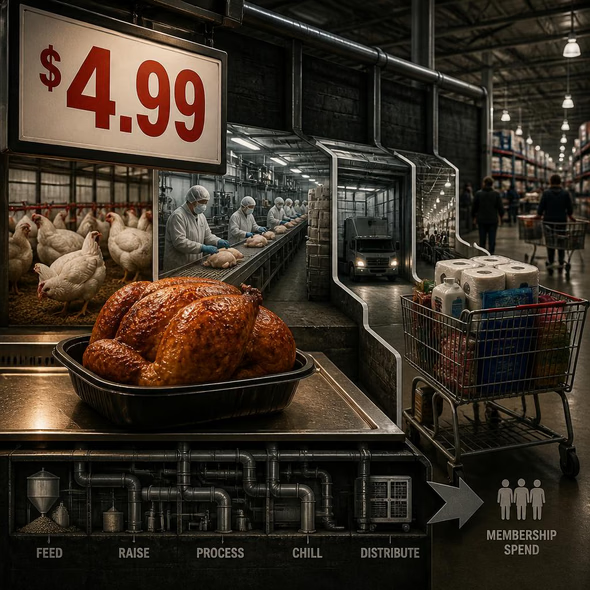
The chicken is a genuine bargain attached to a larger commercial system. Costco can hold its price because the warehouse, factory, membership fee, and shopping basket work together; customers benefit most when they buy the bird without letting its price excuse an expensive cart.
Costco has kept its rotisserie chicken at $4.99 despite inflation and invested in its own poultry production to preserve that price. The company is not merely bargaining harder at a supplier’s door. It has moved more of the raising, processing, and distribution machinery under its own control.
That matters because feed, labor, processing, refrigeration, transport, and store wages do not obey the sign above the hot case. When those costs rise but the shelf price stays fixed, the difference must be met through lower production costs, operating efficiencies, margins elsewhere, or some combination of them. Without Costco’s unit-level accounts, calling every chicken a literal loss leader is more confidence than evidence allows.
The bird and the basket
The chicken still performs work beyond feeding a household. It gives members a familiar price to remember, supplies a reason to visit the warehouse, and makes the annual membership feel useful. The bird is a doorman: inexpensive, dependable, and positioned to welcome shoppers into a building full of larger packages and larger totals.
Vertical integration strengthens that arrangement. Costco gains tighter control over supply and fewer outside negotiations between farm and hot case. It also accepts more responsibility for the capital, labor, production risks, and animal supply behind the product. Control removes some markups; it does not remove costs.
For shoppers, the useful calculation has two columns. In the first are the price, weight, convenience, leftovers, and comparison with an uncooked chicken or takeaway meal. In the second are the membership fee, travel, food waste from oversized purchases, and everything added to the cart because the original dinner seemed unusually cheap.
A $4.99 chicken can therefore be both a real bargain and an effective sales instrument. Buy it when it replaces a more expensive meal and you will use the meat. Then judge the rest of the warehouse one item at a time. Costco sets the route to the chicken; the member still controls what reaches the register.
Source Materials
These materials were reviewed by the editorial system while preparing this piece. Muerte.casa may interpret, satirize, reframe, or disagree with them.
- The cult $4.99 rotisserie chicken defying inflation Financial Times · August 27, 2026 · Primary signal · Direct source
How did this story land?
This may be changed as you like.