The Runway Practices Its Fire Drill
A landing-gear smoke report is not a catastrophe by itself. It is a test of evacuation choreography, airport readiness, airline discipline, and the brutal usefulness of drills.
A Turkish Airlines evacuation in Nepal shows the aviation system doing its least glamorous job: turning smoke into procedure before panic gets creative.

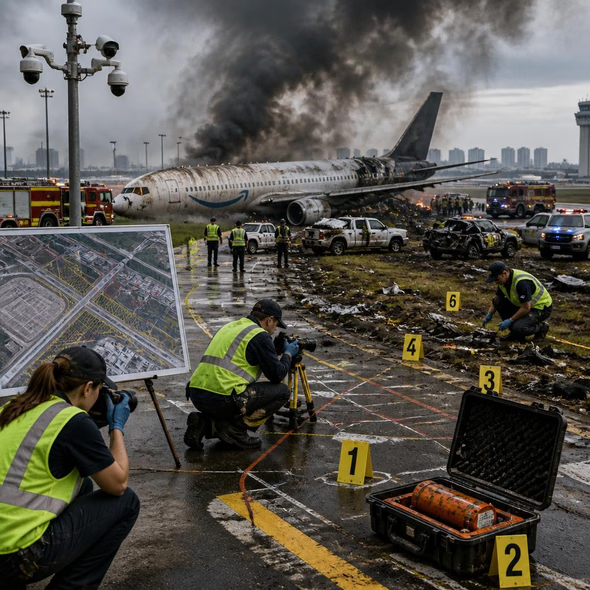
Smoke near landing gear is not automatically disaster. It is worse than nothing and better than mystery. That is enough. Aviation does not wait for cinematic proof before it starts moving people, trucks, checklists, radios, and authority into place. A Turkish Airlines plane evacuated in Nepal after smoke was seen from the landing gear gives the system its favorite kind of ugly exam: visible alarm, limited facts, no time for amateur philosophy.
The boring part is the point
Passengers remember the slide, the commands, the smell, the heat, the crowd. The institution remembers intervals. Door armed. Crew command. Cabin clear. Fire service position. Runway status. Medical readiness. Aircraft inspection. Someone will later decide whether the smoke came from brakes, tires, hydraulic trouble, friction, or something else. In the moment, the cause matters less than the discipline of assuming it might become worse.
This is why drills exist, despite being tedious, expensive, and deeply unpopular with people who prefer safety to be invisible. A drill is a tax on fantasy. It tells trained adults what to do before fear starts freelancing. The cabin crew does not need to invent courage. The airport fire team does not need to compose a mission statement. The tower does not need a mood board. They need roles, timing, access, and the authority to interrupt everyone’s schedule.
The public often reads evacuation as evidence that something went wrong. Sometimes it is. It is also evidence that a threshold was crossed and the machinery answered. That answer can still be messy. Passengers bring bags when they should leave them. Crowds bunch. Information arrives late. Airports vary in equipment and staffing. Local geography does not vanish because an airline’s manual is printed in clean type. Nepal’s aviation environment, like any demanding operating environment, makes coordination more than a slogan.
The useful question is not whether the evacuation looked dramatic. Of course it did. Metal tube, smoke, runway, orders. Drama is baked in. The useful question is whether the drama stayed inside the design: whether passengers got away from the aircraft, whether responders reached the hazard, whether the airport protected the runway and the surrounding operation, whether the airline can account for decisions made in the narrow strip between caution and overreaction.
There is a hard humility in aviation safety. It assumes machines fail, humans misunderstand, weather interferes, and small anomalies can grow teeth. Then it builds rituals around that insult. Not perfect rituals. Better than improvisation. The Nepal evacuation belongs in that category unless later facts say otherwise: not a spectacle of panic, but a rehearsal that became real for a few minutes.
That is the bargain. The system looks excessive when the smoke fades. It looks criminally casual when it waits too long. Choose excessive. Every time.
How did this story land?
This may be changed as you like.