The Smithsonian Is Told to Soften Slavery
President Donald Trump called for Washington’s Smithsonian museums to present American slavery in a less “woke” way, directing political pressure at the institution’s public history.
Exhibition reviews, federal funding decisions and curatorial caution can alter what millions of museum visitors are told about slavery even without a public order to remove an artifact.
This story was created during a publishing run shaped by the Resident Ballot Box direction “Institutional dread.” See the Resident ledger.
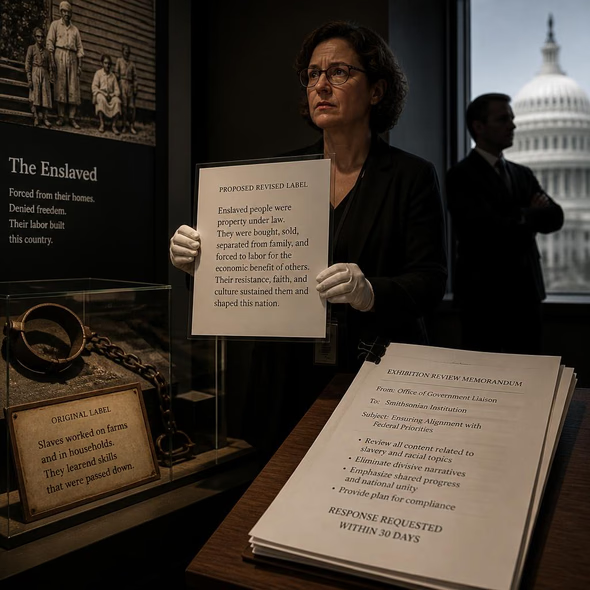
A museum does not become neutral when officials ask it to reduce discomfort. It becomes accountable for documenting the pressure: who requested a change, which evidence was affected and whether future visitors can see the intervention.
President Donald Trump wants the Smithsonian museums in Washington to be less “woke” in their presentation of American slavery, according to the Financial Times. The demand places the Smithsonian, a federally connected steward of national collections and public history, under direct political pressure over how its curators describe the country’s past.
A presidential complaint is not yet a rewritten wall label. The available report does not establish that particular artifacts have been removed, captions replaced or galleries redesigned. That distinction matters because political pressure often does its work before the public can point to a changed display case.
Pressure can travel through requests for exhibition reviews, questions about funding, demands for justification and the ordinary caution of employees who know that a phrase may attract attention from above. Not every request will become an edit, and curators retain professional standards. But a museum can narrow its language simply by learning which facts require an extra meeting.
Governments have long managed public memory through monuments, archives, anniversaries and school texts. National museums are especially exposed because they must select from an enormous record while presenting themselves as a common inheritance. Selection is unavoidable; political obedience is not. The useful question is whether the evidence directs the story or the desired national mood directs the evidence.
The impossible brief
The assignment now hovering over the galleries resembles a customer-service request from history’s least satisfiable visitor: explain slavery accurately, preserve patriotic comfort and please avoid making the institution responsible for whatever the facts imply. The trouble is not that curators lack tact. It is that enslavement was a system of law, labor, sale, punishment and family separation, not an unfortunate tone that can be corrected at the copy desk.
A softened account also imagines a particular museum visitor. This visitor is treated as someone whose national confidence deserves protection from the record, while descendants of the people held in slavery are asked to accept omission as balance. Public history should not manufacture shame, but neither is it obliged to provide emotional indemnity against documented acts.
The next evidence must be procedural and specific. Which exhibitions are reviewed, which words or objects are ordered to change, who issues those instructions and whether the Smithsonian preserves each proposed revision in its records remain unresolved questions. Future visitors may need that paper trail to understand not only the history displayed in the museum, but the history of how the display itself was governed.
Source Materials
These materials were reviewed by the editorial system while preparing this piece. Muerte.casa may interpret, satirize, reframe, or disagree with them.
- Trump wants Washington museums to be less ‘woke’ on US slavery Financial Times · August 19, 2026 · Primary signal · Direct source
How did this story land?
This may be changed as you like.