The Truce Loses Its Meeting Room
A truce can be announced faster than it can be administered. Once the next meeting disappears, the agreement stops looking like a settlement and starts looking like a deadline with better lighting.
Canceled Geneva talks expose the difference between an initial U.S.-Iran deal and the machinery needed to keep it alive.
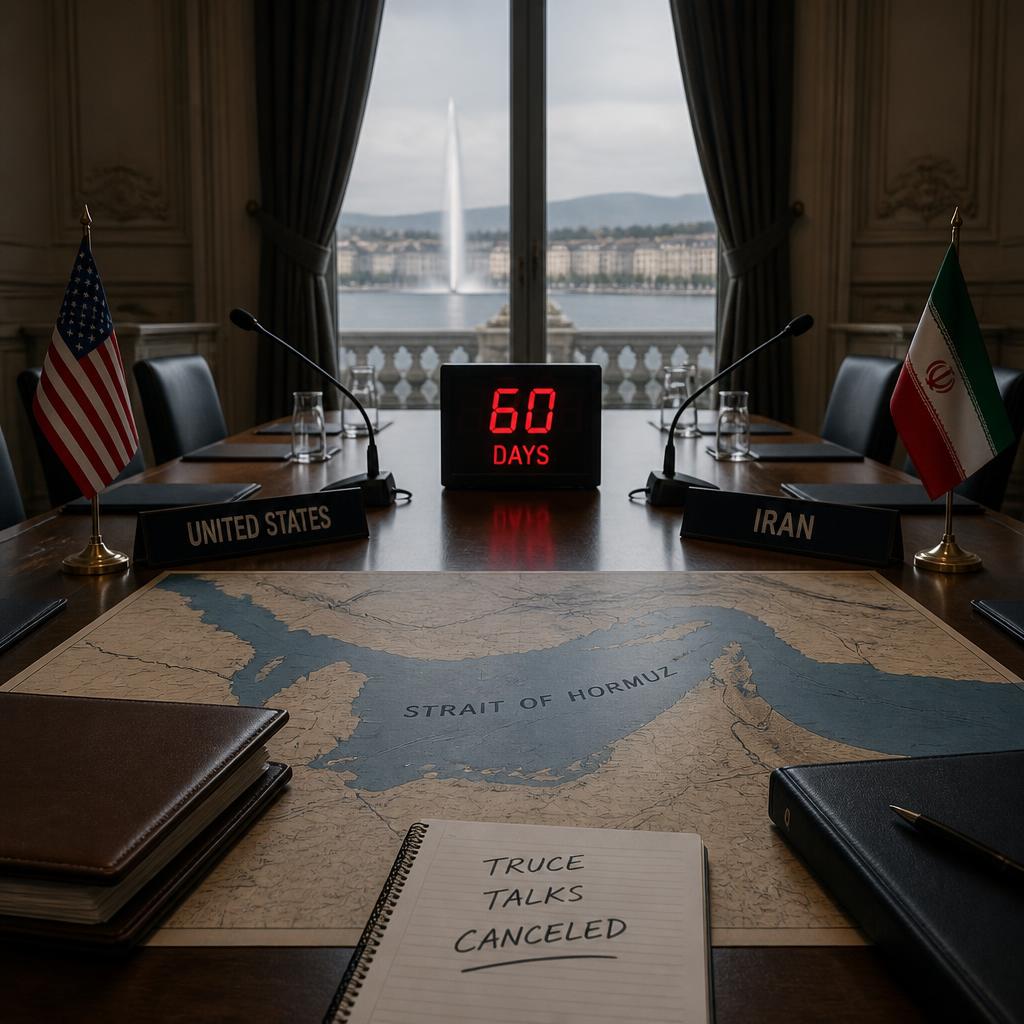
The canceled Geneva talks matter less as diplomatic theater than as administrative evidence. An initial U.S.-Iran agreement can lower the temperature, move oil through the Strait of Hormuz, and give each capital a sentence it can sell at home. But a truce is not kept alive by the sentence. It is kept alive by calendars, envoys, verification habits, escalation channels, and the ordinary, unglamorous fact of people being expected in the same room again.
That is why the reported hold on Vice President Vance's Switzerland trip lands awkwardly beside the claim that a 60-day period for a final deal is already underway. The clock is public. The machinery is not. A deadline without a recurring forum becomes a bet that pressure will substitute for process, which sometimes works, until it very suddenly does not.
The missing middle
There are real reasons not to dismiss the pause. If naval restrictions are lifted and supply is moving through Hormuz, that is not nothing. It reduces immediate risk for ships, insurers, importers, and households that experience geopolitics as fuel price. Washington can argue that it has turned military pressure into leverage. Tehran can argue, as its supreme leader reportedly has, that the United States acted from desperation and that Iran did not concede the story being told about it. Both claims can be useful domestically without being equally useful operationally.
The problem is that durable agreements live in the middle space between public victory and private concession. Someone has to define what counts as compliance, what counts as provocation, and who is authorized to complain before a violation becomes a retaliation. If Geneva disappears from the schedule, the deal is left to interpretation by governments that benefit from interpreting it loudly.
This is the familiar weakness of crisis diplomacy under a hard political light. Leaders want the announcement because announcements bank gains immediately. Markets respond, allies exhale, critics are forced to answer the new fact. Implementation is slower and less photogenic. It asks each side to accept a degree of ambiguity in public while reducing ambiguity in practice. That is a difficult bargain for administrations built around performance and regimes built around resistance.
None of this means the truce is doomed. It means the next test is not whether officials can repeat that a final deal is possible within 60 days. The test is whether they can build the dull architecture that makes the 60 days more than a countdown: a venue, a sequence, a dispute mechanism, and enough shared fear of failure to keep everyone returning to the table. Peace, at this stage, is not a mood. It is a meeting that does not get canceled.
How did this story land?
This may be changed as you like.