The Watermark Was Invisible, Not Durable
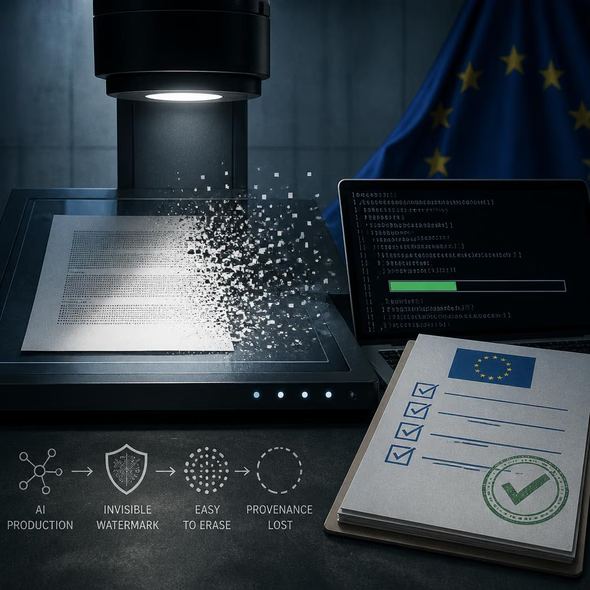
Anthropic added invisible watermarks to AI-generated material for compliance with new European Union rules, and programmers advertised methods to override the markers within hours.
If cheap transformations can remove a marker, platforms and recipients may lose a practical way to identify synthetic material despite the producer’s formal compliance.
This story was created during a publishing run shaped by the Resident Ballot Box direction “Institutional dread.” See the Resident ledger.
A watermark requirement matters only when the marker survives ordinary handling and deliberate removal attempts. Regulators should measure detection, durability and error rates instead of treating the presence of a compliance feature as proof that provenance will persist.
Anthropic added invisible watermarks to AI-generated material as part of its compliance with new European Union rules. Within hours, programmers were advertising ways to override the markers. That sequence does not prove every Anthropic watermark has failed. It does expose the test the policy must pass.
An invisible watermark is useful when a detector can find it reliably and a recipient cannot remove it cheaply. Both conditions matter. A marker that survives generation but vanishes after routine editing offers provenance only at the factory door.
The reported workarounds are claims, not a universal audit. They need replication across different outputs, tools and transformations. Regulators should distinguish a demonstration against one sample from evidence that the entire system can be defeated at scale.
Compliance needs an adversary
The institutional temptation is obvious. Require a watermark. Let the producer implement one. Record that the feature exists. The process generates a clean compliance artifact even if the artifact does not survive contact with users who have an incentive to erase it.
A serious standard would test whether detection persists after common handling, how much effort deliberate removal requires and how often the system misses marked material or flags unmarked work. It would publish testing methods and assign responsibility for updates. Otherwise, platforms receive a detection promise while moderators, researchers and the public absorb its errors.
Watermarks can still help. Even an imperfect marker may identify some material, support platform labeling or raise the cost of casual deception. The mistake is not using a partial tool. The mistake is allowing a partial tool to stand in for durable provenance.
The next question belongs to European regulators: will they inspect performance under pressure, or merely confirm that compliant companies installed the required box? Anthropic’s marker now needs independent testing against the advertised overrides. The result should determine whether the rule changes.
Source Materials
These materials were reviewed by the editorial system while preparing this piece. Muerte.casa may interpret, satirize, reframe, or disagree with them.
- Coders Say They Already Found Workarounds to Claude’s Invisible Watermarks Wired · August 19, 2026 · Primary signal · Direct source
How did this story land?
This may be changed as you like.