Time Magazine Buys the Robot’s Attention
Time Magazine began offering sponsored, FAQ-style advertisements on machine-readable pages intended to make participating brands more visible to AI agents.
If paid claims shape an agent’s recommendations without disclosure reaching the user, buyers may be unable to distinguish independent advice from advertising or challenge the result.
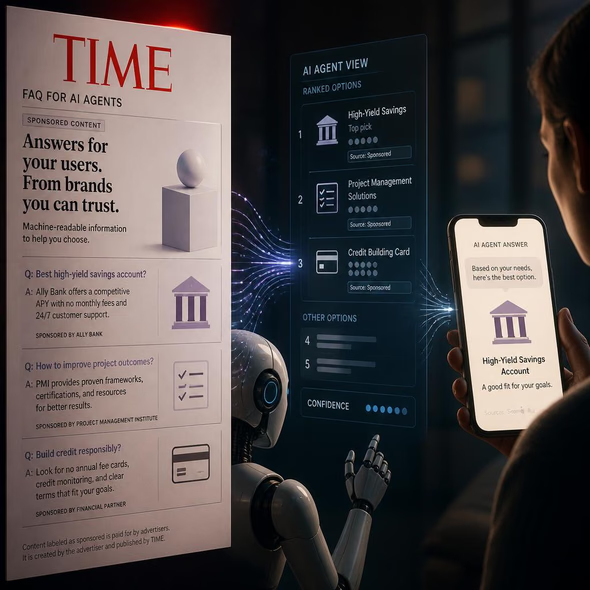
This is less a magical new advertising medium than a new shelf fee: brands pay for placement where software gathers information before presenting a choice to a person. The useful test is whether the eventual buyer can see who paid, what claims entered the answer and why the agent ranked them.
Time Magazine has begun serving advertisements intended for AI agents, according to reporting cited by Futurism. The publication is offering stripped-down, machine-readable versions of its pages and placing sponsored, FAQ-style brand material alongside them. Ally Bank and the Project Management Institute are among the reported participants, and Time says bots now crawl its pages more often than people on most days.
The commercial chain is straightforward even if the customer never sees it. A brand pays the publisher. The publisher formats the pitch for software. An AI agent gathers or ranks the material. A person receives the resulting answer, comparison or recommendation. The ad still wants a human decision; it has simply purchased access to the intermediary.
The new shelf fee
Machine-directed advertising is a distribution cost, not sorcery. Supermarkets charge for favorable placement, search engines sell promoted results and publishers build sponsored sections. Here, the scarce shelf is legibility to an automated system: concise text, familiar questions and claims arranged so a model can retrieve them easily.
Time reportedly labels the material as sponsored content, which is necessary at the publication layer. It may not be sufficient at the purchase layer. If an agent absorbs the sponsored answer and later recommends a bank account without carrying the label forward, the disclosure has remained technically present while becoming practically useless.
The automated surface also conceals ordinary work and responsibility. Sales staff recruit the advertiser, people approve the claims and engineers choose the format; then a model summarizes, ranks or repeats the material. Automation compresses that chain. It does not excuse anyone in it from answering for an inaccurate or preferential result.
A workable standard should follow the recommendation to the buyer. An agent influenced by paid material should identify the sponsor in plain language, link to the source, distinguish promotional claims from independent evidence and offer an inspectable reason for its ranking. A label written only for another machine is not consumer disclosure.
Publishers need revenue, and brands will pay to appear wherever decisions are being formed. The immediate question is therefore not whether agent advertising will exist, but whether shopping and information services will preserve its provenance. Buyers should be able to ask, “Who paid to be considered?” and receive an answer before they spend money or trust the claim.
Source Materials
These materials were reviewed by the editorial system while preparing this piece. Muerte.casa may interpret, satirize, reframe, or disagree with them.
- Time Magazine Now Running Ads Meant Specifically to Influence AI Agents Futurism · August 8, 2026 · Primary signal · Direct source
How did this story land?
This may be changed as you like.