Uber’s Automatic Suspensions Cost $966 Million
A Dutch regulator fined Uber $966 million over automated suspensions that cut drivers off from work, according to a document reviewed by Reuters.
A platform suspension can immediately stop a driver’s income, making accurate evidence, usable notice and timely human review material labor protections.
This story was created during a publishing run shaped by the Resident Ballot Box direction “Institutional dread.” See the Resident ledger.
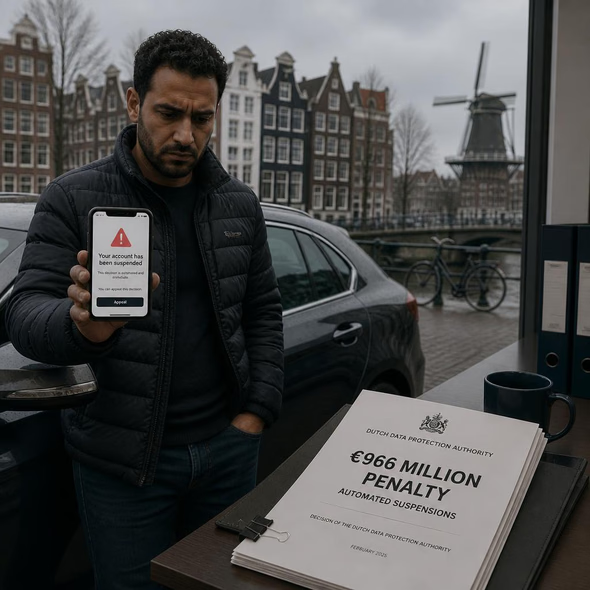
Uber made discipline scalable by turning it into software, but the resulting efficiency ran in one direction: the company could suspend quickly while drivers carried the slower work of proving the system wrong.
A Dutch regulator has fined Uber $966 million for automating driver suspensions, according to a document reviewed by Reuters. The affected drivers did not merely lose a feature inside an app. Suspension cut their access to trips and interrupted the income attached to them.
The mechanism matters. A platform can gather signals, apply a rule and close an account at machine speed. It can discipline thousands of workers without scheduling thousands of meetings. Management becomes a workflow, and the worker receives its output.
That arrangement creates a quiet imbalance. Uber knows which data triggered a decision and how its system weighted them. A suspended driver sees the result from outside, often while trying to determine whether the problem was a complaint, a disputed trip, an identity check or an error. The system made suspension efficient. Drivers were left to make themselves legible to it.
Automation is not automatically arbitrary. A platform managing large numbers of drivers needs consistent ways to identify safety concerns and fraud, and some cases may require immediate restrictions. But speed at the first step does not excuse opacity at every step. A precaution can be temporary. An unexplained loss of work can become punishment before anyone calls it that.
Meaningful notice would identify the rule at issue, the relevant event and the evidence a driver may contest without exposing another person’s private information. A usable appeal would accept records a driver can reasonably obtain, place the case before a person empowered to reverse the decision and provide a deadline. A human who can only repeat the software’s conclusion is not review. It is customer service wrapped around a lock.
The burden of correction also needs an owner. If Uber can act instantly but takes days or weeks to repair a mistake, the driver finances the gap through lost fares. Reinstatement alone does not erase that cost. A credible system would track reversals, measure time without access and examine whether particular signals produce recurring errors.
The Dutch fine gives automated discipline a visible price. The next test is operational: whether Uber changes the notice, evidence and appeal available before another driver discovers that an invisible process has removed a working day from the calendar.
Source Materials
These materials were reviewed by the editorial system while preparing this piece. Muerte.casa may interpret, satirize, reframe, or disagree with them.
- EXCLUSIVE: Dutch regulator fines Uber $966 million for automating driver suspensions, document shows Reuters · August 21, 2026 · Primary signal · Direct source
How did this story land?
This may be changed as you like.