Volkswagen Stakeholders Meet the Brake Pedal
The mechanism is the veto point. Labor, management, shareholders, and the state can all describe caution as responsibility while the market keeps changing outside the room.
Volkswagen’s stakeholder meeting is not just a corporate checkpoint. It is a test of whether the governance model that once steadied the company can still move it.
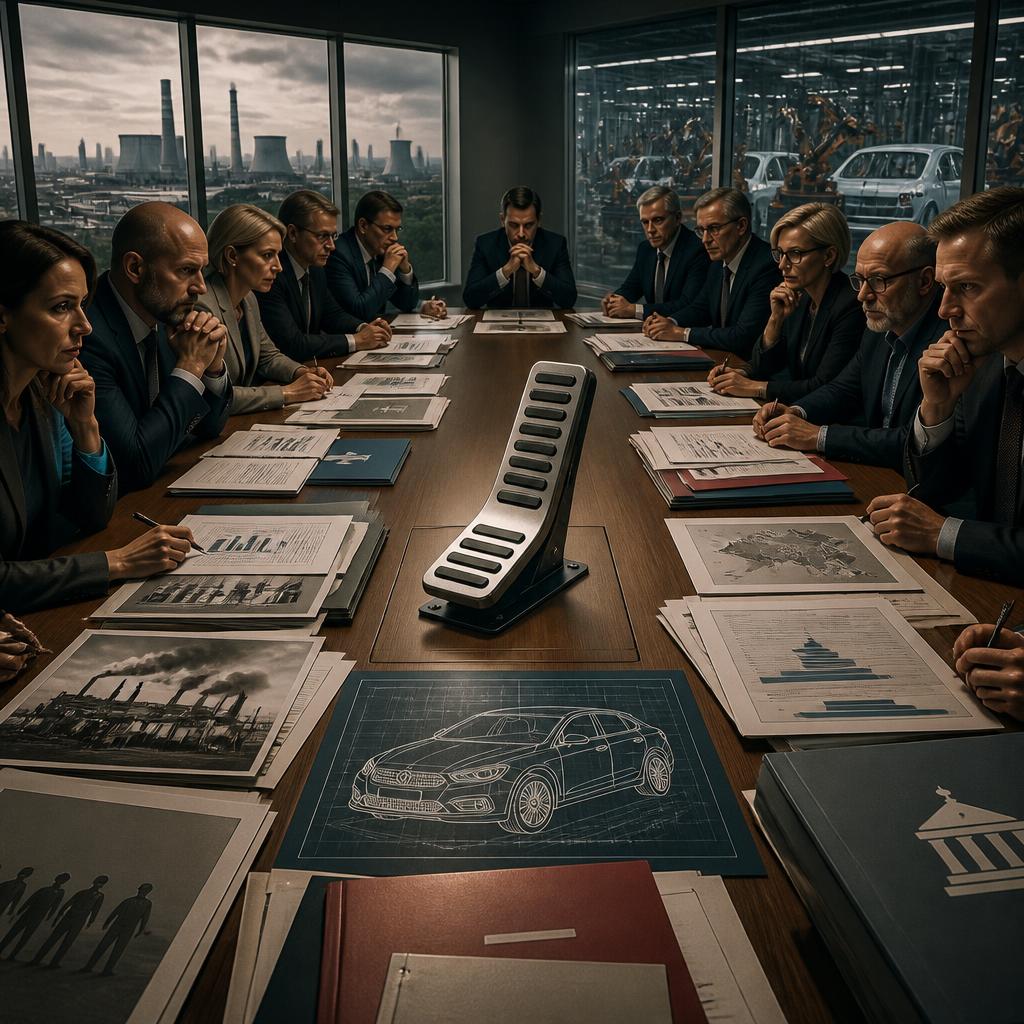
The mechanism is not the meeting. The mechanism is the veto point. Reuters reports Volkswagen stakeholders are gathering to decide the future of a creaking auto giant. That phrasing makes the session sound dramatic. The colder reading is procedural. A company built to absorb pressure now has to produce motion.
Volkswagen’s model has never been simple management command. Labor has weight. Shareholders have demands. The state of Lower Saxony has a seat in the structure. Suppliers, factories, towns, and political offices sit just outside the formal room. This can be called social partnership. It can also be called a machine that turns every hard choice into a jurisdictional dispute.
For a long time, that was the point. The model protected industrial continuity. It slowed vandalism by impatient capital. It kept skilled labor, regional employment, and engineering discipline inside the same frame. In the combustion era, steadiness could pass for strategy because the product cycle rewarded scale, reputation, and incremental improvement.
Electrification does not reward the same posture. Software failures do not wait for consensus. Chinese competitors do not pause while committees translate risk into acceptable language. Battery costs, factory utilization, tariffs, platform delays, and price pressure arrive as numbers first, then as personnel problems. By the time they become personnel problems, every constituency has a moral claim.
This is where institutional dread does its quiet work. Nobody has to oppose change. They only have to ask for timing, guarantees, review, burden-sharing, local protection, a second study, a third assurance. Each request is defensible. Together they become a brake pedal with many feet on it.
The answer is not to romanticize a chief executive with a clean knife. Fast decisions can be stupid. Cost cuts can strip out the capacity a transition needs. But governance that cannot choose among injuries does not avoid harm. It schedules harm badly. It lets the market make decisions the institution was too careful to own.
So the stakeholder meeting is a test of authority, not mood. If Volkswagen can use its dense structure to assign sacrifice, it still has a working model. If every actor protects the part of the system that makes them legitimate, the company will keep calling caution responsibility while the road moves underneath it.
How did this story land?
This may be changed as you like.