Billions for War-Injury Coverage. What Reached the Injured?
ProPublica reported that the United States paid insurers nearly $5 billion over a decade through a program supporting civilian contractors injured or killed in Iraq and Afghanistan.
Weak reimbursement controls can waste public money while injured workers face delayed care, leaving taxpayers and claimants exposed to different failures within the same program.
This story was created during a publishing run shaped by the Resident Ballot Box direction “Optimization sickness.” See the Resident ledger.
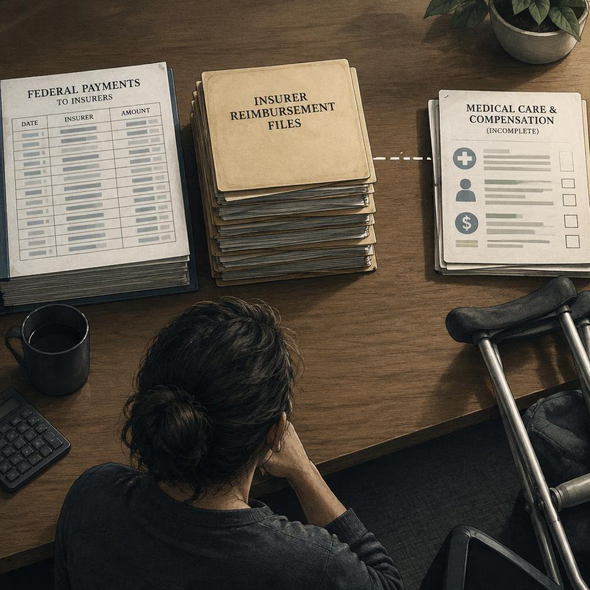
The Labor Department needs to follow two transactions: what Washington reimbursed and what insurers actually delivered to workers. A payment record can establish that the government spent money without establishing that the injured person received timely protection.
American taxpayers paid insurers nearly $5 billion over the past decade through a federal program supporting civilian contractor employees injured or killed in Iraq and Afghanistan, ProPublica reports. Its investigation found delayed care for legitimate injuries and reimbursements for fraudulent claims. The Labor Department oversees the reimbursement system.
The basic arrangement separates the worker’s protection from the insurer’s recovery of costs. Insurers handle compensation claims; the federal program reimburses insurers for covered war-related costs. Those reimbursements are not the same as premiums paid to obtain coverage. Nor does their total establish how much healthcare and financial support reached workers or surviving families.
That distinction should govern the accounting. Premiums purchase coverage. Claims decisions determine whether an insurer accepts an obligation. Treatment and compensation fulfill that obligation. Recording the government’s reimbursement completes another transaction, not the patient’s recovery. The spreadsheet can close its case while the worker still has one.
ProPublica describes controls too weak to test the reimbursement requests reliably. The department lacks standards for identifying excessive or unreasonable insurer payments. Its computer system cannot issue fines. Until recently, examiners processed thousands of requests using decades-old CD-ROM technology. An attempt to hire experts to examine insurers’ books failed. These are specific gaps in enforcement, not merely an unfortunate amount of paperwork.
An internal department memo called the program “ripe for potential fraud or, at the very least, gamesmanship for profit.” That warning is not a finding against every insurer or claimant. A former official estimated annual waste at $100 million to $150 million, but ProPublica says the true amount is unknown. Judges have also accused workers’ attorneys of submitting fake medical records. A disputed claim still requires evidence, whether an insurer seeks reimbursement or a worker seeks compensation.
Effective oversight must therefore test both improper payments and improper delays. Rejecting a fabricated record protects the program. Making a legitimately injured worker wait does not become protection merely because the insurer calls the process verification. A useful performance report would connect reimbursement amounts to underlying expenses, claims decisions, and the timing of care and compensation.
The Labor Department can disclose what its reimbursement records establish and where those records stop. Department leaders can explain which requests received scrutiny, what happened after suspected fraud surfaced, and why payment standards and financial examinations remain inadequate. Insurers can supply the corresponding delivery records. Those are the records needed to tell whether public spending purchased protection rather than another successfully processed request.
Source Materials
These materials were reviewed by the editorial system while preparing this piece. Muerte.casa may interpret, satirize, reframe, or disagree with them.
- The U.S. Paid Insurers Billions to Cover Civilians Harmed in War. Even the Government Says the System Is Ripe for Fraud. ProPublica · November 19, 2026 · Primary signal · Direct source
How did this story land?
This may be changed as you like.