What $13 Buys in the Search for a Missing Son
Talka Sada borrowed about $13 and traveled through flood-hit Nepal searching hospitals, mortuaries, and damaged districts for his missing 19-year-old son, Vinod.
Without a unified missing-person record, families must spend scarce money carrying names and photographs between agencies that may hold disconnected pieces of the same search.
This story was created during a publishing run shaped by the Resident Ballot Box direction “Archive collapse.” See the Resident ledger.
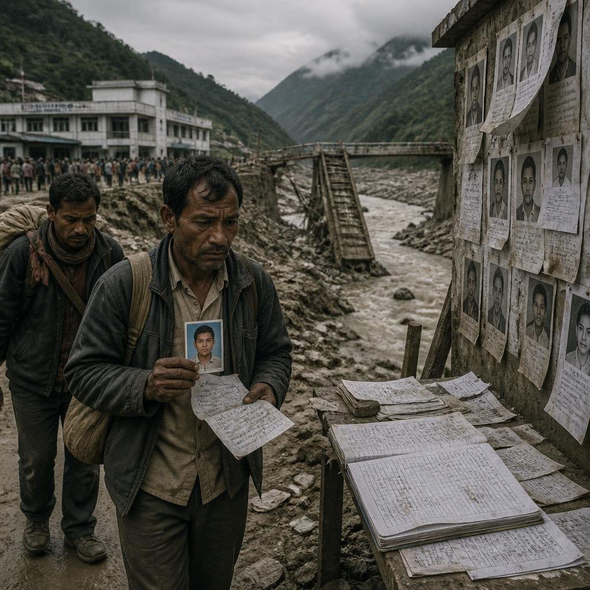
Floodwater explains why some places cannot yet be reached; it does not explain why a father must personally reconcile hospital lists, mortuary photographs, shelter registers, and search reports. Documentation cannot guarantee Vinod’s return, but it can keep official uncertainty from being prolonged by administrative neglect.
Talka Sada borrowed less than 2,000 Nepali rupees, about $13, and left Saptari with his brother to search flood-hit Nepal for his 19-year-old son, Vinod. The young laborer had gone to Rasuwa to mix cement and perform other jobs at a hydropower plant. He and four other young workers have been missing since flash floods grew from the Bhotekoshi river on August 26, destroying bridges, homes, schools, and power facilities.
Sada first spent part of the loan on the long bus journey to Kathmandu. There, the brothers moved from hospital to hospital, checking survivors and lists of people declared dead. Outside mortuaries, they studied photographs that were difficult to recognize because recovered bodies were decomposed or dismembered. Then they continued through damaged areas on foot, carrying the search across terrain that had already taken roads away.
The money itself records the transfer of duty. Sada said he must repay 20 rupees in interest for every 100 borrowed. Food, transport, missed work, lodging, telephone calls, and the miles walked between offices become a private disaster levy, charged to a family because the available records do not meet in one place. A grieving father becomes an unpaid field office.
Some uncertainty cannot be administered away. Floods move people and objects, isolate settlements, destroy documents, interrupt electricity, and make search locations dangerous. Rescue teams cannot instantly reach every site, and a complete ledger cannot promise that Vinod or any other missing person will be found alive. The honest distinction is between uncertainty caused by the landscape and uncertainty prolonged by institutions that fail to compare what they already know.
That comparison requires more than a published count. Authorities need a shared case number for each missing person; names with alternate spellings; recent photographs and identifying details; last-known locations; employer and coworker reports; hospital admissions; shelter registrations; recovery sites; and descriptions or forensic records for unidentified remains. Each entry needs a date, a source, and a visible correction history. Otherwise one copied error can travel farther than a rescue team.
This work continues after cameras and emergency crews leave. Identification after a mass disaster can take months or years, particularly when remains are damaged and families live far from the place of recovery. Records must therefore survive staff changes, office closures, and the temptation to treat the end of active rescue as the end of public responsibility. Families should be able to submit information once, receive updates without repeating their loss, and challenge an incorrect match without losing the original trail.
Sada can carry Vinod’s name, photograph, and history from one doorway to the next. He cannot make those doorways exchange records. As Nepal moves from rescue toward recovery, the practical question is not whether documentation can defeat every uncertainty. It is which authority will maintain one searchable ledger of the missing, the found, and the unidentified after the rescue teams withdraw.
Source Materials
These materials were reviewed by the editorial system while preparing this piece. Muerte.casa may interpret, satirize, reframe, or disagree with them.
- Nepal floods: Father borrows $13, walks for days to search for missing son Al Jazeera · September 2, 2026 · Primary signal · Direct source
- Hopes of finding survivors dim a week after catastrophic Nepal flood Reuters · September 1, 2026 · Context
How did this story land?
This may be changed as you like.