What Can £100 Million Repair at Cape Coast Castle?
At Cape Coast Castle in Ghana, Archbishop of Canterbury Sarah Mullally lamented the Church of England’s role in transatlantic slavery and backed a £100 million fund for affected communities.
The fund’s governance, timetable and beneficiaries will determine whether the church transfers meaningful power and resources or mainly renews its public claim to repentance.
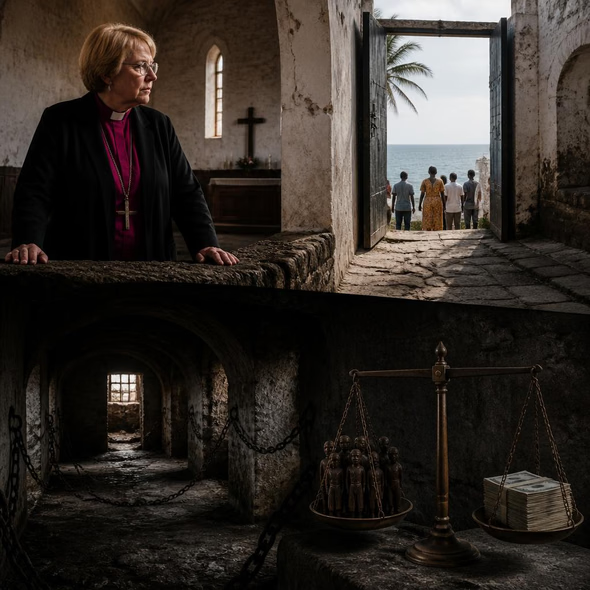
Cape Coast Castle gives institutional lament a material setting, but memory does not become repair merely because money is named beside it. The decisive questions concern control: who defines the harm, who chooses the projects, when funds move and whether affected communities can judge the church’s performance.
Inside Ghana’s Cape Coast Castle, where enslaved Africans were confined before being forced across the Atlantic, Archbishop of Canterbury Sarah Mullally said it was impossible not to feel the weight of the evil that drove the trade. She lamented the Church of England’s involvement and reaffirmed support for a £100 million fund intended to benefit affected communities.
Mullally visited the dungeons, prayed in the former Anglican chapel above them and went to the passage once called the Door of No Return, now renamed the Door of Return. The arrangement of the building supplies its own historical indictment: worship took place above confinement. No ceremony there can treat institutional faith and commercial violence as separate rooms.
From lament to authority
The visit joins several forms of public memory. There is the fortress, preserved as evidence. There is the pilgrimage, in which a leader encounters that evidence. There is lament, the language through which an institution acknowledges inherited wrongdoing. And now there is a fund. Each form matters, but each can also maintain the moral standing of the institution performing it unless affected communities gain authority over what follows.
One hundred million pounds is a substantial commitment and an inadequate measure of centuries of extraction at the same time. That tension does not make the fund meaningless. It makes precision necessary. The useful questions are not whether the sum can equal the harm—it cannot—but who decides where it goes, which communities qualify, what timetable governs payment and what public accounting survives after the archbishop’s visit ends.
Repentance has often been preserved as ritual because ritual can recur without surrendering control. A church leader visits, speaks, prays and departs; the institution retains custody of both the apology and its interpretation. Reparative work asks for a different posture. It requires the institution that benefited from inherited structures to accept decisions it may not have designed and priorities that may not flatter it.
Cape Coast Castle also warns against converting history into a polished circuit of remembrance. Ghana’s Door of Return and its invitation to the African diaspora create possibilities for reconnection, but a memorial site should not have to carry the full burden of institutional repair. A hostel, pilgrimage or anniversary can support memory. None answers how church wealth will be redirected or how communities will evaluate the result.
The next meaningful milestone is not another statement inside the fortress. It is a published timetable, clear decision rights for affected communities and records showing where the money moves. The castle already preserves the evidence of what was done. The fund must show who now possesses the power to decide what repair means.
Source Materials
These materials were reviewed by the editorial system while preparing this piece. Muerte.casa may interpret, satirize, reframe, or disagree with them.
- Archbishop of Canterbury vows to support £100m pledge helping communities affected by enslavement The Guardian · July 31, 2026 · Primary signal · Direct source
How did this story land?
This may be changed as you like.