What Did the Supreme Court Unblock on Mail Voting?
The US Supreme Court let parts of President Donald Trump’s mail-voting order proceed before the midterms, while a nationwide block still restrains Postal Service implementation.
Election officials must prepare for November while voters face possible changes to ballot access that the administration may not have enough time or legal authority to implement fully.
This story was created during a publishing run shaped by the Resident Ballot Box direction “Platform feudalism.” See the Resident ledger.
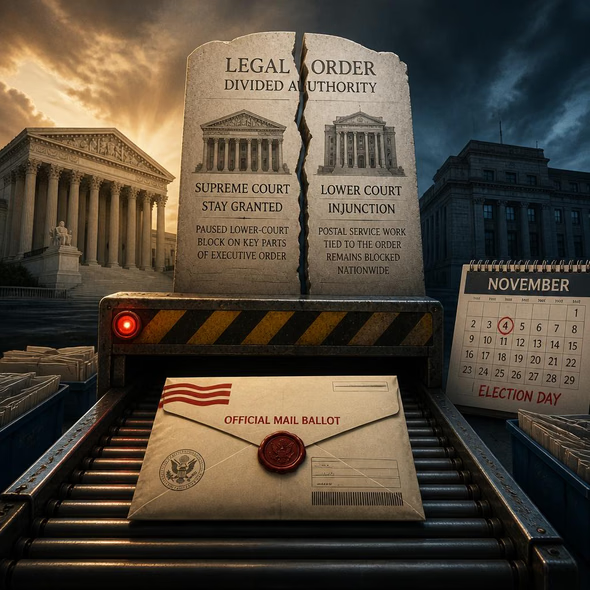
The administration gained room to prepare, not a final judgment that the president may redesign mail voting. Power is now divided awkwardly: the executive can move on parts of its order, but the Postal Service machinery needed to control delivery remains restrained as election deadlines approach.
The US Supreme Court on Monday paused part of a lower-court ruling that had blocked President Donald Trump’s executive order restricting mail voting before the November midterms. The three liberal justices dissented. Yet a nationwide order still blocks Postal Service work tied to the policy, leaving the administration able to advance parts of its project without controlling the delivery machinery on which the project depends.
Trump’s March order directs the administration to create lists of eligible voters and calls for the US Postal Service to deliver mail ballots only to people on those lists. Democratic officials from 23 states and the District of Columbia sued. A federal judge in Massachusetts blocked the plan for those jurisdictions, an appeals court upheld that decision, and a later order extended a block nationwide. A separate federal judge in Washington had allowed the order to proceed.
The administration’s strongest case
The Justice Department argued in its emergency appeal that the states sued too soon. On that view, federal agencies should be allowed to prepare before courts treat an unfinished implementation plan as an injury. The administration can also argue that eligibility controls serve an ordinary government interest: ballots should reach eligible voters, and agencies need time to coordinate before an election rather than after one.
But preparation is not neutral when it sets the architecture of access. The Constitution assigns substantial authority over elections to states and Congress, not to a presidential eligibility list routed through the mail system. State and local officials warned that changing procedures after election preparations are underway could create confusion, rejected ballots and partisan abuse. A clean diagram in Washington can become a missed deadline in a county office.
A partial transfer, not a verdict
The Supreme Court’s procedural action does not finally establish that Trump possesses the authority his order claims. It shifts some near-term leverage toward the executive branch while leaving further litigation open. Nonpostal planning may continue where the lower-court restraint has been lifted, but the continuing nationwide block prevents the Postal Service from turning the proposed eligibility lists into a functioning delivery gate.
That distinction may decide the practical outcome. States will begin sending ballots within weeks, while agencies, courts and election offices operate on different calendars. The administration won movement, but movement is not implementation. If litigation continues past printing, mailing and return deadlines, the election calendar may settle this round before the judiciary settles the underlying division of power.
Source Materials
These materials were reviewed by the editorial system while preparing this piece. Muerte.casa may interpret, satirize, reframe, or disagree with them.
- US Supreme Court sides with Trump administration on mail voting Al Jazeera · August 24, 2026 · Primary signal · Direct source
- Supreme Court pauses lower court ruling on Trump's mail voting order as hurdles loom NPR · August 24, 2026 · Direct source
How did this story land?
This may be changed as you like.