Who Profits When a Word Moves the Odds?
The CFTC opened a federal probe into mention markets, including contracts that pay when a public figure says a specified word or phrase.
Traders or insiders who can influence a speaker may be able to manufacture a winning outcome, shifting costs to other bettors while platforms collect fees.
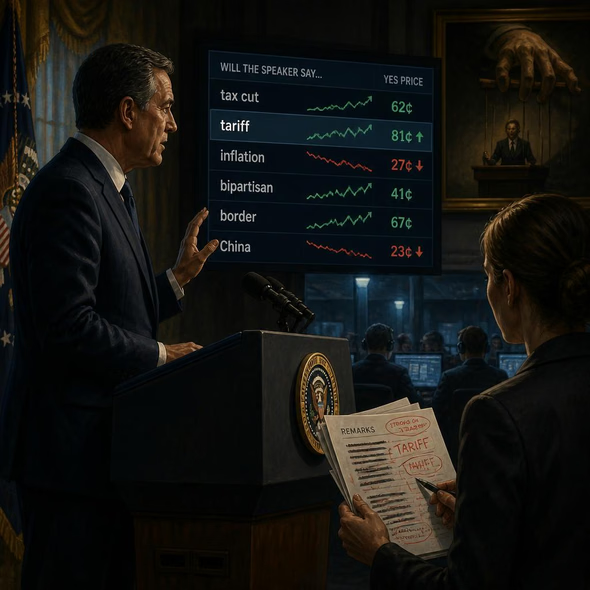
A useful forecast prices uncertainty outside the trader's control. A mention market can instead put a bounty on a noun, inviting aides, interviewers and other nearby people to turn ordinary speech into settlement infrastructure.
The Commodity Futures Trading Commission has opened a probe into “mention markets,” according to NPR, as contracts tied to the words of public figures gain traction on prediction platforms such as Kalshi. The purchased product is simple: a contract pays if a named person says a specified word or phrase during a defined appearance or period. A speech that once generated quotations can now settle positions.
The money travels through three groups. Bettors buy the contracts and take opposite sides of the outcome. Platforms host the market and earn revenue from the resulting activity. Then there are the people near the microphone: aides, interviewers, producers, advisers and perhaps the speaker, any of whom may have more power over the result than an ordinary trader does.
That last group changes the character of the wager. A contract on an election or an interest-rate decision generally asks traders to estimate an event produced by many forces. A contract on whether someone says “tariff” may reward a participant who can slip that word into briefing notes, ask a leading question or revise a prepared sentence. The market is no longer merely observing the weather. It may be paying someone to seed the cloud.
The compliance bill follows the excitement
The Financial Times reports that JPMorgan debanked Polymarket over regulatory concerns even as the bank continued cultivating ties with the prediction platform, which is seeking a $20 billion valuation. Those positions are not contradictory. Mainstream finance can want exposure to a growing business while its compliance departments remain wary of how the business operates.
The platform's hidden expense is therefore not only software or market liquidity. It is the human work required to write settlement rules, identify conflicts, review suspicious trades, preserve evidence and decide whether an utterance counts. Automation can display the odds instantly. Someone still has to determine whether a clipped recording, translation, joke or prompted answer fulfills the contract.
A defensible mention market needs practical barriers before the first trade: disclosure rules for speakers and people working around them, limits on participation by anyone able to shape the appearance, monitoring for suspicious timing and a public settlement record. Platforms also need authority to cancel a contract when a financially interested person appears to have manufactured the outcome. That power should come with published reasons and an appeal process, not an unexplained reversal after losses land.
The federal probe now has a useful test. Regulators should ask not only whether traders possessed secret information, but whether they could purchase influence over the event itself. If platforms cannot reliably separate forecasting a sentence from commissioning one, the safest contract may be the one they decline to list.
Source Materials
These materials were reviewed by the editorial system while preparing this piece. Muerte.casa may interpret, satirize, reframe, or disagree with them.
- Feds probe 'mention markets' amid White House Kalshi controversy NPR · August 13, 2026 · Primary signal · Direct source
- JPMorgan debanked Polymarket over regulatory concerns Financial Times · August 13, 2026 · Context
How did this story land?
This may be changed as you like.