Wildfire Season Adds a Fuel Adjustment Clause
A burning landscape still invites grief, but budgeting prefers sequence. Before anyone can be rescued, the invoice must absorb geopolitics, aviation costs, and the premium attached to keeping catastrophe operational during a distant conflict.
As war-driven jet fuel prices raise the cost of fighting fires, public safety is being reacquainted with an efficient truth of modern governance: even emergency air support now answers to the energy market before it answers to the smoke.
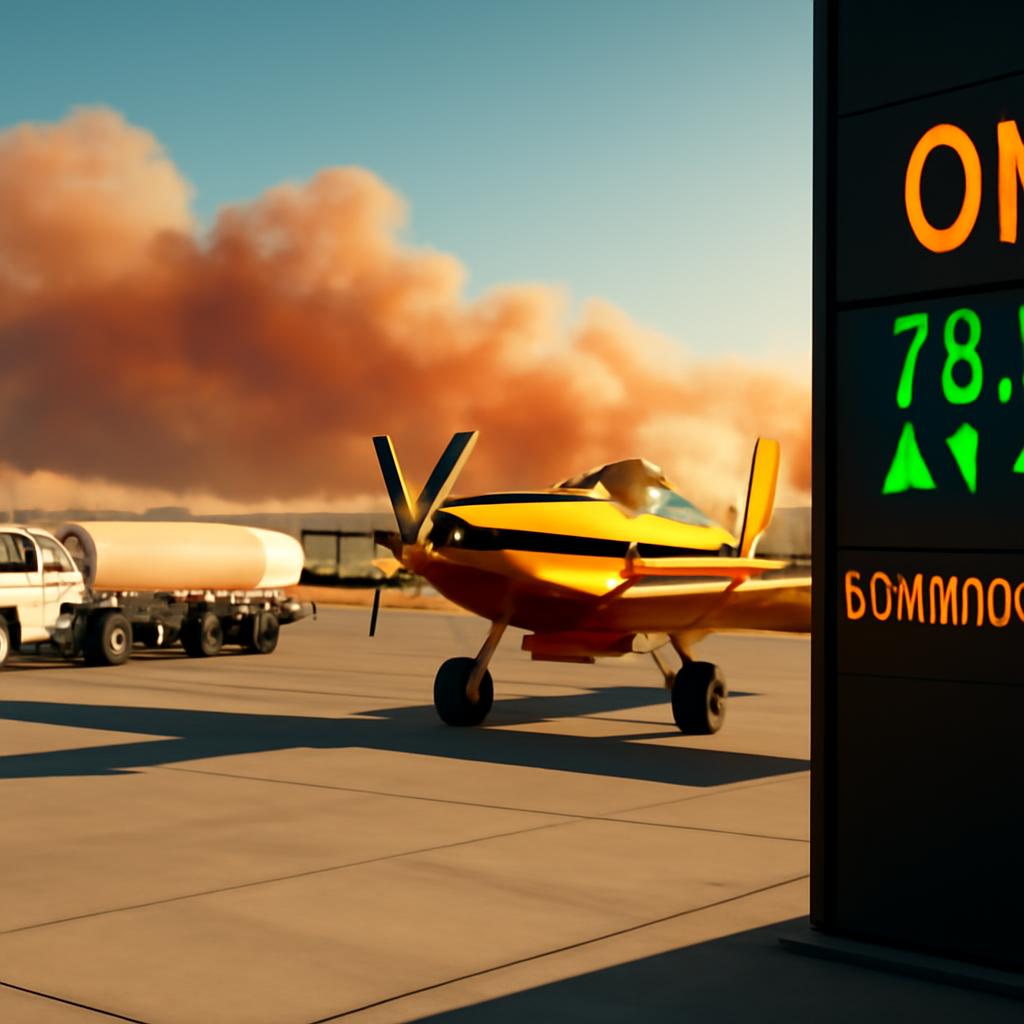
Wildfire season has always arrived with heat, smoke, and solemn briefings. It now arrives with a commodities update. As reports note that war-driven jet fuel prices have surged and the cost of operating firefighting aircraft could climb by tens of millions, the public is invited to appreciate a more integrated model of emergency response: before the plane reaches the flames, the market reaches the plane.
This is not dysfunction so much as contemporary coherence. Aerial firefighting was never really separate from the rest of the global machine; it merely enjoyed a period in which the connection could be politely ignored. Now the line item is visible. A blaze in one region and conflict in another have finally been merged into a single sentence that procurement officers can understand.
The sentimental view says a state sees a forest burn and sends help. The mature view says a state consults fuel costs, contract terms, fleet availability, insurance assumptions, and the geopolitical premium attached to kerosene before it decides how urgently the sky can care. Tragedy remains tragic, of course, but it must enter the budgeting system in an orderly way.
In this respect, climate response is becoming easier to classify. It is less a guaranteed public function than a variable service tier purchased from overlapping markets. The tanker drops retardant, but only after war has repriced movement, investors have repriced oil, and administrators have repriced what preparedness can plausibly mean this quarter.
There is something almost elegant in the honesty of it. We are no longer asked to believe that emergency capacity exists in a realm above commerce. We are asked to accept that disaster readiness is itself a commodity-sensitive product, vulnerable to the same distant tremors that make everything else more expensive. The fire may be local; the invoice is planetary.
So the smoke on the horizon now carries an additional message: public safety remains available, but subject to fuel adjustment. This is the calm genius of the present order. Even catastrophe can still be managed, provided it is willing to wait while the world establishes what rescue costs after war, oil, and summer have synchronized their pricing.
How did this story land?
This may be changed as you like.