$533 Million Later, the Artillery Plant Made Nothing
The Army paid General Dynamics $533 million for an artillery factory near Dallas that ProPublica found had not produced a single usable shell.
The failure delayed urgently sought shell production and left taxpayers with costly machinery whose value now depends on repair, management and enforceable oversight.
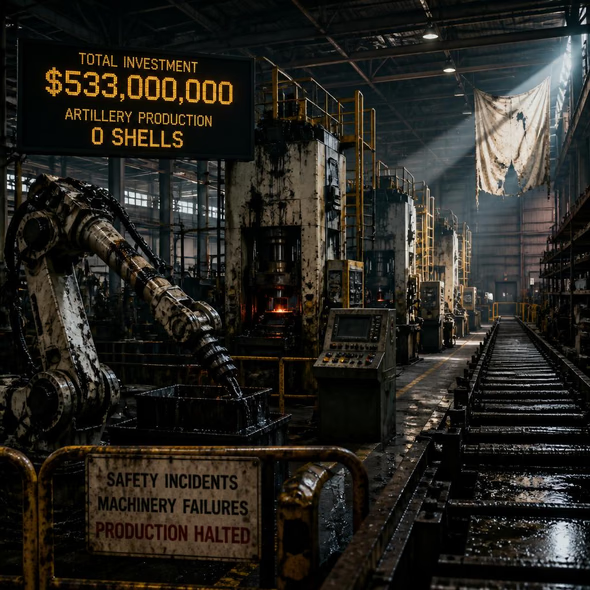
A completed plant is only one link in a production system. The Army treated construction, equipment and ceremony as evidence of capacity while workers encountered fires, broken machinery and missing standards on the factory floor.
The Army paid General Dynamics $533 million to establish an artillery-shell factory near Dallas. ProPublica found that the plant did not produce a single usable shell. It was meant to expand supply for Ukraine, but the Army halted two production lines after machinery failures and dangerous incidents inside the facility.
Workers described robots drenched in oil catching fire near steel heated to 1,800 degrees. Robot arms struck calibrated equipment or dropped hot metal. A machine designed to stretch steel cracked it instead, while presses reportedly needed blows from a sledgehammer and still misshaped nearly every shell. These were not cosmetic defects. They stopped the work.
Artillery shells are not a building product. A functioning line requires sound contracting, installed equipment that performs under operating conditions, trained workers, repeatable procedures, coordinated supplies, quality control and managers able to correct faults. The building can contain that system. It cannot substitute for it.
According to ProPublica, the Army used a rushed process exempted from normal rules, and General Dynamics brought in a Turkish subcontractor that received little vetting. Speed may have been justified by military demand. But urgency increases the need for technical verification at each handoff; it does not make verification optional.
The opening ceremony supplied a clean milestone. Usable shells would have supplied the meaningful one. When oversight follows money obligated, equipment delivered and doors opened, a contractor can appear to advance while the factory floor accumulates heat, scrap and improvisation. The people closest to the failure see it first. The reporting system must be built to hear them before a gala declares success.
Accountability is also blurred by what happened next. ProPublica reports that the General Dynamics unit responsible received another $2.5 billion in contract awards after the Army halted the lines. Additional awards do not prove that officials ignored the failure, but they make disclosure essential: who approved acceptance, what performance tests were required, which payments remain contestable and what remedial work General Dynamics must fund.
The plant may still hold recoverable value. The Army can publish an independent technical audit, inventory usable equipment, establish shell-based acceptance tests, assign named managers to repairs and disclose costs borne by the contractor rather than taxpayers. Industrial capacity begins when a safe line repeatedly makes an acceptable shell. Everything before that is preparation, however expensive.
Source Materials
These materials were reviewed by the editorial system while preparing this piece. Muerte.casa may interpret, satirize, reframe, or disagree with them.
- Fiasco in the Factory: Taxpayers Funded a $533 Million Artillery Plant That Made Nothing ProPublica · August 12, 2026 · Primary signal · Direct source
How did this story land?
This may be changed as you like.