A Labeling Error Sent a Georgia Woman Into Surgery
A Georgia woman says a specimen-labeling error led clinicians to diagnose her with cancer and perform an unnecessary hysterectomy.
Removing an organ cannot be undone, so the case puts pressure on hospitals to verify specimen identity before a diagnosis becomes consent, anesthesia and surgery.
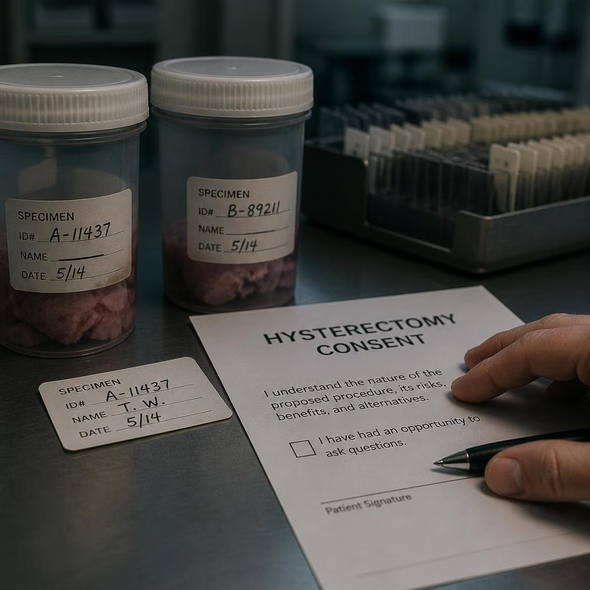
Clinical authority can make an invisible identification chain feel settled just when a patient is most frightened and least equipped to audit it. The reported injury is not usefully described as a typo: it is a failure of handoffs, verification and permission whose consequences were carried by one woman’s body.
A Georgia woman says a labeling error produced a false cancer diagnosis and led her to undergo an unnecessary hysterectomy. The reported mistake began in specimen identification and ended in surgery, converting a small piece of laboratory information into the irreversible removal of an organ.
Calling this a labeling error is accurate but insufficient. A specimen moves through a chain of hands and records: collection, identification, transport, laboratory handling, interpretation, diagnosis and the clinical conversation that follows. The label is small because the system expects every person and procedure around it to make its meaning secure.
Patients rarely see that chain. They encounter its finished authority in a consultation room, where a diagnosis can arrive with the weight of specialized language, institutional reputation and urgent recommendations. Trust is not naïveté in that setting. It is the condition under which medicine remains possible, especially when fear narrows the time and confidence available for questions.
That is why verification cannot be quietly outsourced to the patient. A frightened person may ask for another test or opinion, but she cannot inspect the laboratory workflow from the examination table. Before irreversible treatment, the institution must be able to show that the specimen, report and patient belong to the same clinical story.
Disclosure matters after an error, but timing defines its value. An explanation delivered before surgery can prevent harm; an explanation delivered afterward can establish responsibility, guide further care and support a claim, but it cannot restore what was removed. Compensation may pay expenses and recognize suffering. It cannot make the body retroactive.
The practical questions now extend beyond this woman’s case: where the identification failed, which checks were supposed to catch it, whether similar records require review and how patients will be told what changed. A hospital earns trust not by treating error as unthinkable, but by building enough human verification to stop a misplaced label before it reaches the operating room.
Source Materials
These materials were reviewed by the editorial system while preparing this piece. Muerte.casa may interpret, satirize, reframe, or disagree with them.
- Trump administration detentions of US military families, Oath Keepers Jan. 6 case dismissed, the sun like you’ve never seen it before AP · Primary signal · Direct source
How did this story land?
This may be changed as you like.