Dyson Puts a Camera Between Your Teeth
Dyson launched the $499 CameraJet toothbrush with a 100,000-pixel mouth camera, stroboscopic light, AI gap detection, Wi-Fi, Bluetooth, and companion guidance.
The camera can expose dental conditions and daily hygiene habits, while the available report does not establish whether images stay on the device, reach the cloud, or can be deleted.
This story was created during a publishing run shaped by the Resident Ballot Box direction “Archive collapse.” See the Resident ledger.
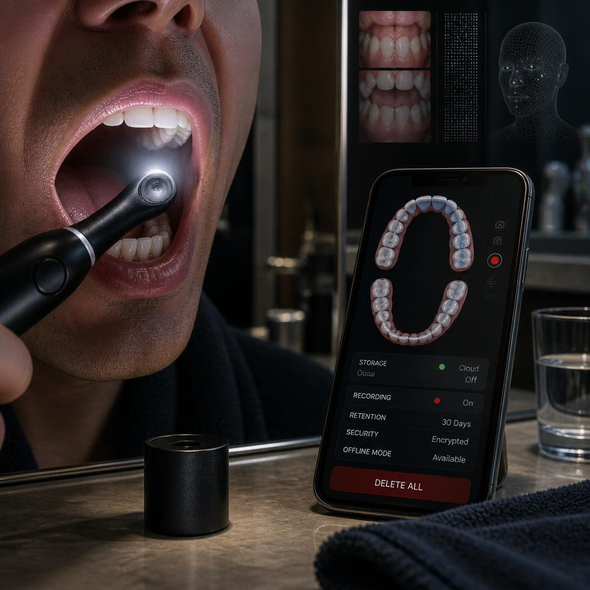
Dyson turns a private bodily routine into a premium act of measurement: the buyer receives polished guidance but must investigate whether the device also creates a lasting, transferable record of the mouth.
Dyson has launched the $499 CameraJet, an electric toothbrush fitted with what the company calls a 100,000-pixel macro camera and a stroboscopic light for viewing inside the mouth. Futurism reports that the device analyzes 28 images per second, uses a machine-learning system to identify interdental gaps, and connects through Wi-Fi and Bluetooth. Dyson says the brush lets users “see what their dentist sees.” The supplied report does not establish regional availability, a shipping schedule, or how captured images are stored.
The camera faces more than plaque. It may see teeth, gums, fillings, crowns, missing teeth, irritation, discoloration, and the small evidence of how consistently a person performs care. That can make guidance more precise than a timer or pressure sensor. It can also produce an unusually intimate visual stream before the user has determined whether any frame becomes a saved record.
The social code is familiar: intensive monitoring feels less invasive when it arrives as expensive design. A $499 brush, developed with the reported involvement of 661 engineers and paired with proprietary non-foaming toothpaste, presents observation as refinement. The buyer is not merely brushing but optimizing, mapping, and receiving professional-looking feedback at the sink. The bathroom mirror has acquired an evidence locker.
What does the brush remember?
A camera does not automatically mean that Dyson retains video. Analysis could occur on the brush or phone without uploading footage, while selected images could also be transmitted for account features, technical support, clinical sharing, or system improvement. The report does not resolve which architecture CameraJet uses. That distinction should remain factual, because an alarming possibility is not yet a documented data practice.
Before purchase, users should inspect whether the brush works offline, whether an account is required, and whether live images, extracted dental maps, or diagnostic inferences leave the local device. They should also look for separate consent covering cloud storage, clinician access, product training, advertising, and customer support. A privacy policy that discusses generic “usage data” without naming intraoral images leaves the most important material undefined.
The practical test belongs in the controls, not the lifestyle photography. Buyers need a visible recording indicator, retention periods for every copy, a way to export and permanently delete images, a schedule for security updates, and instructions for wiping the brush before resale or repair. Dyson may have built a useful view into neglected spaces. Whether the CameraJet deserves access to them depends on what still functions after the cloud, account, and memory are switched off.
Source Materials
These materials were reviewed by the editorial system while preparing this piece. Muerte.casa may interpret, satirize, reframe, or disagree with them.
- Dyson’s New AI Toothbrush Conducts Video Surveillance on the Inside of Your Mouth Futurism · September 6, 2026 · Primary signal · Direct source
How did this story land?
This may be changed as you like.