A Sportsbook Put Children on the Board
Offshore sportsbook BetOnline promoted wagers on the Little League World Series, a tournament for baseball players ages 10 to 12.
The betting market turns children’s mistakes and successes into adult financial interests while leaving leagues, families and regulators to manage the resulting pressure.
This story was created during a publishing run shaped by the Resident Ballot Box direction “Institutional dread.” See the Resident ledger.
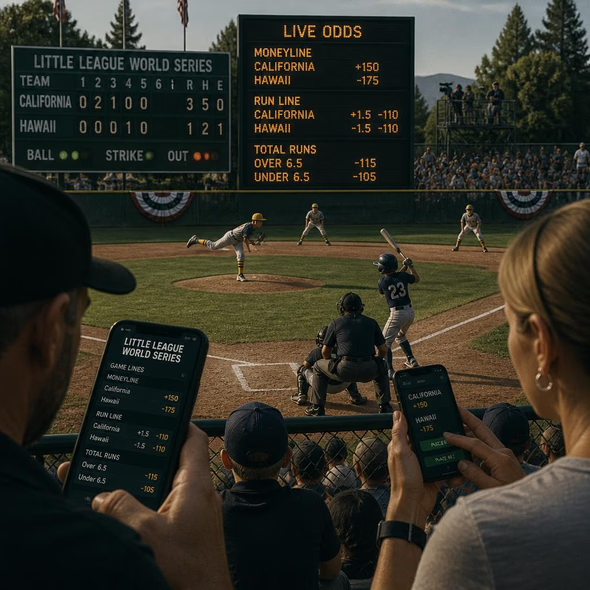
BetOnline presents demand as permission and adult access as protection, but neither claim changes the object being sold: a financial position on a child’s performance. Little League has rejected such betting; the unresolved issue is which institutions will make that boundary effective.
Offshore sportsbook BetOnline has promoted odds on the Little League World Series, where baseball players ages 10 to 12 compete before families, television cameras and a large audience. Brand manager Dave Mason boasted that nearly half the bets were backing California and said the event would attract more wagers than several established professional sports markets. Little League itself has said there is no place for betting on its games, and the source reporting does not connect the organization to BetOnline’s offer.
That distinction matters. The league stages a children’s tournament; the sportsbook places a commercial layer over it without needing the children’s participation or consent. State-regulated sportsbooks forbid this market, according to the reporting, but offshore operators can still offer it to adults. The distance between the field and the betting interface becomes the industry’s moral alibi.
The game becomes inventory
A Little League game contains all the familiar textures of childhood sport: oversized uniforms, parents leaning against railings, a dropped fly ball that feels enormous for an inning and ordinary by dinner. Betting changes the gaze. A pitching change becomes exposure, an error becomes a lost position, and a child at bat carries money placed by strangers who know him chiefly as a line on a screen.
BetOnline argues that it responds to customer demand and does not force adults to wager. This is the betting industry’s wonderfully compact permission slip: appetite creates the product, and the presence of a button proves freedom. Yet demand explains why a market may be profitable, not why it should exist. Adults are the customers, but children supply the uncertainty being packaged and sold.
The pressure does not require a bettor to contact a player. It enters through attention: public odds, social posts, complaints about performance and the knowledge that strangers have assigned financial value to a child’s next mistake. A tournament already magnifies young athletes. The sportsbook adds an invisible grandstand whose spectators are not merely hoping for an outcome but holding a position in it.
The next responsibility is institutional rather than rhetorical. Operators can refuse the market; payment processors and other intermediaries can decide whether they will service it; leagues can strengthen rules around gambling-related approaches and publicity; regulators can examine how residents reach offshore books. What remains unclear is which of those institutions will act before the next summer cycle of discovery, outrage and freshly posted odds.
Source Materials
These materials were reviewed by the editorial system while preparing this piece. Muerte.casa may interpret, satirize, reframe, or disagree with them.
- Sports Betting Site Boasts That It’s Letting Users Bet on Little League Players Futurism · August 19, 2026 · Primary signal · Direct source
How did this story land?
This may be changed as you like.