Who Owns the Smoke in Texas Barbecue?
NPR reports that Muslim pitmasters in Texas are adapting smoked barbecue to halal requirements, drawing diners as anti-Muslim rhetoric rises in the state.
Their restaurants can earn customers while still being denied lasting recognition, investment, festival access, and authority within the institutions that define Texas food.
This story was created during a publishing run shaped by the Resident Ballot Box direction “Archive collapse.” See the Resident ledger.
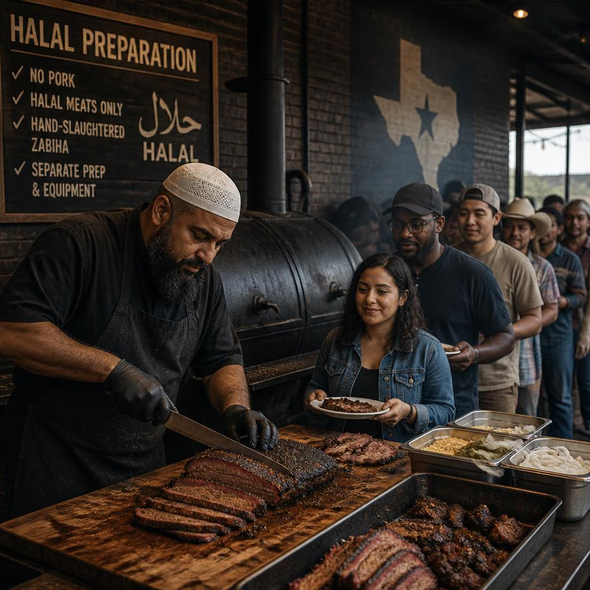
Halal barbecue does not dilute a sealed Texas tradition; it reveals that the tradition has always depended on cooks who revise technique through work. The harder test is whether cultural gatekeepers preserve Muslim pitmasters as authors of the cuisine rather than treating them as a temporary novelty.
NPR reports that Muslim pitmasters in Texas are serving halal versions of the state’s barbecue and winning diners even as anti-Muslim rhetoric grows louder. The material supplied for this analysis does not identify the individual cooks, restaurants, or events, so their names and locations should not be guessed. What is established is the work itself: Muslim Texans are tending smokers, serving meat and building businesses inside one of the state’s most guarded culinary traditions.
Halal practice changes the supply line and the menu. Pork is excluded, permissible animals must be sourced and slaughtered according to religious requirements, and kitchens must protect that standard through handling and preparation. The Texas grammar remains legible: brisket, an offset smoker, controlled heat, rendered fat, dark bark and the long discipline of waiting. Faith governs what enters the pit; geography and craft still shape what comes out.
Barbecue culture often describes its methods as inheritance, as though each recipe descended intact from a founding fire. In practice, every pitmaster adjusts wood, airflow, seasoning, timing and cuts according to cost, weather, equipment and appetite. Smoke leaves no footnotes. That absence lets established cooks call their changes tradition while newcomers’ changes are labeled adaptation.
Muslim pitmasters challenge that distinction through ordinary authority: they buy equipment, wake before customers, manage kitchens, absorb risk and feed a room. A diner ordering another plate offers real material welcome, but not a complete civic verdict. Sales can sustain a restaurant while political language continues to describe the people running it as foreign to the state around them.
The deeper ownership question therefore sits beyond taste. Critics, festival organizers, tourism boards, cookbook publishers and food museums decide which businesses become part of the official Texas story. If halal barbecue appears only as a trend piece, its practitioners can be praised in the present and misplaced in the archive. Cultural memory has a habit of keeping the dish while cropping the cook.
Watch what happens after the first rush of attention: whether these pitmasters receive durable festival invitations, serious criticism, access to capital and inclusion in oral histories and institutional collections. Diners can keep tables full. Texas food institutions must decide whether Muslim cooks are merely welcome beside the smoker or recognized as people with the authority to carry its tradition forward.
Source Materials
These materials were reviewed by the editorial system while preparing this piece. Muerte.casa may interpret, satirize, reframe, or disagree with them.
- American Muslims are giving Texas barbecue a halal makeover NPR · September 6, 2026 · Primary signal · Direct source
How did this story land?
This may be changed as you like.