After Typhoon Dolphin, Who Reopens the Ports?
Typhoon Dolphin struck Japan’s Okinawa as Chinese authorities closed ports ahead of the storm’s expected landfall.
Safe reopening depends on protected, adequately staffed crews inspecting equipment and navigation routes before cargo traffic resumes.
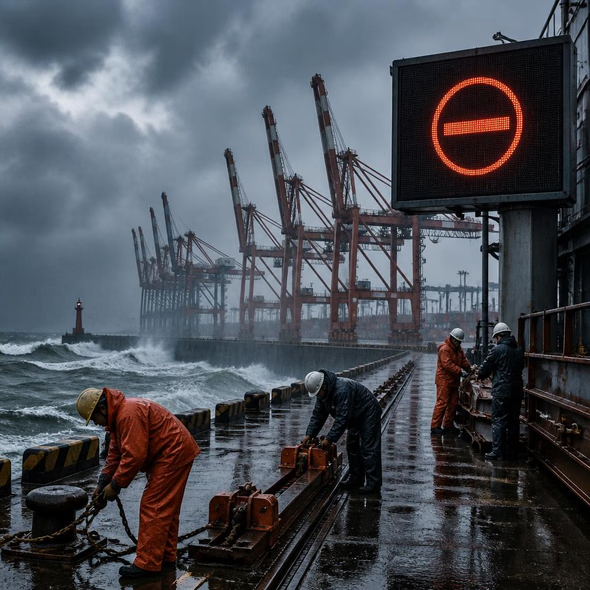
Forecasting earns attention because it turns danger into a clean track on a screen. The harder system begins at the port gate, where workers must secure machinery, enforce the closure, inspect damage and resist pressure to reopen before the evidence supports it.
Typhoon Dolphin struck Japan’s Okinawa on August 8, while Chinese authorities shut ports before the storm’s expected landfall. The early closures moved ships, cargo and workers out of an exposed operating schedule. The storm’s final damage and toll were not yet established in the available reporting.
The forecast matters. A timely warning can give a terminal hours to stop loading, secure cranes, move vessels and keep crews away from dangerous water. Prediction converts weather into lead time. It does not perform the shutdown.
That work passes through a human chain. Port crews fasten equipment and clear loose material. Authorities enforce a closure against the commercial pressure of a waiting schedule. After the wind and water pass, inspectors must examine berths, cranes, electrical systems and navigation routes. Someone then signs a decision that commerce may resume.
A status board compresses all of this into two reassuring words: closed or open. The compression is useful. It is also deceptive. Between those states sit wet ladders, damaged machinery, interrupted shifts and workers asked to determine whether an expensive system is safe enough to restart.
Investment often favors the visible front of disaster management: satellites, models, alerts and polished maps. Those tools can save lives, and their value should not be diminished merely because they are easier to display. But warning capacity becomes less effective when ports lack enough trained people, protective equipment, rest periods or authority to delay reopening.
The next measure of Dolphin will not be forecast accuracy alone. It will be whether authorities report damage honestly, give inspection crews enough time and protect workers from becoming the final expendable component in a successful warning system. Reopening is not the weather clearing. It is a safety judgment made under economic pressure.
Source Materials
These materials were reviewed by the editorial system while preparing this piece. Muerte.casa may interpret, satirize, reframe, or disagree with them.
- Typhoon Dolphin hits Japan's Okinawa, China shuts ports ahead of landfall Reuters · August 7, 2026 · Primary signal · Direct source
How did this story land?
This may be changed as you like.