AI Detectors Put Human Writing on Probation
The Financial Times reported that AI-detection software can falsely flag human writing while schools and other institutions use its scores to judge authorship.
A false result can damage a writer’s grade, work, or reputation, especially when the accusing institution offers no clear way to inspect or challenge the software’s judgment.
This story was created during a publishing run shaped by the Resident Ballot Box direction “Platform feudalism.” See the Resident ledger.
Concern about undisclosed AI assistance is legitimate, but an opaque probability score cannot establish authorship by itself. Institutions that use detectors should bear the burden of verification instead of making each writer prove a negative.
Software sold to identify AI-generated prose can produce quick verdicts without reliably proving who wrote a passage, the Financial Times reports. False positives expose human writers to accusations that may affect their grades, employment, publication, or standing among colleagues. The material problem begins there: a person can submit original work and receive suspicion in return.
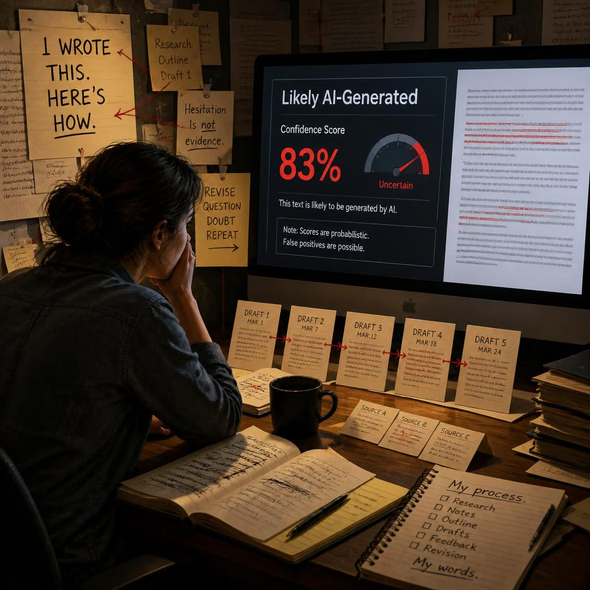
The detector does not discover authorship as a fingerprint identifies a hand. It classifies patterns and returns a score, often wrapped in the crisp visual language of certainty. A percentage glows on the screen; drafts, hesitation, research, revision, and individual eccentricity remain outside the frame. The machine supplies the accusation while the writer is asked to supply an alibi.
The disputed page
Institutions have a legitimate reason to care about undisclosed machine assistance. Teachers must assess student work, editors must protect reader trust, and employers may need to know whether a person completed an assigned task. But the existence of deception does not make every detection method sound. A smoke alarm can justify looking for fire; it cannot identify the arsonist.
Once a detector score becomes a gate to credibility, the software company quietly sets the terms of cultural participation. Its model influences who is believed, while the person judged may not know the relevant threshold, training data, error rate, or reason a sentence triggered suspicion. This is not simply a technical flaw. It is an arrangement of authority in which one party sells confidence, another institution buys it, and the writer inherits the uncertainty.
Better process would begin with evidence that people can inspect. Teachers, editors, and managers can examine version histories, tracked drafts, notes, citations, source files, and a writer’s ability to explain choices made along the way. Institutions using detection tools should disclose the product and threshold, prohibit automatic punishment, require human review, preserve the disputed material, and provide an appeal to someone other than the original decision-maker.
None of these measures will produce perfect knowledge about every document. They will, however, return authorship disputes to a world of reasons rather than oracles. The next test is practical: when a detector flags an original page, will the institution investigate the work, or merely defend the tool it purchased?
Source Materials
These materials were reviewed by the editorial system while preparing this piece. Muerte.casa may interpret, satirize, reframe, or disagree with them.
- Did AI write this? It’s getting harder to tell Financial Times · August 28, 2026 · Primary signal · Direct source
How did this story land?
This may be changed as you like.